
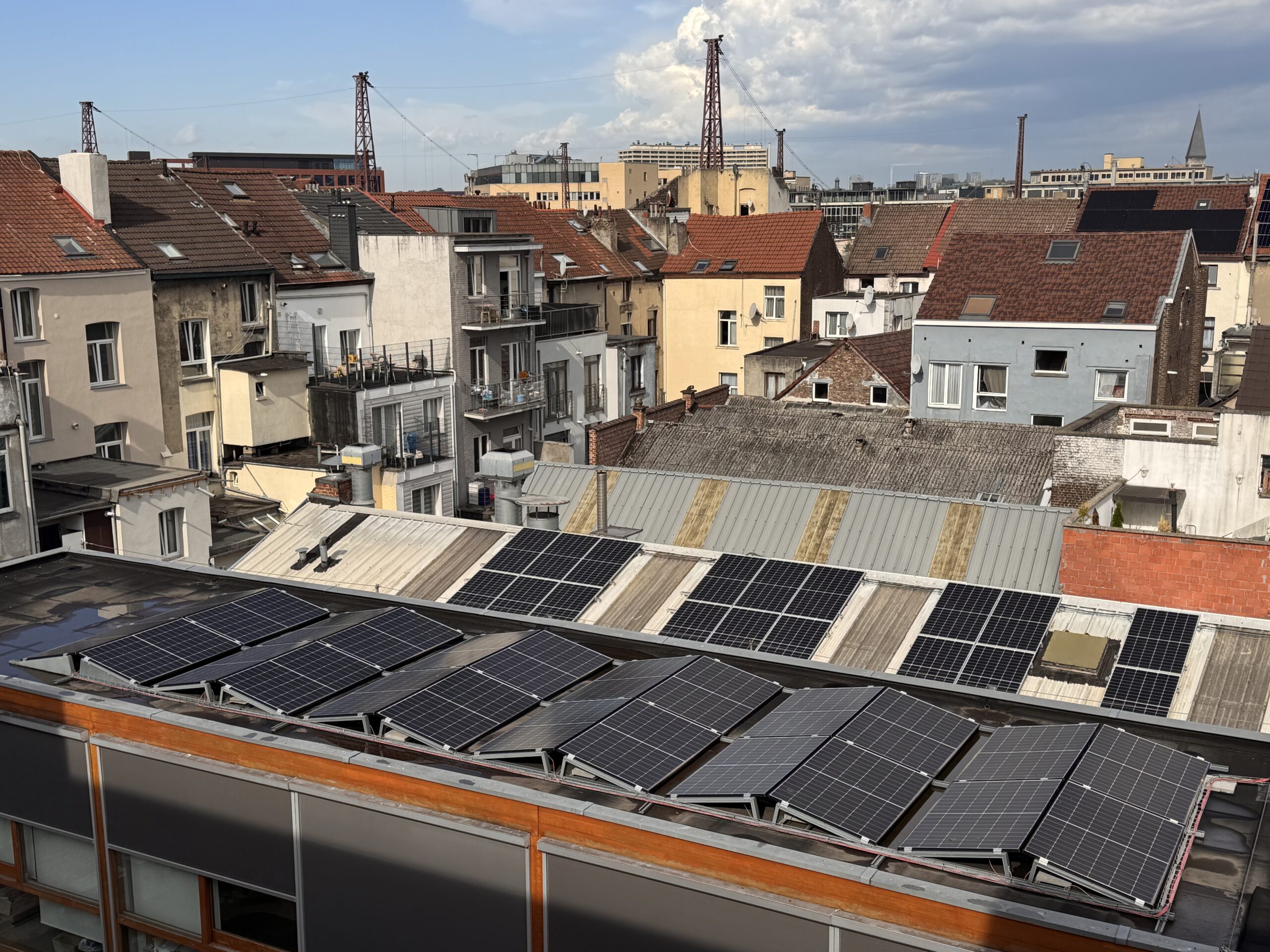
A rooftop solar scheme in Saint-Gilles is modest in scale, but it shows how communes, cooperatives and citizens can work together to cut bills and emissions. Philippa Nuttall visits the project and finds out why Belgium’s wider green transition remains a work in progress.
Gang warfare, not gigawatts, is why Saint-Gilles is often in the headlines. A recent spate of shootings has drawn political and press attention. But the Brussels commune and energy cooperative Brupower want to talk about solar power, as energy prices remain high and households continue to feel the pinch.
They believe a different way of producing and consuming energy can bring social benefits too.
Energy costs rocketed in 2022 after Russia’s full-scale invasion of Ukraine and have remained high across western Europe, including Belgium. The country has some of the highest electricity prices in the EU.
In 2025, Ireland reported the highest prices, at €40.42 per 100 kilowatt-hours (kWh), according to Eurostat, followed by Germany at €38.69 and Belgium at €34.99. By comparison, consumers in Hungary paid €10.82 per 100 kWh.
This summer, the ongoing closure of the Strait of Hormuz and nuclear power plant closures caused by a lack of cooling water during the heatwave were among the factors that sent prices soaring in Belgium once again. Brupower believes energy communities are one way to break this cycle, providing citizens with electricity at a stable price while reducing emissions and bringing people together.
Green shoots
Brupower (sometimes styled as brupower) was born on Zoom during the Covid-19 pandemic. A group of citizens met online once a week, concerned that “the energy sector in Brussels was completely non-resilient, the smallest energy suppliers were going bankrupt, and we were just left with the big actors, TotalEnergies and Engie,” says Sébastien Mouthuy, the cooperative’s co-founder.
“Our idea was to produce clean energy and to supply it to citizens at a stable price.”
The situation is different in Wallonia and Flanders, where there is a wider variety of energy suppliers. Since then, Brupower has raised €650,000 and installed more than 1,000 solar panels across Brussels. In 2024, the cooperative was given the green light by the regulator to provide local, renewable electricity at a stable price of €29 per 100 kWh, around 30% cheaper than the major suppliers.
Today, it has seven projects underway in 11 of Brussels’ 19 communes, including on the roof of the Saint-Gilles Municipal Sports Centre, with plenty more planned.
Brupower’s partnership with Saint-Gilles started in 2024, when the commune published a tender for the installation of solar panels. Projects received extra points if citizens were involved.
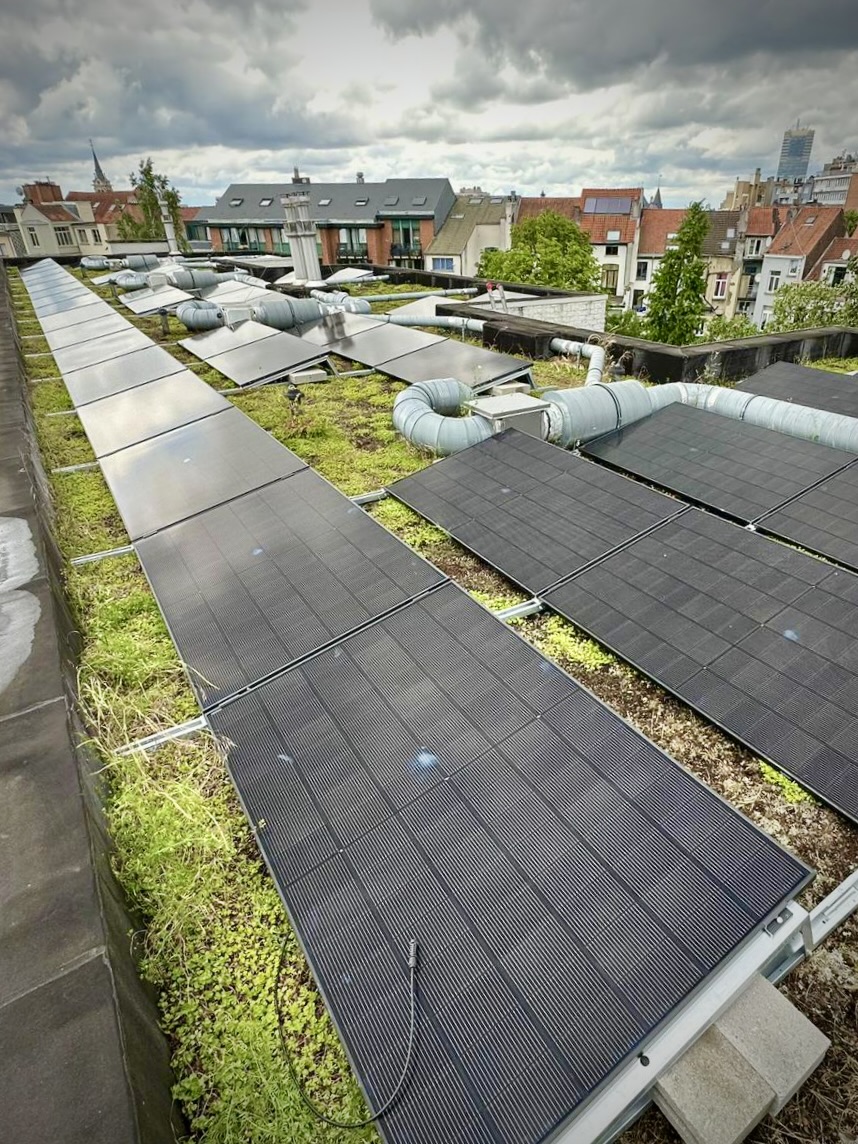
Croix de Pierre.
Loes Salomez, Saint-Gilles councillor for energy, climate and biodiversity and a member of the Flemish green party Groen, says energy is “at the heart of ecological politics”. For her, this means not just moving away from fossil fuels towards cleaner energy to reduce the impact of climate change.
She also sees the energy transition as an opportunity to tackle social problems, including the pollution and human rights impacts of extractive industries elsewhere in the world and energy poverty in Brussels caused by high prices. Citizen investment is also a way to bring about change despite Saint-Gilles’ limited budget.
Energy poverty – when a household must reduce its energy consumption to a level that harms people’s health and wellbeing – is a growing issue in Belgium. According to a report by the King Baudouin Foundation, nearly 23% of people living in Brussels were in energy poverty in 2022, an increase of over four percentage points compared with 2021.
Yet getting people on board with Brupower’s community energy ideas was initially not easy, says Salomez. Only two people turned up to the first information evening, deterred by the assumption that the project was not for them: they believed either that they did not have enough money or that, as non-homeowners, they were not concerned.
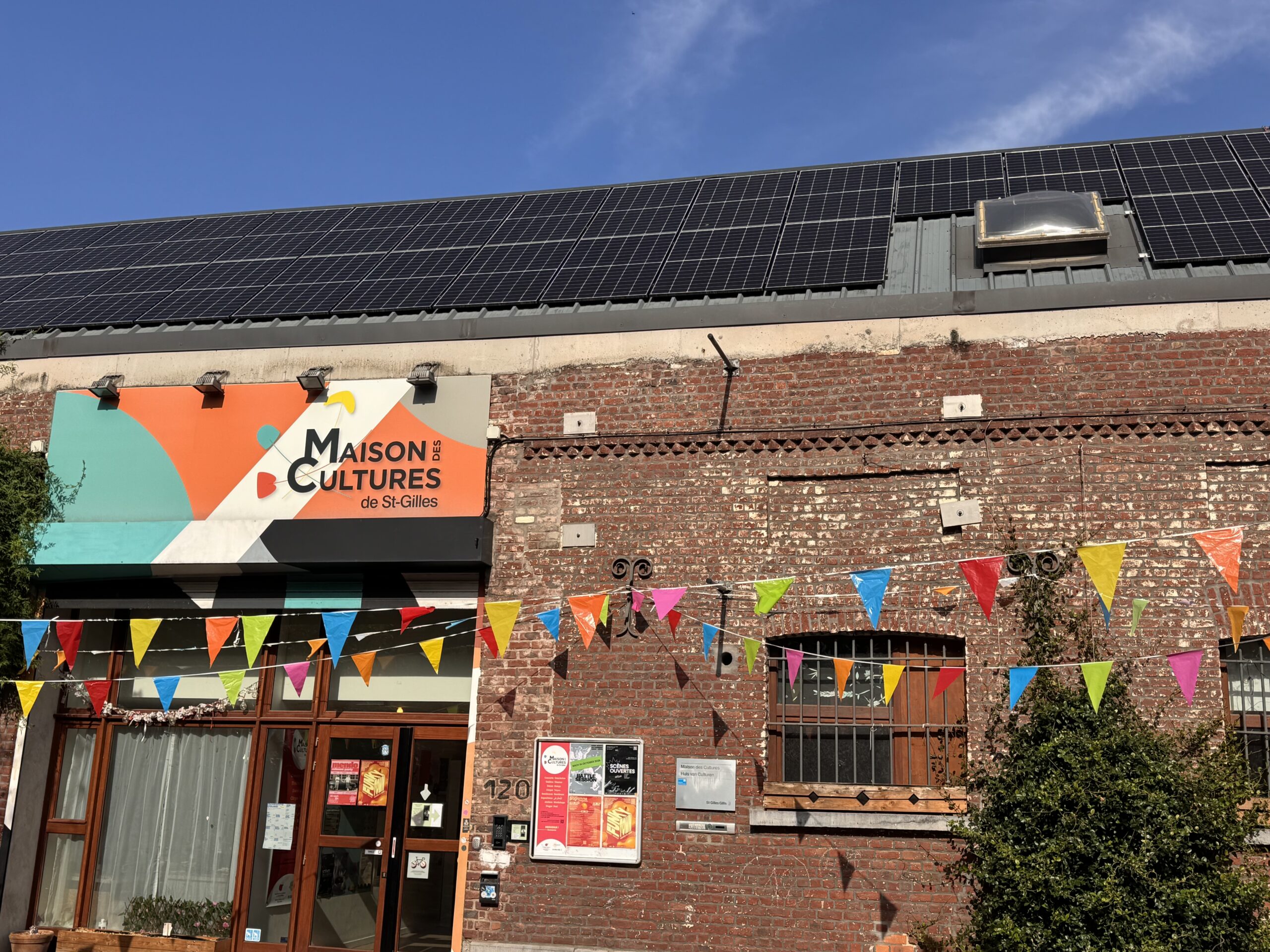
Maison des Cultures de Saint-Gilles.
After this poor turnout, the commune put considerable effort into explaining how community energy would work, that renters as well as owners could join, and that people did not need to be wealthy to take part. While the average investment in Brupower across Brussels is €2,000, shares start at €50 and many people opt to buy just one or two. In Saint-Gilles, the effort paid off.
At the second information evening, 25 people showed up. The idea is that everybody can be involved in producing local clean energy, says Mouthuy, who believes the model can also create community ties. “I put in my money and my neighbour who is a single parent benefits by consuming the energy,” he says. “The electricity goes to my neighbour and the money stays local.”
Brupower is working with the commune to install panels on other public buildings, including schools and churches, and on blocks of flats through agreements with the copropriétés that manage them. In September 2026, the 1950s Sainte-Alène church will become another Saint-Gilles landmark covered in solar panels.
The cooperative is also helping to create “solar streets”, going door to door to ask whether residents want to install panels at a lower cost than if each owner acted alone. And through the SeaCoop initiative, it helps citizens invest in offshore wind projects.
Europe’s community experiment
There are more than 8,000 energy communities across the EU, enabled by a range of EU policies and legislation. Alongside successive versions of the Renewable Energy Directive is the REPowerEU Plan.
Launched in 2022 to wean Europe off Russian oil and gas and accelerate the shift to greener, more local energy sources, it also recognised the role of energy communities in creating a more secure, affordable and cleaner energy system.
More recently, in March 2026, the European Commission published a non-legislative EU Citizens EnergyPlan, followed a month later by the Energy Communities Action Plan, which set an ambition to increase tenfold the capacity installed by energy communities by 2030.
Under the current EU budget, which runs from 2021 to 2027, EU member states pledged to support 140 energy communities through regional funds – but have only actually supported one so far.
A European Court of Auditors report from March 2026 also concluded that the EU could do more. The REPowerEU Plan set a goal of having at least one renewables-based energy community in every municipality with more than 10,000 inhabitants by 2025.
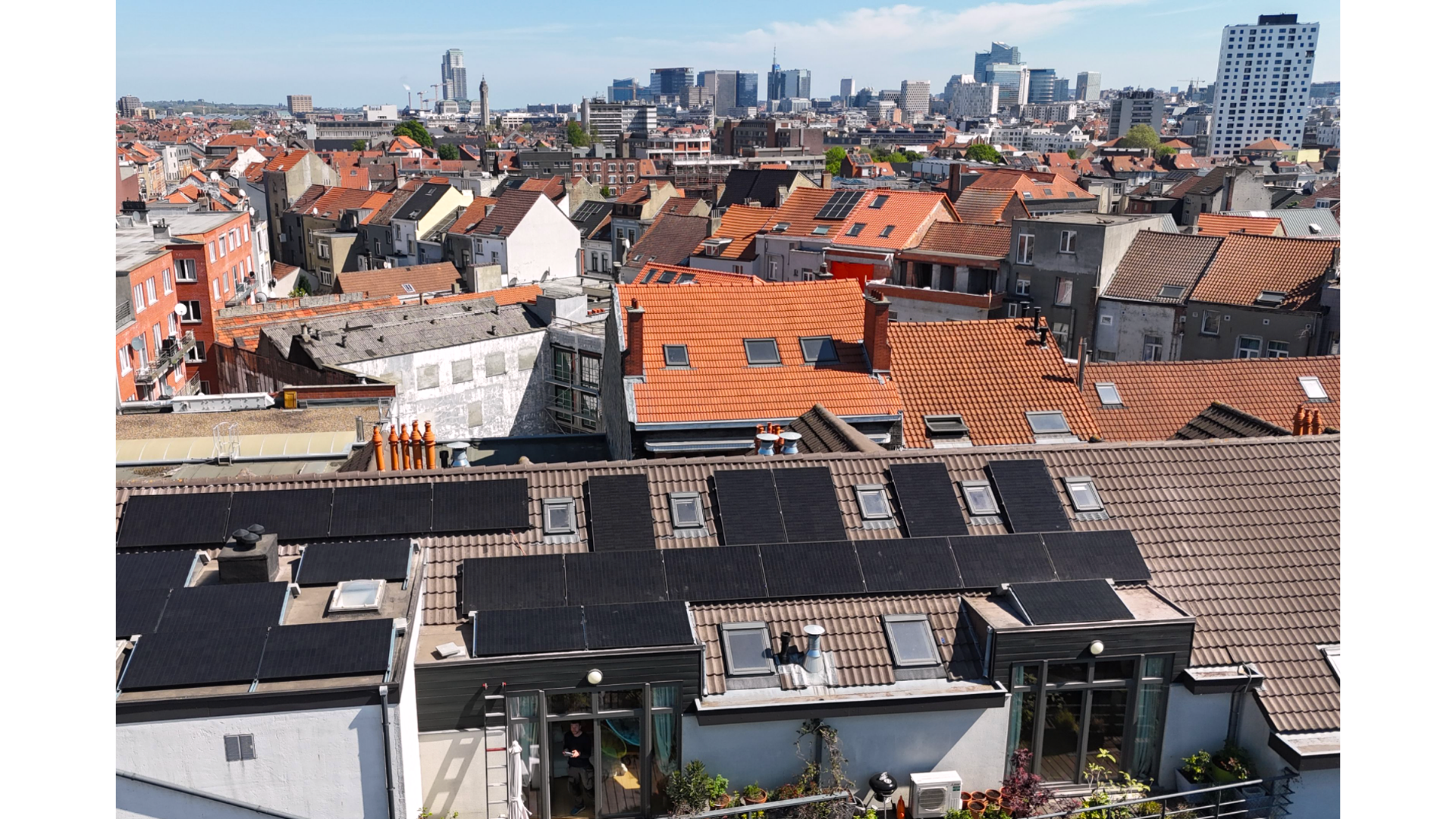
Solar installation
But according to the court, by January 2025 only 27% of this objective had been reached. The report also found that, even in the best-case scenario, energy communities would own only 4% of solar and wind generation capacity by 2030, well below the shares of 21% and 17% respectively previously suggested by the Commission.
The Court of Auditors says clearer rules, better financial rewards and other forms of support would make it easier for poorer citizens to join such initiatives. Supporters say energy communities are not only good for household finances and for greening the energy system, but can also benefit the wider community.
Rather than profits disappearing to distant shareholders, as with large energy companies, every euro of public money invested in an energy community can generate €50 for the region through income for installers, maintenance and local transport, for example.
Mouthuy says Brupower prefers to work with local installers and use solar panels developed in Belgium rather than China. “We want money to go back into the local community,” he says.
Belgium’s mixed record
On the energy transition as a whole, Belgium is a laggard rather than a leader.
It has the second-lowest share of renewables in the EU, ahead only of Luxembourg. Just 15% of Belgium’s energy comes from renewable sources, compared with 63% in Sweden and 22.5% in neighbouring France.
The country performs better, however, on community energy. Only five EU member states – Belgium, Ireland, the Netherlands, the Czech Republic and Denmark – are deemed to have successfully transposed the EU’s community energy definition into law.
Belgium’s first community energy project was Ecopower. Founded in Flanders in 1991 by a group of students from Leuven, the cooperative today has more than 60,000 citizen investors, produces 80 million kWh and provides electricity to some 55,000 households.
Belgium is on the low-average when it comes to the number of communities per inhabitant, with only 40 communities across the country, according to REScoop.eu, a network of energy communities. However, Jonathan Bonadio REScoop.eu’s head of policy says Belgian cooperatives are typically larger and more concentrated than the European average.
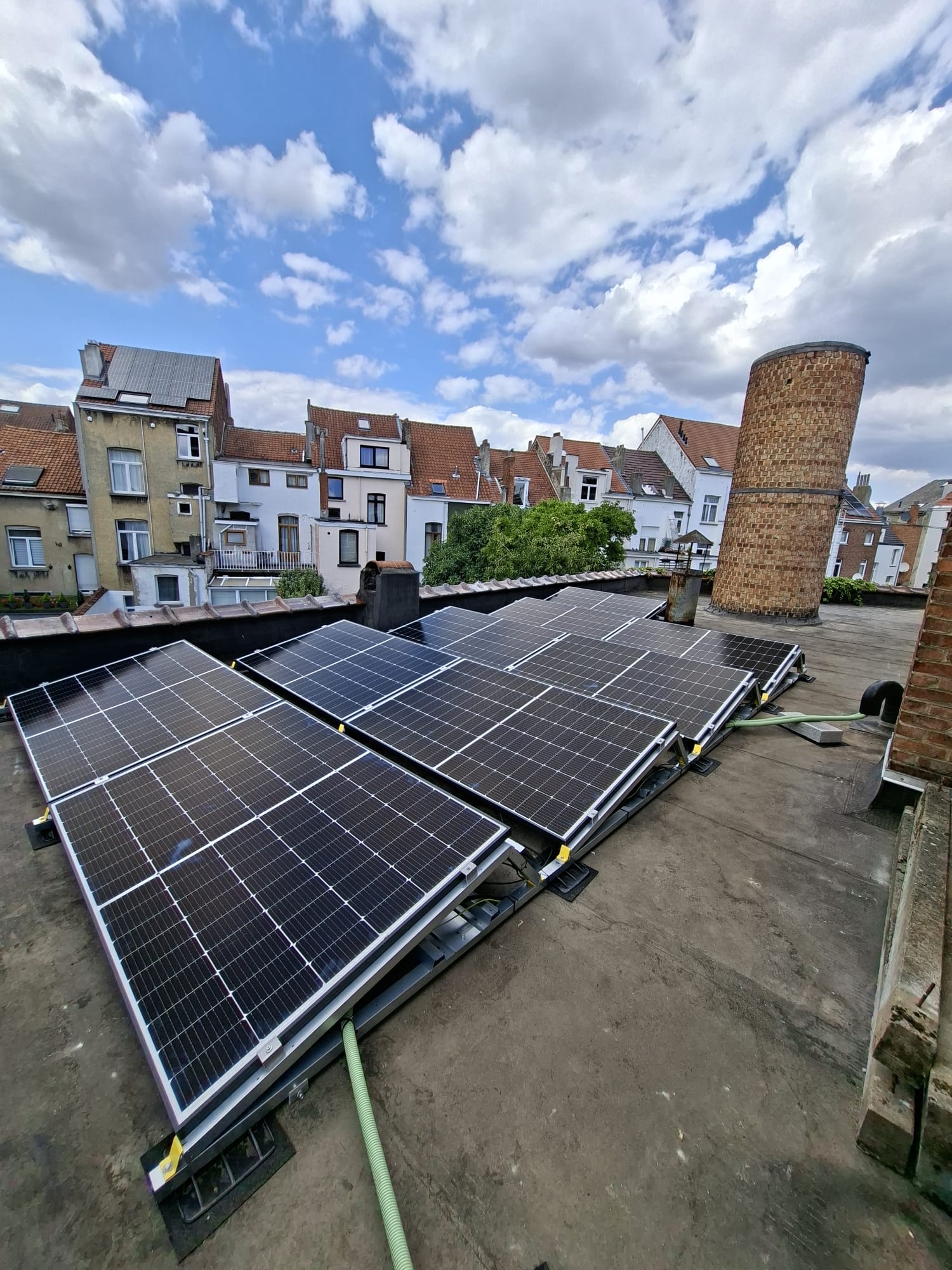
Solar project by Brupower.
“It makes them hit a very good score when it comes to the number of members per inhabitants,” he says. Overall, Belgian citizens produce more than 5% of the country’s renewable energy.
“Belgium has implemented the various directives and that is why Brupower can do what it wants to do,” says Mouthuy. However, he suggests “support for citizen energy is less than it was before at the federal level”, echoing wider criticism of cost-cutting by the current government led by Bart De Wever.
One sign of a change in tone, he says, is the government’s decision this summer to make citizen participation only a voluntary criterion in an upcoming wind tender.
Despite such challenges, Mouthuy retains the enthusiasm and optimism of youth. In times of trouble, community energy projects can be a lifeline. When energy prices shot up in 2022, Belgium had the highest energy inflation in the EU. An Ecopower household using around 2,000 kWh a year faced a bill of about €570 – roughly half that offered by the cheapest commercial provider.
That, ultimately, is the promise of projects such as Brupower. A few hundred solar panels on a sports centre or church will not transform Belgium’s energy mix, still less solve its dependence on fossil fuels.
But in Saint-Gilles, the transition is becoming something tangible: electricity generated on familiar rooftops, financed by local people and consumed by their neighbours. Belgium may still have a long way to go on green energy, but some of the building blocks are already in place – one roof, and one community, at a time.
