
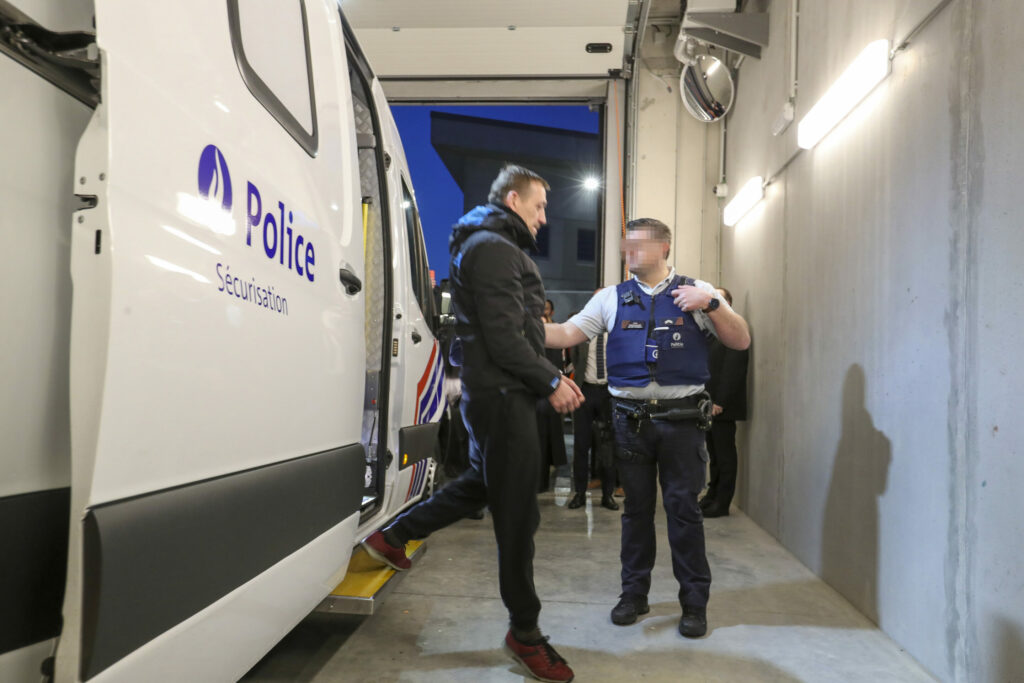
As a rising number of leaders of organised crime and large-scale drug trafficking are put on trial in Belgium, the country is expanding a regime for increased security in prisons to include mafia bosses.
Heads of criminal organisations or drug gangs who are in prison may in certain cases be placed in a special security regime, with, for example, permanent camera observation and a visit ban, Justice Minister Paul Van Tigchelt (Open VLD) announced on Friday. It is one of the latest in a series of measures taken by the judiciary to combat organised crime.
"With more and more leaders of organised crime and large-scale drug trafficking being convicted and extradited, we need a special security regime. We are not naive and know that they are trying to continue their criminal activities from prison," Van Tigchelt said. This has already emerged from the intercepted Sky ECC messages, among others.
"Such a security regime also exists in the Netherlands and Italy. Specifically, this means more control, more isolation and less privacy for the ringleaders," he said. This ensures ties to the underworld outside prison remain permanently cut.
'Not additional punishment'
The system of increased security, which is being expanded to include mafia bosses in prison, already exists for inmates who pose a serious risk to their fellow inmates and prison staff. It can also be used to prevent members of terrorist networks from spreading radical ideas within the prison walls. These people are excluded from group activities, their correspondence is monitored and there are restrictions on visits and telephone calls.

Inside view of the prison of Namur. Credit: Belga / John Thys
The bill paving the way for the expansion, approved by the federal parliament on Wednesday, means the regime can be imposed on inmates with a proven significant role in a criminal organisation or a gang involved in drug trafficking.
The usual measures of a classical security regime can be extended to include other restrictions including permanent camera observation and the exclusion of the right to visit by some or all people. Deciding to place a person under tighter security is up to the Director General of the prison system.
"The aim is not to further punish the prisoner, but to prevent the security risk for the population from persisting," Van Tigchelt said. The flagship mega-prison in Haren, among others, is equipped for such a special security regime.
