
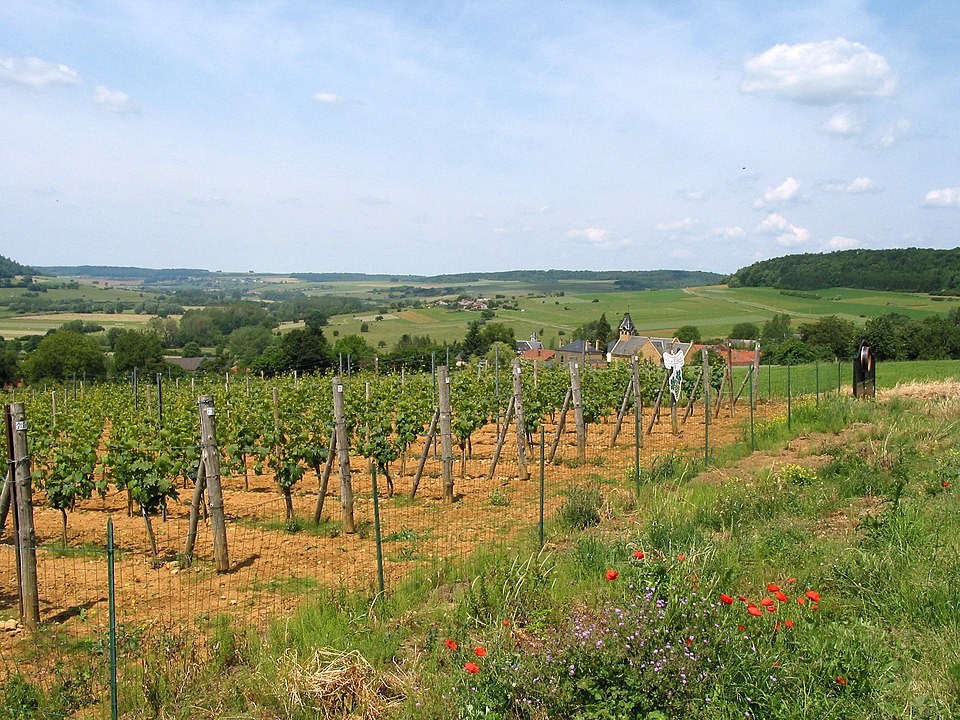
A new book published on Friday chronicles the history of viticulture in Belgium from the Middle Ages to the present day.
Written by Marc De Brouwer, 'Belgium, a Country of Wine, Vines, and Vineyards, from Yesterday to Today,' offers the most exhaustive account of this history since a version published in 1895.
The book’s 11 chapters enumerate regions, towns, and specific sites where the vine, initially planted by monks, was once cultivated. They also recount the rise and fall of Belgium’s viticulture.
Grape cultivation and winemaking in Belgium vanished during the Little Ice Age - the period between the 14th Century and the mid-19th Century when average global temperatures dropped by as much as 2°C. Viticulture resurfaced briefly in 1815, then largely disappear once again, before slowly re-emerging after the 1960s.
Climate change favoured the re-emergence of larger vineyards from the 1990s, followed by a significant surge in the number of vineyards from 2010.
Detailing over 150 vineyards, the book draws from an ample documentary archive amassed by a non-profit organisation De Brouwer founded. The author also addresses and corrects historical inaccuracies that had been continually propagated throughout the years.
An amateur winemaker himself, De Brouwer managed to establish a small vineyard in the Brussels municipality of Uccle in 1988 before moving to Rance, in Hainaut, where he planted more vines. His other published works focus on fermentations and artisanal beverages.
The 304-page book is available for purchase from the publisher, CEP vdqa.
