Human plasma is used to manufacture a variety of important treatments, including those used in major trauma causes, even being sent to support those injured on the battlefield in Ukraine.
Yet these treatments are largely unknown by the general public, while more patients across the EU are diagnosed every year with life-threatening plasma protein related disorders, such as immune deficiencies, immune-mediated peripheral neuropathies, Hereditary Angioedema, Alpha 1-Antitrypsin Deficiencies, Haemophilia and other bleeding disorders. So too is the yellow liquid used to treat chronic auto-immune diseases, as well as clotting disorders.
Patients living with these conditions and others rely on the donations of plasma donors. To this end, the Plasma Protein Therapeutics Association (PPTA), an organisation representing more than 1,000 private plasma collection centres across the world, works tirelessly to advocate for the needs of patients and donors.
The Brussels Times sat down with donors, patients and PPTA members to understand the human stories behind this delicate symbiosis of donor and patient, and to understand the urgent needs of a sector providing unique, critical and life-saving treatments to patients across the globe.
‘I was left paralysed’
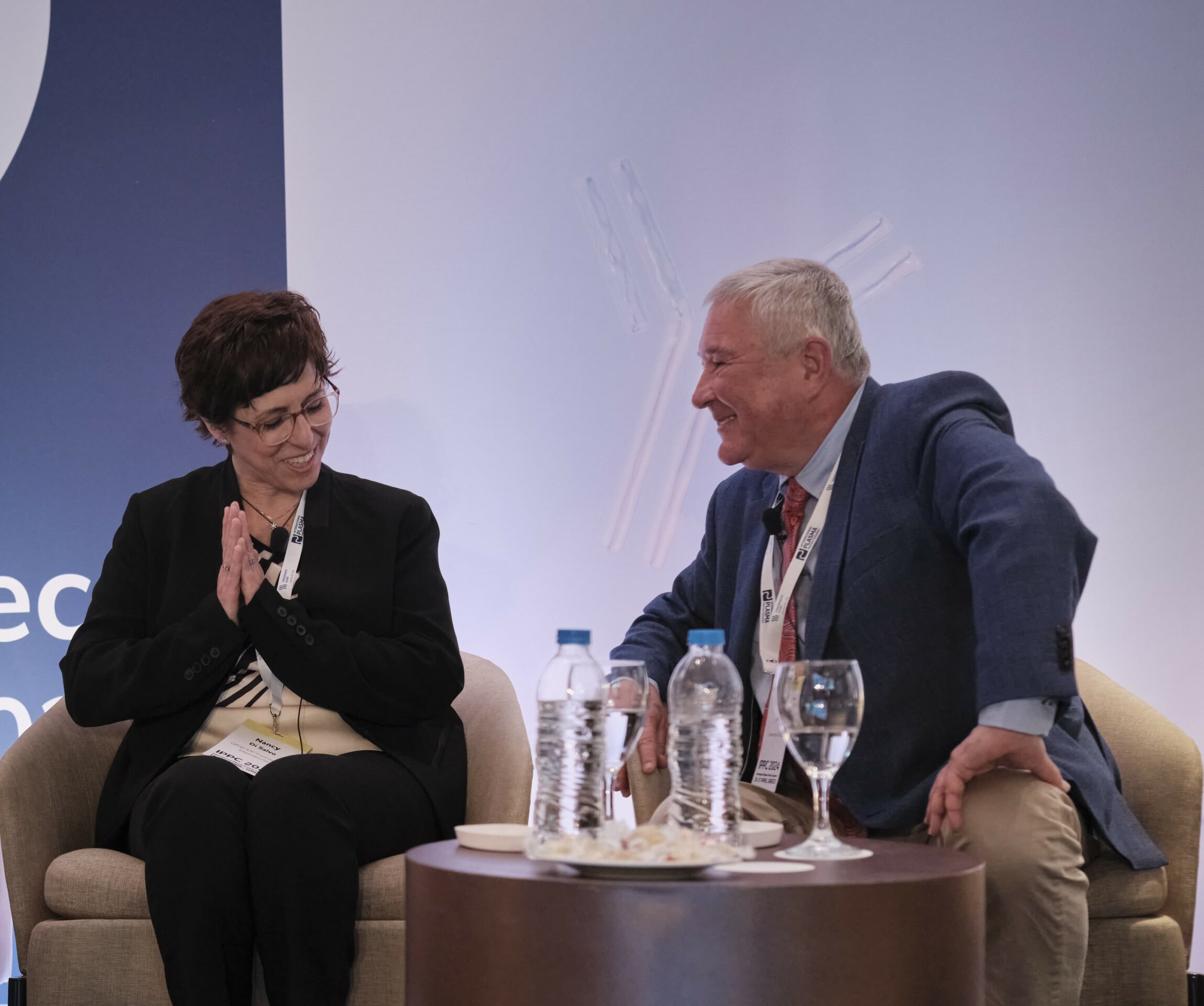
At 20-years-old, Nancy Di Salvo, who lives in Palermo, Italy, woke up to find herself almost completely paralysed. She was diagnosed with Guillain-Barre Syndrome (GBS), a rare condition which causes the immune system to attack the nervous system. For more than a month, Di Salvo remained paralysed. In the 1990s, treatment options for the condition were limited and she was unable to walk for nearly six months.
Immunoglobulins (IVIG) treatment, derived from human plasma, ultimately proved to be life-changing for the Italian. With the innovative treatment, she regained her ability to walk and recovered almost entirely by 1996. Then, about a decade later, she was diagnosed with Chronic Inflammatory Demyelinating Polyradiculoneuropathy (CIDP), another autoimmune disorder, plasma-derived medicines once again proved crucial to her recovery.
Now aged 54, Di Salvo is now one of the many patients who relies on weekly subcutaneous infusions of plasma-derived immunoglobulins. While she still has bad days, this treatment has enabled her to slowly heal and regain her independence. But for Di Salvo, like many on plasma-derived medicines, concerns still abound.
“We always have that concern that we might have a plasma shortage locally, like at the hospital where I am right now,” Di Salvo told The Brussels Times. “They just informed patients that are on IVIG that there is a shortage and that they cannot undergo their infusion … I feel helpless towards other patients because there’s a constant uncertainty that impacts our conditions.”
According to estimates from the PPTA, in the EU, there is currently a shortfall of around 5 million litres of plasma needed to manufacture plasma-derived medicines. Over the past 10 years, the use of immunoglobulins has almost doubled, while almost 40% of all Europe’s plasma needs are now imported from the US.
If Di Salvo and others were not able to access her plasma treatment, the consequences would be grave. “It would not only be dreadful, but I think I would have to give up on having a normal life because I would not be able to work… I would not be good at all in this society,” she said.
Many of the conditions treated with plasma-derived medicines are deadly. Di Salvo recalled that one fellow patient in North Macedonia had passed away from GBS just a few days prior speaking to The Brussels Times.
Di Salvo now works as a patient advocate for the GBS-CIDP Foundation, sharing her experiences with other patients and thanking plasma donors. As a patient and advocate, she stresses the importance of plasma-derived medicines and raises awareness about plasma donation. Di Salvo emphasises that she is extremely grateful for the “kindness” of donors, who make donations “out of the goodness of their own heart and on their own will.”
“I’m trying to reach out to local blood centres for that reason because I am now able to go visit donation centres and just go shake somebody’s hand just to say thank you. I am here because of you– that’s the plain truth.”
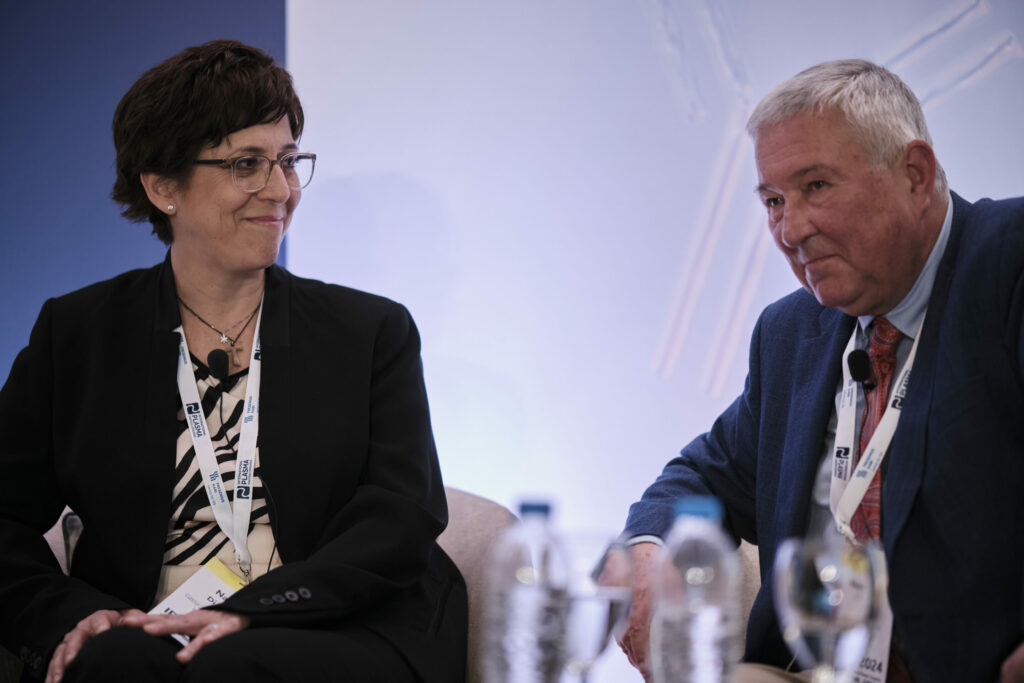
Pictured here: Nancy Di Salvo and Martin Moll
Martin’s ‘me time’
Healthy plasma donors come from all walks of life. One such altruist is Martin Moll, a plasma donor from Graz, Austria. Outside his work as a university professor, Moll has built a reputation as a superhero plasma donor, becoming a recognisable face at his local donation centre. Since first starting to donate plasma more than 20 years ago, Moll has made over 1,000 donations, amounting to roughly 750 litres of plasma.
“I slipped, so to say, into this career of becoming a donor … I was so overwhelmed by the friendly atmosphere that prevailed at the centre. All these people were being so kind and helpful,” Moll recalled. “I stayed loyal to this plasma centre and never regretted it.”
Plasma donations work differently to blood donations.
While with blood donations you only withdraw blood, plasma donations withdraw blood from the body, extract the yellow plasma liquid through centrifugation, and return the donor’s red blood cells back to the body. As a result, donors can give more frequently than blood donors and are encouraged to donate at least once a month, or even up to every two weeks, depending on local regulations.
Other than good health, which is typically assessed by a doctor at the donation clinic, Moll stressed that the ideal donor is driven by altruistic intentions. While some compensation is offered for donors’ time, this is usually not a significant amount.
“The main argument is that you can help other people and you are doing something good for yourself. Before every donation I get a medical check-up. Sometimes the doctor even recommends me to eat more or less of some kind of food,” Moll explained. “You feel like being a part of a family or a group which meets regularly.”
Both Moll and Di Salvo characterise their plasma procedures as their “me time” - for Moll, the one-hour sessions give him time to read a book, socialise with the staff (who have become his friends over the years), or relax. For Di Salvo, her Sunday transfusions give her a quiet moment to receive her treatment and continue her career and family life during the week.
As an ambassador for plasma donors, Moll had the opportunity to meet with patients from across Europe, some of whom may have directly benefited from his plasma. Unlike blood, plasma can be frozen and transported across Europe to where it is manufactured into life-saving medicines. Plasma saves thousands of lives each year.
Blood angels
One such company working to ensure plasma gets to where it is needed most, and to encourage new donations, is Haema, which has 40 donation centres located across Germany. Haema’s staff, known affectionately as Blutengel (blood angels), provide hygienic and safe spaces for local residents to donate their plasma.
Marion Junghans, Associate Director for donor experience at Haema, works to create the conditions to find new donors and ensure that existing donors return. “We are providing donors with a clean, attractive, and welcoming environment,” she told The Brussels Times. “Our centres look more like a lounge where you feel very warm and welcome. We try to make all the things we do as easy and nice as possible.”
Plasma donation has never been easier. At Haema centres, prospective donors can now answer medical surveys and book appointments via a mobile app. Initial health screenings are being streamlined to help attract new donors. There are no particular criterias needed to become a donor, except being in good health.
“Donors are healthy and responsible members of the local community who are really helping or want to help patients with life threatening illnesses, or need for plasma medicines,” Junghans explained. In the past few years, criterias for becoming a plasma donor have broadened across Europe. In Germany, men who have sex with men are now no longer excluded from donation.
Stakeholder engagement is a big part of Haema’s business, Junghans explained. The centres host frequent ceremonies, patient-donor meetings, and gatherings with the communities with the goal of providing a “holistic view of the impact of donations and donors.” Haema also invests in advertising to help expand its outreach, even partnering with local companies and institutions to bolster its plasma drive.
“Plasma donors get frequent health checks with each donation. The Haema team and the donors are like a family: they know each other, they know what they like, what they dislike, what their hobbies are,” Junghans noted. “Every donor who is coming and taking time out of their day is a valued donor.”
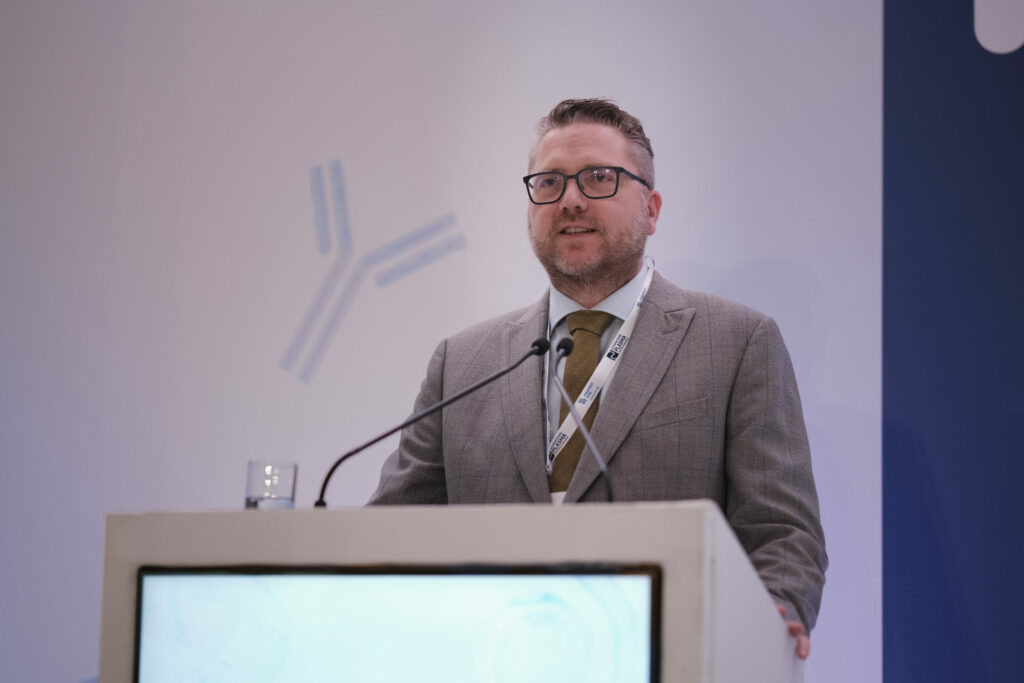
Pictured here: Maarten Van Baelen, ED of the PPTA Europe
Support for the sector
The PPTA works with international partners to advocate for greater involvement of the private sector in the collection of plasma and provision of life-saving treatments for patients in need of plasma-derived medicines.
Europe will need to step up its collection of plasma to reduce the current dependence on U.S. imports. As such, in August 2023, the PPTA told the European Union (EU) that it should work to address the “root causes of shortages”, cut down on redundant administrative processes, and safeguard the European plasma industry.
In an interview with The Brussels Times, Maarten Van Baelen, ED of PPTA Europe, explained that the plasma sector required a policy change to help meet the rapidly expanding need of patients.
“European countries really need to step up plasma collection or open up the market to ensure that the private sector can engage,” he explained. “We have the knowledge, expertise, and financial means to support them in doing so.”
To achieve this, the PPTA advocates for opening up more markets to allow for the private and public sectors to cooperate in meeting Europe’s plasma needs. Both don’t compete, they argue, but rather have plenty of scope for collaboration. Currently, only four countries in Europe allow the private sector to engage in plasma collection. Despite this, nearly 50% of all plasma is still collected in Europe by private companies.
The association works to raise awareness about plasma-derived medicines and their recipients. Plasma donation centres face restrictions on advertising in many countries. This is often left to the government to promote, making plasma publicity reliant on public funds. In some countries, it is also restricted to explicitly promote financial compensation.
The PPTA organises International Plasma Awareness Week, which happens annually during the first full week of October - this year's celebration will be from 7-11 October. The event seeks to raise awareness about plasma collection, recognise the contribution of plasma donors, and increase understanding about lifesaving plasma-derived medicines and rare diseases.
Van Baelen was eager to stress that plasma is not needed exclusively to treat rare diseases, but a wide array of conditions. It is important to keep plasma-derived medicines as accessible as possible, with the help of the private sector. According to the PPTA executive, 80% of people will “at least once in their lives rely on a plasma-derived product” as these treatments are used to treat trauma, bleeding and diseases such as hepatitis, paediatric HIV and Rhesus incompatibility during pregnancy, whereas albumin is even used as a stabiliser for some vaccines.
As such, any means of facilitating plasma donation should be encouraged. “In Europe, most countries offer some form of compensation to donors in the form of days off work, meal vouchers, cinema tickets, or even a form of fixed-rate allowance,” he explained. “And you can differentiate the compensation you provide between a blood donor and a plasma donor, as plasma donation takes more time and is more inconvenient for the donor.”
Governments should also seek to eliminate unnecessary administration which creates boundaries to efficient and comfortable plasma donation.
“In Germany, for example, they request to have a physician in place every minute a plasma centre is open. We believe a remote doctor or a doctor present at dedicated times would be sufficient,” Van Baelen believes.
The PPTA has several standards in place for its members to protect donors and monitor, report and record adverse events. These standards typically go beyond regulations.
“We are really keen on showing that donors are healthy, that donation is safe, because as we have said, patients need these donors,” Van Baelen concluded.
The Brussels Times
