
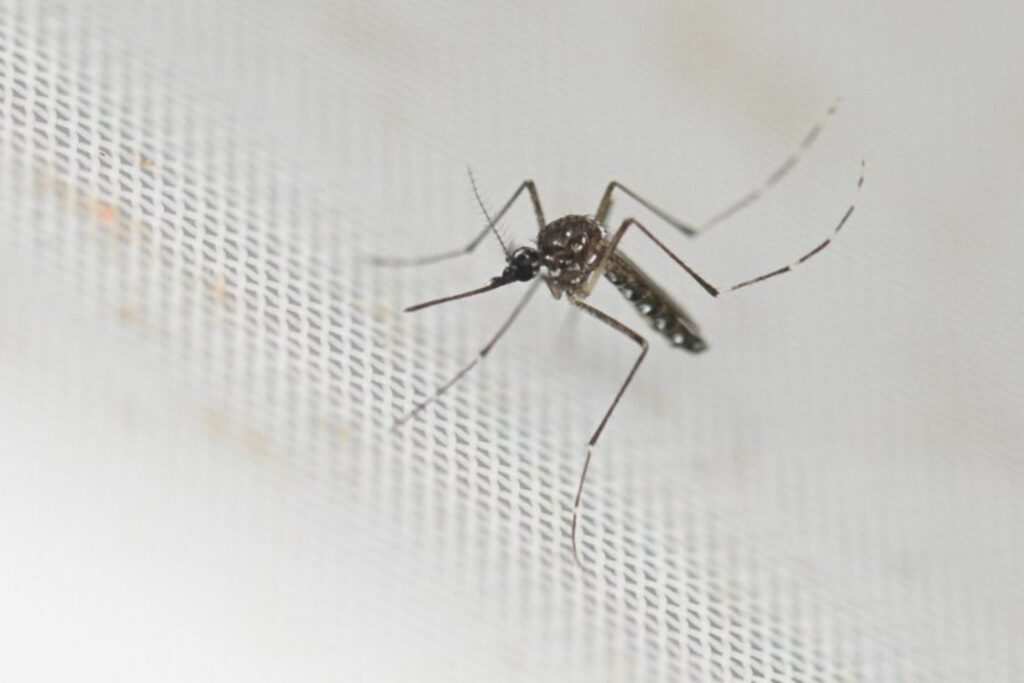
Cases of dengue and other mosquito-borne diseases are rising sharply across Europe due to climate change, which enables the spread of invasive mosquitoes, the EU health agency warns.
In 2023, there were 130 reported domestic dengue cases within the European Union, Iceland, Liechtenstein and Norway (EEA zone), up from from 71 in 2022.
This represents a “significant increase” when compared to the period between 2010 and 2021, which saw 73 cases, the European Centre for Disease Prevention and Control (ECDC) said in a statement.
Climate change helping the spread of invasive mosquitos
There has also been a surge in imported cases, which reached 1,572 in 2022 and climbed to 4,900 in 2023, the highest since European surveillance began in 2008.
“Europe is already seeing how climate change is creating more favourable conditions for invasive mosquitos to spread into previously unaffected areas and infect more people with diseases such as dengue," says ECDC Director Andrea Ammon."
"Increased international travel from dengue-endemic countries will also increase the risk of imported cases, and inevitably also the risk of local outbreaks,” she adds.
Fewer cases of West Nile virus, but more areas affected
Another source of concern is the West Nile virus: 713 domestic cases were reported across 123 regions in nine EU countries in 2023, resulting in 67 deaths. Although this is down from the 1,133 cases registered in 2022, the number of affected regions is at its highest since 2018.
The mosquito species that spreads the West Nile virus, Culex pipiens, is native to Europe and is found throughout the EU/EEA, according to ECDC.
The Aedes albopictus (tiger mosquito), known for transmitting dengue, chikungunya, and Zika viruses, “is spreading further north, east, and west in Europe, and now has self-sustaining populations in 13 EU/EEA countries,” the ECDC reports.
Coordinated control measures are the key
The Aedes aegypti species, responsible for spreading yellow fever, dengue, chikungunya, and Zika, has recently established itself in Cyprus and certain peripheral areas of the EU such as Madeira and the French overseas departments in the Caribbean.
Key to curbing these diseases are coordinated control measures such as mosquito nets, insecticides, and household insecticide sprays, says the ECDC.
Additional vital steps include removing stagnant water from balconies and gardens, and protecting oneself, adds the agency.
