

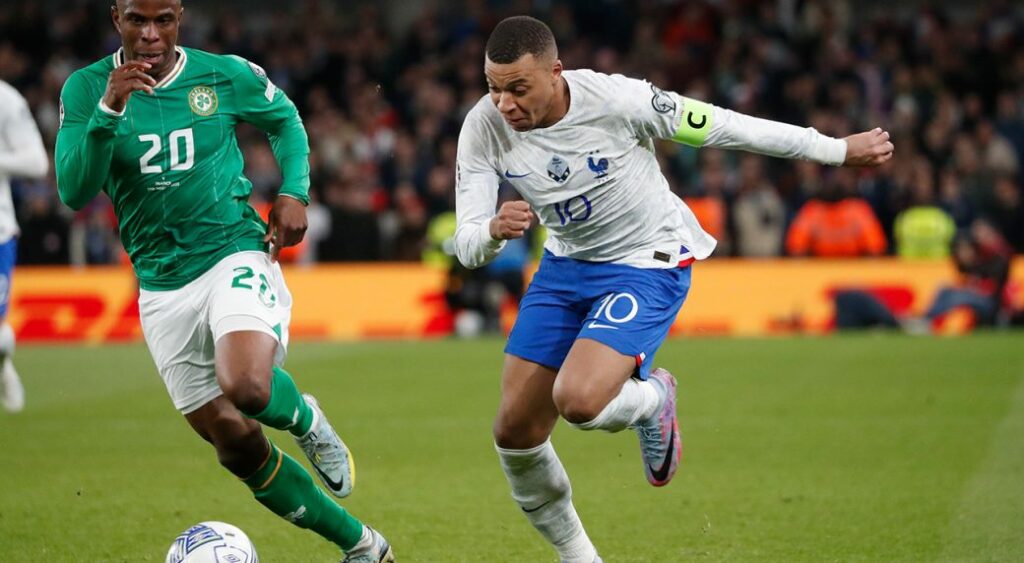
Euro 2024 is just around the corner and the excitement of a month of international football raises all sorts of questions and considerations. Could football finally be coming home? Are we about to see the handover between two golden generations in Belgium? Will we see success from a Dark Horse in this year's tournament?
The endless possibilities and speculation will be discussed to no end before one country ends up champions, above them all. But one thing is for sure as we head into international tournament territory, it’s time for the return of banal nationalism.
Banal nationalism in itself is not inherently a bad thing. It refers to the everyday representations of a nation, which build a sense of shared national identity. Citizens of a nation are allowed to feel proud of their country and those representing it, just as they can come together in harmony in the community that it creates.
Things like flag waving and face painting are innocent acts of national pride and these are things we see frequently. When does a country’s flag become less political and more popular? Prior to a match at an international sporting tournament until everything, inevitably, falls apart.
The unity it brings can also be a force for positive change in society. The “black, blanc, beur” label given to France following their World Cup 98 winning team created a new form of social harmony across the country. Whilst it was by no means an instigator of vast societal change, it did help to cover up a small amount of the cracks in a largely fractured society and unite citizens against the right wing nationalist Jean-Marie Le Pen.
Nationalism
Despite the relatively harmless nature of this banal nationalism, football has a habit of bringing with it elements of hot nationalism and this is where international football tournaments can get tricky. As a concept and an ideology, a tendency to look to the past and glorify what has gone before is at the heart of nationalism.
The “good old days” remind us of how things used to be and what society should be like in the eyes of some. Football fans share this nostalgia and are often unaware of their underlying nationalist tendencies. They can be both backwards and offensive but it is often hard to stop these romantic reflections.
Take my native England and its songbook for the stadiums for example. A quick scroll through the annals of YouTube helps you find more hot nationalist hits like “Two world wars and one World Cup” and cult classics like “10 German bombers”, both popular at games against Germany, “the old enemy”.
Despite nearly 80 years of peace between the countries and numerous calls to stop these problematic chants, it’s inevitable they’ll be sung in stadiums across Germany this summer, even if the teams don’t play each other.
The Foreign Office and Police have even issued official guidance for fans travelling to the tournament in Germany this summer to not use these chants, but I’d put strong money on the songs being broken out.
Whilst these chants may be “a bit of a laugh” or “harmless banter”, they can stir up some ugly emotions inside fans. The horrific scenes of racist discrimination against Marcus Rashford, Jadon Sancho and Bukayo Saka following England’s penalty shootout defeat to Italy in Euro 2020 were not banter, but distasteful and vitriolic levels of abuse at players from BAME backgrounds. Indeed, they were instead expressions of hot nationalism built up from underlying emotions and acceptance by some.
This year’s Euros also present a further, more serious face of hot nationalism following a flood of real nationalists into the halls of power in Brussels.
People expressed their dissatisfaction with the status quo at the polls, giving these players a piece of power at Europe’s highest echelons. Host country Germany witnessed far-right nationalists Alternative für Deutschland (AfD) become the second largest party from their country, with 15 seats going to the group even ID currently won’t touch.
Elsewhere bookies favourites France saw 30 Rassemblement National (RN) MEPs elected, not only becoming the biggest French party in the European Parliament, but forcing President Macron into calling a snap election. Clearly, real nationalism is on the rise inside the societies of some of Europe’s biggest players, so perhaps this summer is time for football fans to catch up and move their chant cycle on. It’s time for football fans to look forwards, not back.
With other countries in the tournament like Ukraine fighting to protect their national identity in the face of aggression and adversity, now is the time to unite and respect one another.
A bit of rivalry and fun between countries is part of the crooks of an international tournament. The Sun’s ‘vi spiser jer til morgenmad’ (we eat you for breakfast) advert published in Danish newspaper BT was a lighthearted quip at Danish bacon at Euro 2020, a joke done in good faith.
But perhaps this is the summer to instead let banal nationalism thrive in football. This year in the face of nationalist adversity, it’s time for more flag waving, less nationalist nonsense and good football.
