
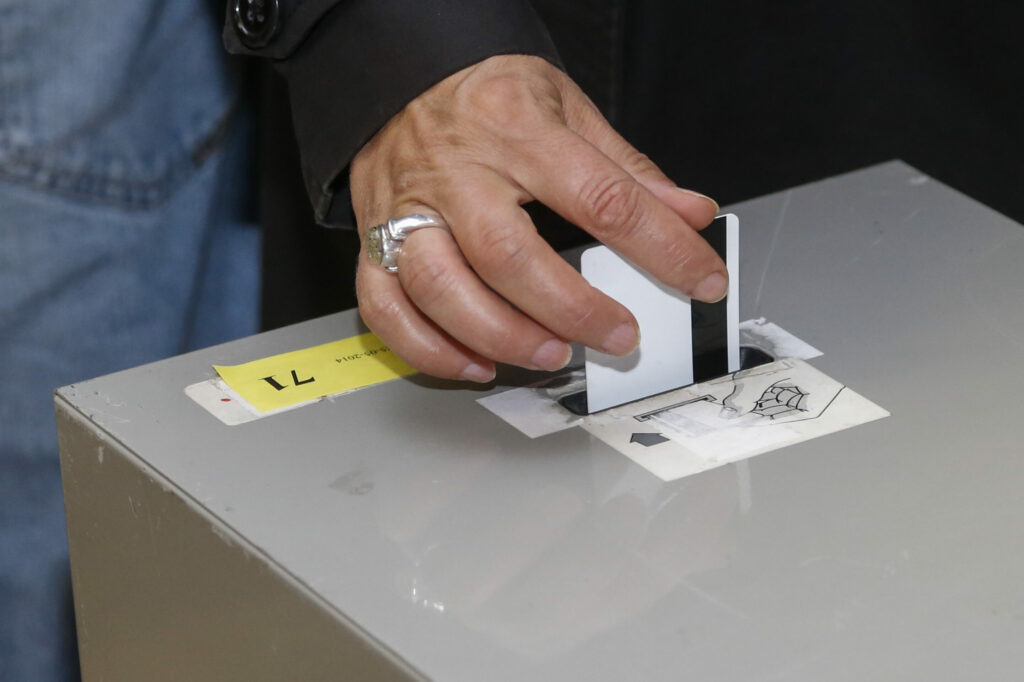
At least 2,171 voters in Belgium were given the wrong electronic ballot documents during the triple elections on 9 June – which might have had an impact on the final seat distribution, according to a report by the body overseeing the conduct of electronic voting.
Most Belgians were allowed to vote three times: for the federal, regional and European parliament. However, minors and non-Belgian EU citizens were only allowed to vote for the European Parliament. This is where things went repeatedly wrong: several minors said they were wrongly allowed to vote for the Federal and Regional Parliament.
Now, the 'Board of Experts' that supervises the proper conduct of the electronic elections across Belgium established that these were not just anecdotal cases, but that people were given the wrong electronic ballot documents on a larger scale: in many polling stations, the number of votes cast did not match the number of voters in each category.
"Only in a minority of stations were no errors found," the experts wrote in their report, which De Standaard was able to see. "The Board must decide that it cannot be ruled out that the problem [...] has had an impact on the final distribution of seats in one or more elections."
Mistakes and technical issues
The errors went both ways: in some polling stations, too many votes were cast for the federal and regional elections. In others, there were too few, meaning that some voters could wrongly cast a vote only for the European Parliament (despite being eligible to vote in all elections).
The fact that some voters received the wrong electronic ballot documents was due to the fact they had been given the wrong chip card. Sometimes by mistake, but sometimes also due to a technical issue, if the chip card was removed too early during the setup process, the new settings might not have been saved.
The experts checked all electoral districts in Brussels and German-speaking Belgium, and did a sample in five districts in Flanders. In the Brussels-Capital Region, voting for the Brussels Parliament (and for those voting on the Dutch-language lists, the Flemish Parliament) was fully electronic, while this was only partly the case in Flanders.
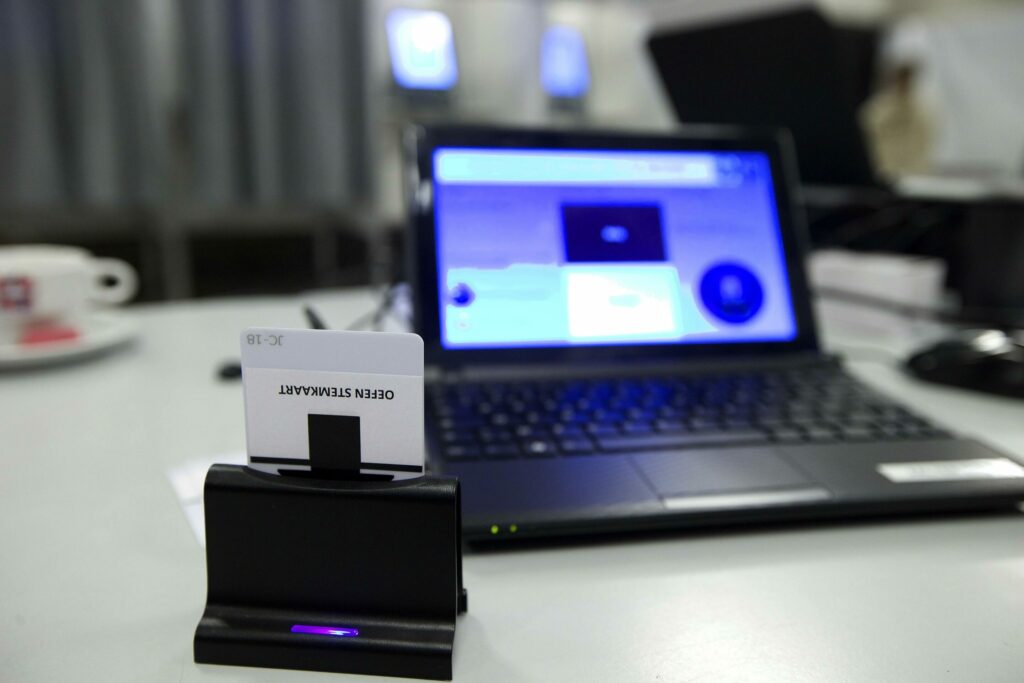
Electronic voting system. Credit: Belga/Nicolas Maeterlinck
They found that at least 2,171 voters in the surveyed districts received incorrect ballot documents. The bulk of the errors (nearly 1,700) were identified in Brussels – the equivalent of 0.3% of votes cast in the Capital Region. That seems little, but it may still have had an impact on the distribution of parliamentary seats.
In the Brussels electoral district of the Flemish Parliament, Open VLD was barely 13 votes short of stealing a seat from Vlaams Belang. There were also very close results in several other areas; in five districts, fewer than 500 votes would suffice to tip a seat to another party.
In the five districts that were checked in Flanders, 399 incorrect votes were found, or 0.2% of votes cast. If the same percentage applies in the other Flemish municipalities where electronic voting took place, this amounts to more than 5,000 incorrect votes in Flanders.
Repeated demand for a recount
In the meantime, the Interior Affairs Ministry emphasised that the elections were conducted correctly, but that "human errors" occurred "here and there" at polling stations because the procedures were not fully followed.
"Given the complexity of the elections, where voting was allowed three times (or even four for those voting on Dutch-language lists in Brussels), this is not entirely incomprehensible, but it remains a shame," said spokesperson Koen Schuyten.
Following the report, the Flemish liberal Open VLD party – which already asked for a recount in Brussels several days ago – repeated its demand to count the votes in Brussels again.
The conclusion of the expert committee report is clear, said Open VLD leader Tom Ongena. "Mistakes have happened and they may have an impact on the distribution of seats. That is why we are asking for thorough research and certainly a recount of the votes in Brussels, where the result was very close. This cannot simply be ignored."
