

Brussels has given its roadmap for public space design in the region a thorough and much-needed update. The 657-page tool will make it easier for future designers to navigate their way through the tangle of Brussels regulations and ensure they create future-proof spaces.
From a fully-fledged pedestrian zone in the city centre to a greener Barrière de Saint-Gilles and making major roads more cyclist- and pedestrian-friendly, Brussels is taking major steps to make the region more liveable. Where the Belgian capital was once considered Europe's concrete jungle, many areas are now almost unrecognisable compared to several years ago.
To concretise this ideology of future-proofing Brussels, its State Secretary for Urban Planning Ans Persoons presented the new so-called 'Public Space Roadmap', replacing and updating the first edition published almost 30 years ago. The guide serves as a tool and guide when designing and redesigning public spaces in Brussels, she said.

Credit: Bernard Boccara/ Brussel Leefmilieu
"The inhabitants of Brussels need more squares to meet, safer school environments, wider pavements, trees everywhere, better rainwater management, inclusive urban furniture and smart solutions for traffic and parking," said Persoons. "Thanks to the Roadmap, all projects, big and small, will improve."
It will also help ensure that permit applications run more smoothly and create clarity in the tangle of different existing recommendations and documents prepared independently by different administrations.
'Human-sized city'
Many stakeholders – Brussels Master Builder, Brussels Mobility, Brussels Environment, the fire brigade, and public transport operator STIB, among others – worked for two years to develop the roadmap, which now combines recommendations from the various Brussels administrations into one central handbook for municipalities, designers and developers.
It consists of the chapters 'Ambitions', 'Filters', 'Territorial Vision', 'Design Strategies', 'Toolbox' and 'Existing Typologies' – each explaining how contemporary expectations of a human-sized city can be taken into account in future designs for public space. For example, the 'Ambition' chapter looks at themes such as environment, materiality, identity, mobility and use, while 'Design Strategies' is devoted to concrete design proposals and recommendations.
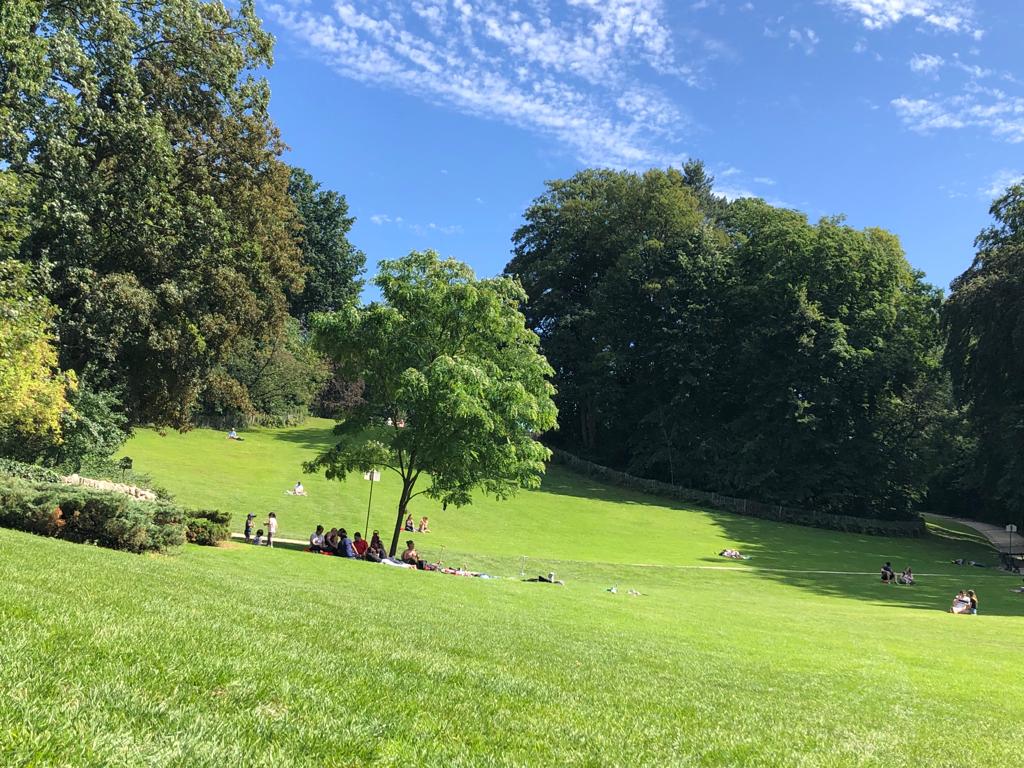
Brussels parc de Wolvendael. The region is looking to create more open, green spaces. Credit: Ugo Realfonzo
Persoons stressed that the roadmap should be used to guide a design strategy and does not impose any obligations. "This is because each project should be tailored to the local, specific situation and adjusted according to the needs on the ground."
In many ways, the roadmap is a lot more progressive than existing regulations, Persoons said. "This is necessary because the public space we design today has to meet the challenges of the future."
