
On 3 August, a SpaceX Falcon 9 rocket is scheduled to be launched towards the International Space Station (ISS), carrying an experiment linking the Brussels Free University (ULB), the University of Namur (UNamur) and the European Space Agency (ESA).
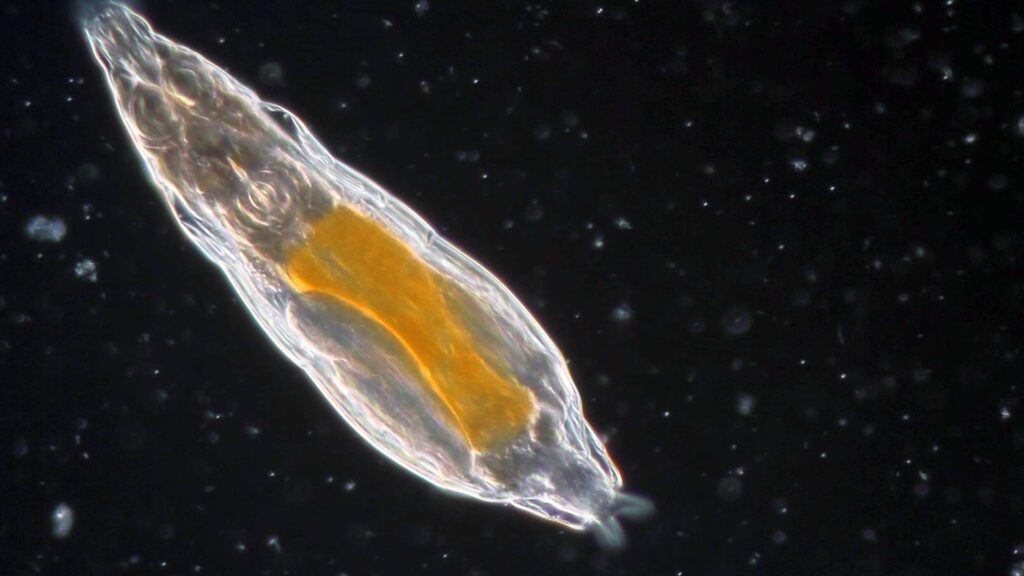
The experiment involves tiny organisms called bdelloid rotifers. These minute animals, some of the smallest on Earth, will have their behaviour in microgravity examined.
First discovered 300 years ago, bdelloid rotifers have the remarkable ability to completely dry out and come back to life after rehydration. Additionally, these multicellular organisms, made up of a thousand cells, can withstand freezing temperatures. Some rotifers found in 24,000-year-old ice cores were able to reproduce after being thawed out.
The new study aims to provide the first images of rehydrated rotifers in the unique environment of the ISS after exposure to high levels of radiation. The scientists wish to understand how these organisms rehydrate, move, and survive while repairing their DNA in space. They also hope to see if the rotifers can reproduce under those conditions.
A preliminary experiment carried out in 2019 investigated the impact of an ISS trip on the gene expression of Adineta vaga, a species of bdelloid rotifer. The results, to be published soon, indicate alterations in key genes involved in DNA repair and resistance to ionising radiation.
A subsequent experiment, launched in 2020, focused on the rotifers’ abilities to rehydrate and repair their DNA within the ISS environment. Ongoing analyses confirm these organisms’ unique capacity to repair their DNA in this distinctive environment.
Information gathered by the upcoming study will provide valuable insights for future manned space missions to the Moon and Mars.
