
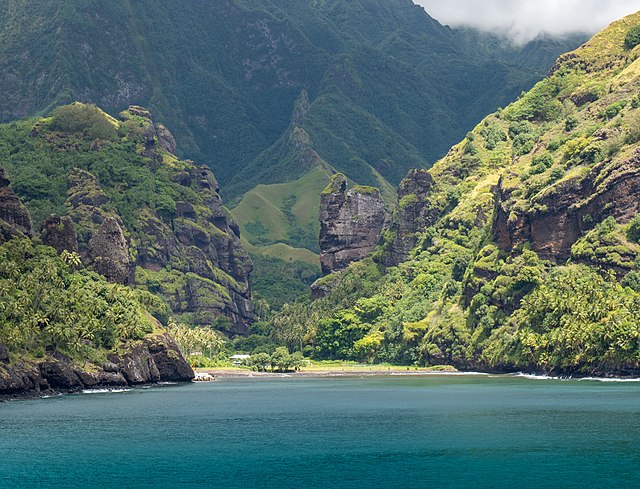
The Marquesas Islands, one of the five archipelagos of French Polynesia, have been added to the UN Educational, Scientific and Cultural Organisation (UNESCO)'s World Heritage List.
The UN organisation announced the islands' inclusion on social media platform X.
French president Emmanuel Macron responded to the news with pride, calling the islands a universal treasure of biodiversity and culture that must be preserved at all costs.
Audrey Azoulay, Director-General of UNESCO, had previously delighted in the inclusion, acknowledging it as an acknowledgment of the islands' natural landscapes of unbelievable beauty combined with a remarkable archaeological and cultural heritage. She said these extraordinary sites would be better protected and valued because of their recognition.
UNESCO deems the islands a “mixed property,” with its universal value stemming from both its cultural and natural riches.
Describing the Marquesas on its website, the UN organisation states that they bear an exceptional testimony to their "territorial occupation by a human civilisation that arrived by sea around the year 1000 CE and developed on these isolated islands between the 10th and the 19th centuries."
They are also "a hotspot of biodiversity that combines irreplaceable and exceptionally well conserved marine and terrestrial ecosystems," UNESCO says. "Marked by sharp ridges, impressive peaks and cliffs rising abruptly above the ocean, the landscapes of the archipelago are unparalleled in these tropical latitudes."
The archipelago is also a major centre of endemism, home to rare and diverse flora, a diversity of emblematic marine species, and one of the most diverse seabird assemblages in the South Pacific, according to the UN organisation.
Virtually free from human exploitation, Marquesan waters are among the world’s last marine wilderness areas, it notes, adding that the archipelago also includes archaeological sites ranging from monumental dry-stone structures to lithic sculptures and engravings.
