
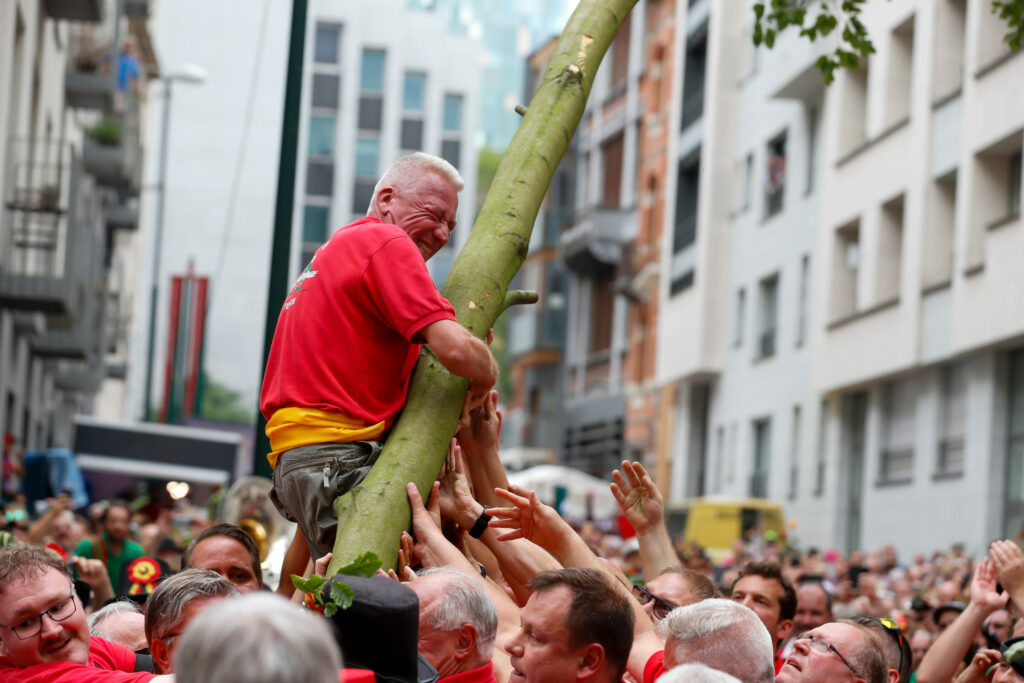
Brussels is full of folklore traditions that continue thanks to the dedication of passionate volunteers. The planting of the Meyboom takes place on 9 August every year and is a calendar highlight.
Anyone walking through the city centre of Brussels may be surprised to see groups of people in traditional clothing, puppets and even a large tree. These are all key elements of the planting of the Meyboom (Tree of Joy). The annual local tradition has been recognised as an intangible heritage by Unesco.
According to the present-day Brotherhood of the Companions of Saint Laurentius, the tradition dates back to 1213, the year of the "Brussels victory over Leuven". People of Leuven turned up in droves one afternoon following a quarrel with the people of Brussels over beer tax and unexpectedly raided the Barn "Het Cattenhuys", where a wedding was being celebrated.
The Companions of Saint Laurentius came to the aid of the Brusseleers and were given the privilege of planting a Meyboom every year on 9 August by the Duke of Brabant as a reward for this feat of bravery. If traced back to this date, this year would mark the 811th planting.
However, it was not until 1308 that the event was given definite shape and it was decided that the planting would take place on the eve of the feast of Saint Laurentius, the archer saint, on 9 August. As a result, this celebration will take place for the 716th time this year.
What happens around the planting?
The event is preceded by the so-called "academic day", which takes place one week before the tree planting. It involves a colourful parade including giant puppets and brass bands through the city centre, the presentation of medals of honour, an hommage to Manneken Pis and a "drink of friendship" on the Place Rouppe, considered a dress rehearsal of sorts before the real event on 9 August.
On Thursday 1 August, around 20 Bûûmdroegers (old Flemish dialect for tree bearers) headed to the Bois de La Cambre to choose the tree that is being planted on Friday. This year, they set their sights on a larger beech than in previous years, weighing around 700 kilograms.
The Bûûmdroegers again travelled to Bois de la Cambre on Friday morning where they cut down the chosen tree at 06:00, after which they criss-crossed the communes of Etterbeek, Schaerbeek and Saint-Josse-ten-Noode.
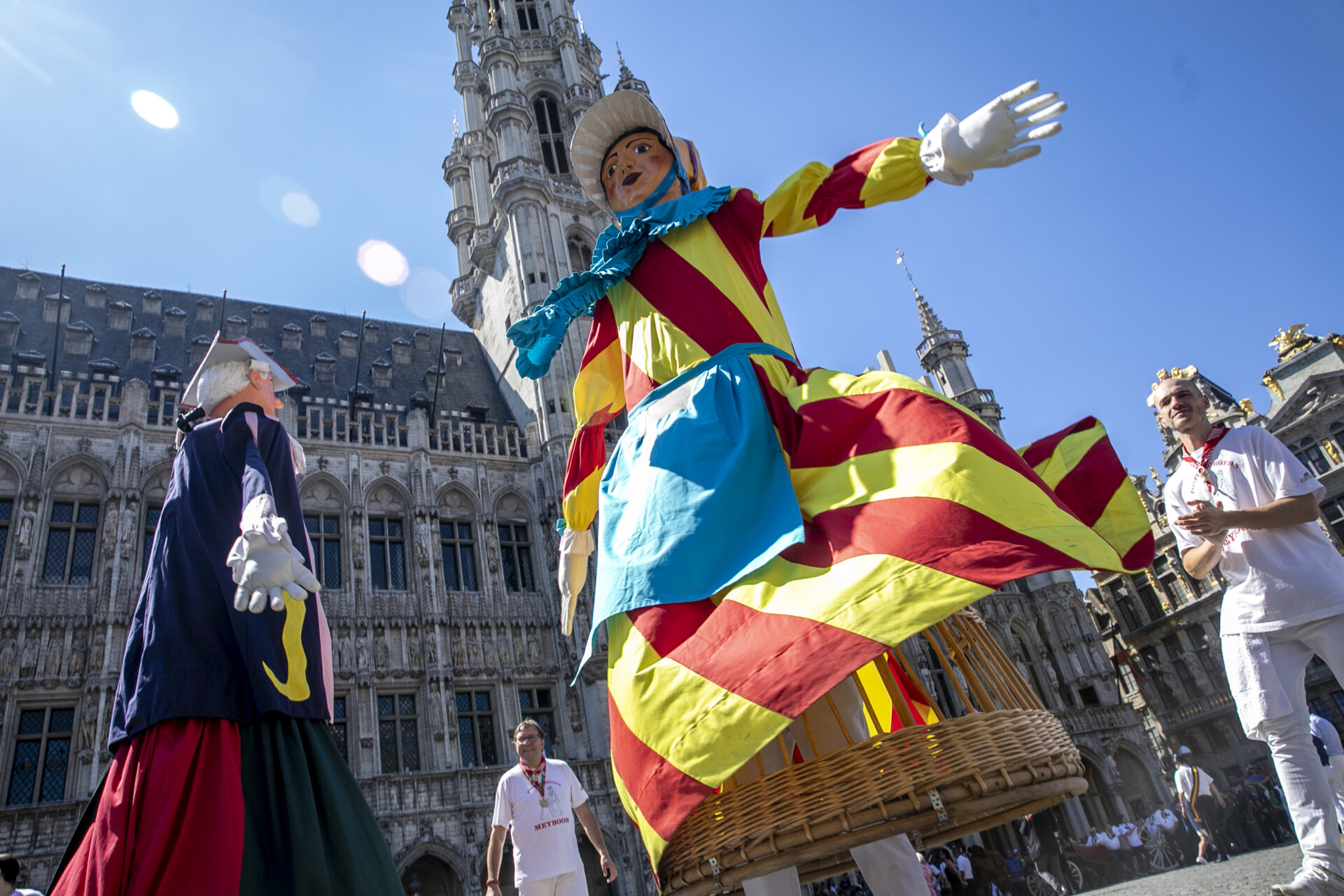
The Meyboom festival. Credit: Belga / Hatim Kaghat.
The tree is then brought to the city centre, where the procession – this year accompanied by the Giants of Namur – depart at 12:45 from the corner of Rue des Sables and Rue du Marais (where the tree will be planted later), heading to Rue Fossé aux Loups, Place de la Monnaie, Boulevard Anspach and Rue des Pierres before arriving at Grand Place, where the tree will be presented to the city authorities around 14:10.
The parade will then return to the planting site to the cheers of the crowd, passing via Rue de la Colline, Rue Marché aux Herbes, Rue de la Fourche, Rue de l'Écuyer, Rue Montagne aux Herbes Potagères, before arriving again on the corner of Rue des Sables and Rue du Marais, where legend has it, the people of Brussels defeated the people of Leuven.
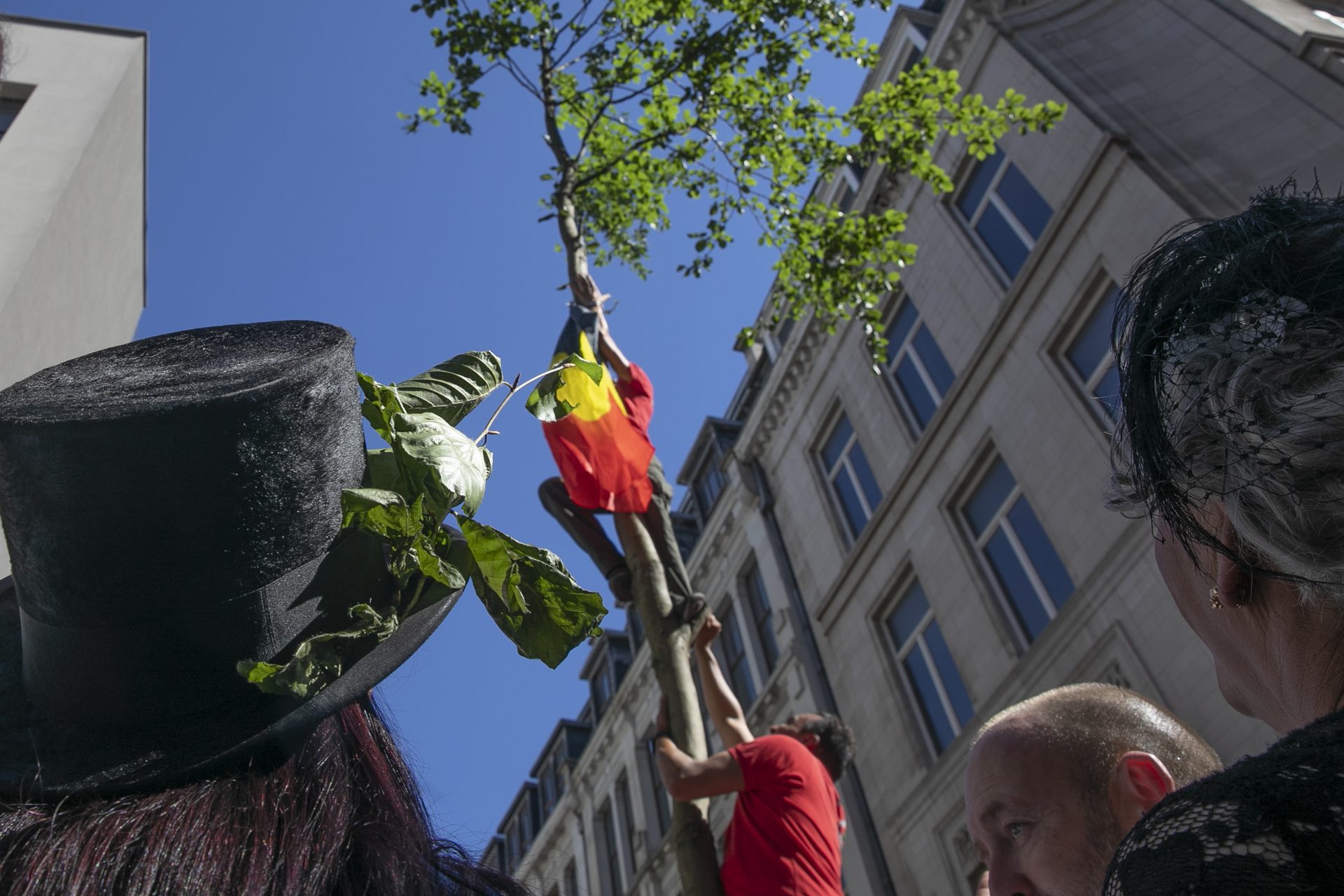
The erection of the Meyboom is recognised as an expression of intangible heritage by Unesco. Credit: Belga/ Hatim Kaghat
The Bûûmdroegers have to plant the tree before 17:00, a deadline still adhered to, taking into account the "opening hours" of the Brussels city walls in the Middle Ages. As they closed after this hour, the tree could no longer be planted after this hour.
If they fail to get the tree in the ground before this time, the victory goes to the people of Leuven. Every year, lurking Leuven men do their best to block the procession somewhere along the route. But if the people of Brussels succeed, celebrations last until the early hours of the following morning.
