
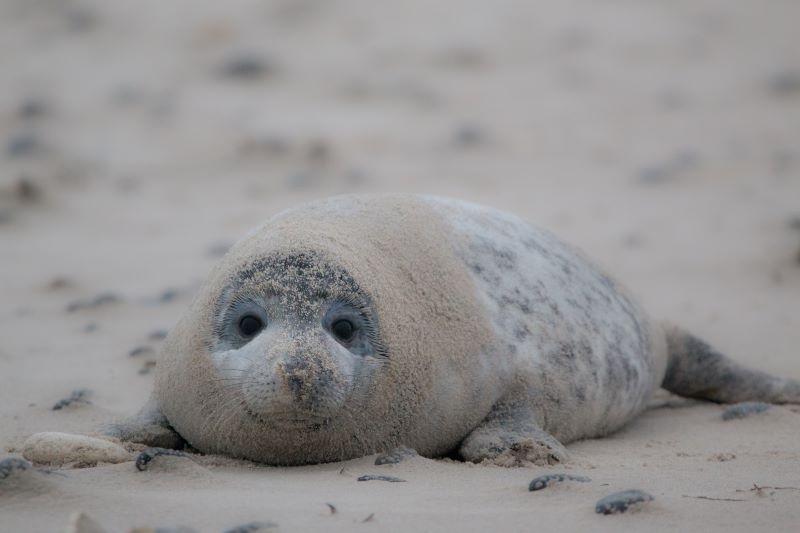
The European Commission has evaluated the current EU seal regime which forbids the import of seal products unless they are derived from traditional hunting by indigenous communities, mainly in Canada and Greenland, or imported for personal use by travellers or their families.
In parallel, the Commission launched a so-called 'fitness check' with a public call for evidence ending today. According to the Commission, this initiative will assess if the rules in place remain fit for purpose, focusing on their socio-economic impact and their impact on seal populations.
Seals are hunted in parts of the world for commercial, subsistence and cultural reasons. In 1983, following people's concerns about animal welfare, the EU banned the import of certain seal pup skins. In 2009, a general ban on placing seal products on the EU market was introduced (the seals regulation on trade in seal products).
In a report from October 2023 on the implementation of the seals regulation the Commission concluded that it seems to work well in preventing the sale of seal products not covered by traditional hunting. However, some EU countries around the Baltic Sea reported increasing seal populations causing damage to fish stocks and fishing gear.
Public outrage
These countries consider that the regulation has a negative socio-economic impact on their territory. In particular, as the exception was removed to allow the sale of seal products resulting from culls – conducted for the sole purpose of sustainably managing marine resources. This exception was removed in 2015 to reflect the outcome of a dispute settlement ruling by the World Trade Organization.
Animal welfare NGO, Eurogroup for Animals, described the ruling as a landmark decision which recognised the public outrage over the inhumane killing of seals.
Since the EU legislation came into force, millions of seals have been spared a brutal and cruel death. But killing methods remain inhumane, involving the use of special hunting clubs, and the shooting of seals from a distance resulting in severe injuries.
A Commission spokesperson told The Brussels Times that the fitness check is a follow-up of the evaluation of the seals trade regulation and that the results will be taken into account in the final assessment. The placing of seals products on the EU market is a distinct issue which differs from the issue of the protection of seals, he explained.
Seals in the EU are protected by the Habitats Directive, depending on the conservation status of different species such as grey seals, ringed seals, and harbour seals. In any case, the Member States are obliged to achieve a favourable status. Under EU legislation, all Member States are also required to monitor and report on the status of seals.
However, the protection of seals might also have to be reconciled with socio-economic considerations, he added, referring to some Member States that claim that the seals trade regulation affects these considerations.
In the EU, the protection of seals continues to be supported by public opinion. In a recent survey conducted in 13 Member States (Belgium, France, Germany, Italy, Lithuania, Netherlands, Poland, Romania, Spain, Sweden, Finland, Denmark and Estonia), a majority of the respondents in all countries said they support the EU ban on the trade of seal products derived from commercial hunting.
"This survey clearly shows that the EU Seal Regime remains crucial to protect seals and address the concerns of Europeans," commented Léa Badoz, Wildlife Programme Officer at Eurogroup for Animals. “As demanded by its citizens, the EU should uphold efforts to protect the welfare of these animals on the continent and beyond, maintaining its leadership and driving positive change.”
She added that there is no scientific consensus on the impact of seals on fisheries and that the impact, in any case, is minor compared to other threats such as overfishing, climate change and eutrophication (release of waste water into the environment). Furthermore, Badoz said, there are non-lethal methods available to mitigate the impact of seals on fisheries such as acoustic deterrents or reinforced fences.
M. Apelblat
The Brussels Times
