
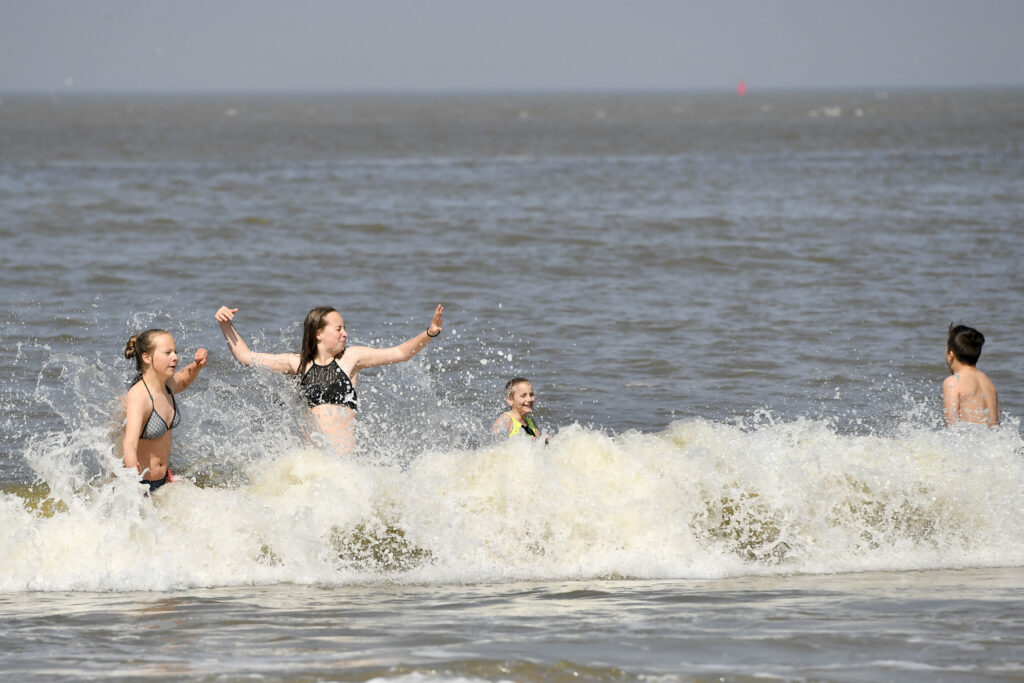
Children and teenagers in Belgium are increasingly lacking swimming skills. This can be especially dangerous in open water, where the current is stronger. This summer, one lifeguard at the Flemish coast has been teaching young people from Brussels how to stay safe while swimming.
Children and teenagers in Belgium are increasingly lacking swimming skills due to a lack of practice, even when it comes to being in a swimming pool. This makes them particularly vulnerable when they head to open waters. Because of the lack of open-air bathing spots in cities, especially in Brussels, many urban residents head to the sea or recreational areas to cool down on hotter days, without considering the potential risks for younger people.
Earlier this week, a 16-year-old boy died after drowning in the sea near Ostend. Meanwhile, a 19-year-old boy is currently in a coma after swimming in the Blaarmeersen, a lake in Ghent.
After a Brussels teenager drowned in the sea in 2021, Noah Fredericq – who has been a coastal lifeguard for six years – founded the organisation Swim-Safe because these cases are not uncommon. "Children love to swim outdoors, but swimming in the sea is a completely different environment from swimming in a pool," the organisation noted.
'Surviving' in water
While Fredericq believes that the lack of swimming skills is part of the problem, the lack of knowledge about how to "survive" in open water also contributes to fatal incidents. The lessons offered by the organisation therefore also address safety in open water, including assessing the risks, how to swim with currents and waves, how to stay afloat and what to do in an emergency. First aid and CPR are also taught.
Since May this year, the organisation has been active in Brussels. One approach is making Brussels a "safe swim zone" by educating schools on what to teach their pupils when it comes to swimming. The organisation also organises Water-Safety Days at FLOW, Brussels' only open-air swimming pool. Similar private lessons for schools are also organised there.
The project is supported by the Flemish Government and will receive funding for the next three years, Bruzz reported.
