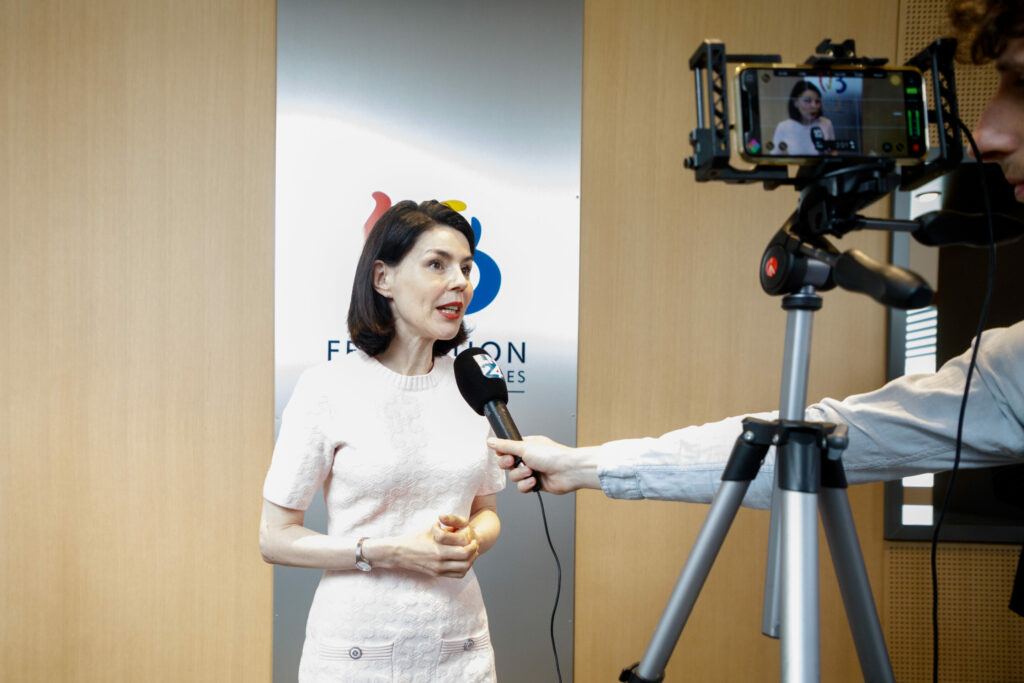
The free school materials programme in place in Belgium's French-speaking education system will not be changed, the relevant education minister Valérie Glatigny confirmed on Monday 26 August.
The French Community Government (FWB) currently provides funds to schools for free materials up to the third year of primary school. Glatigny, the new education minister in the FWB, gave reassurances as pupils in the francophone system returned to classrooms on Monday.
Her comments came after the new MR-Engagés government announced in July that it would "evaluate" the programme and "adapt" it if necessary – a statement that triggered concerns about the government's intention to maintain the scheme.
When asked about the programme by public broadcaster RTBF on Monday morning, Glatigny said that she had no intention of scrapping it. The programme allows pupils up to the third year of primary school to receive basic school supplies (pencils, markers, folders, etc.) free of charge. “The school materials provision will not be reconsidered,” she said on radio.
The government does still plan to assess the scheme's impact and how it is implemented. Some schools do not allow children to bring the materials home, forcing parents to buy additional supplies, Glatigny pointed out. Other schools have also reported instances of wastage.
The free school materials programme has been in force since 2019. It costs the French Community Government about €20 million a year. The Ligue des familles – a civil organisation that campaigns for educational equality– says that it saves parents around €100 at the start of the school year.
Related News
- New school year: Cheaper public transport in Brussels for children and students
- Free school materials: Calls for education minister to continue subsidy
- 'Families are struggling': Almost half of parents cannot afford school trip costs
On Wednesday 21 August, the Ligue petitioned the government to extend the subsidy to fourth year primary pupils from the next academic year. It also called for the new government to cap the cost of school trips. Four in ten families struggle to afford trips, a survey recently conducted by the organisation showed.
When asked about a potential cap on these costs, Minister Glatigny exercised caution."I wouldn't want a school to no longer be able to carry out certain educational projects because there is a price limit," she said, citing the case of a school that has been preparing a class trip to Benin for its pupils for several years.
“I will be mindful of the potential adverse effects (of a potential cap on the cost of school trip),” the minister concluded.
