
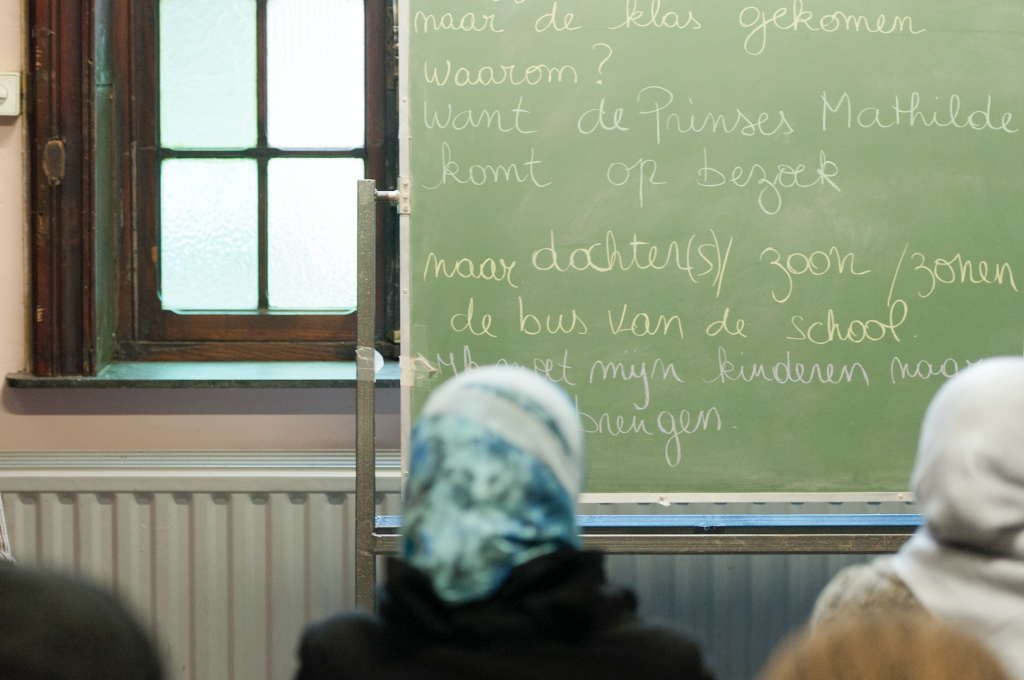
A rising number of non-native Dutch speakers living in Flanders are showing interest in learning the language. Mastering the language can help connect more people in the region, the Flemish Integration Agency said.
Across Flanders, figures show that many non-Dutch-speakers are learning the language. Last year, almost 78,000 non-native speakers registered to learn Dutch as a second language, the Flemish Integration Agency (Agentschap Integratie en Inburgering) announced.
"There were never so many before," said Ann Van Damme, the agency's director of 'Living Together' and 'Languages'. However, the agency stressed that there are negative assumptions about non-native speakers learning Dutch. This is because people arriving in Belgium from a non-EU country essentially have to learn the language as part of the mandatory civic integration programme.
The course and taking the obligatory test to pass the programme is expensive, while failing to undergo the programme triggers an infringement procedure, which can come with sanctions such as fines or having social benefits cut.
The negotiations for a new Flemish Government cast a new shadow over the prospect of learning Dutch, as under newly planned rules, foreign parents who refuse to learn Dutch will lose their school bonus in Flanders.
Opening doors
The Integration Agency wants to paint learning Dutch in a more positive light, including by launching a campaign to improve communication about Dutch language learners and emphasise the importance of Dutch as a connecting language in Flemish society during the Dutch language week (until 5 October).
Local governments and organisations will be offered support to communicate effectively about this topic, including through stories that positively highlight the motivation of language learners.
"By communicating positively and nuanced about language learners and language acquisition, you motivate non-native speakers to learn, practice and use Dutch," Van Damme said.
"Dutch speakers can also do their bit. They can offer language learners learning and practice opportunities." She added that Dutch as a common language "connects residents, promotes understanding and creates meaningful interactions".
"By learning and practising together, we strengthen society and open doors to an inclusive future."
