
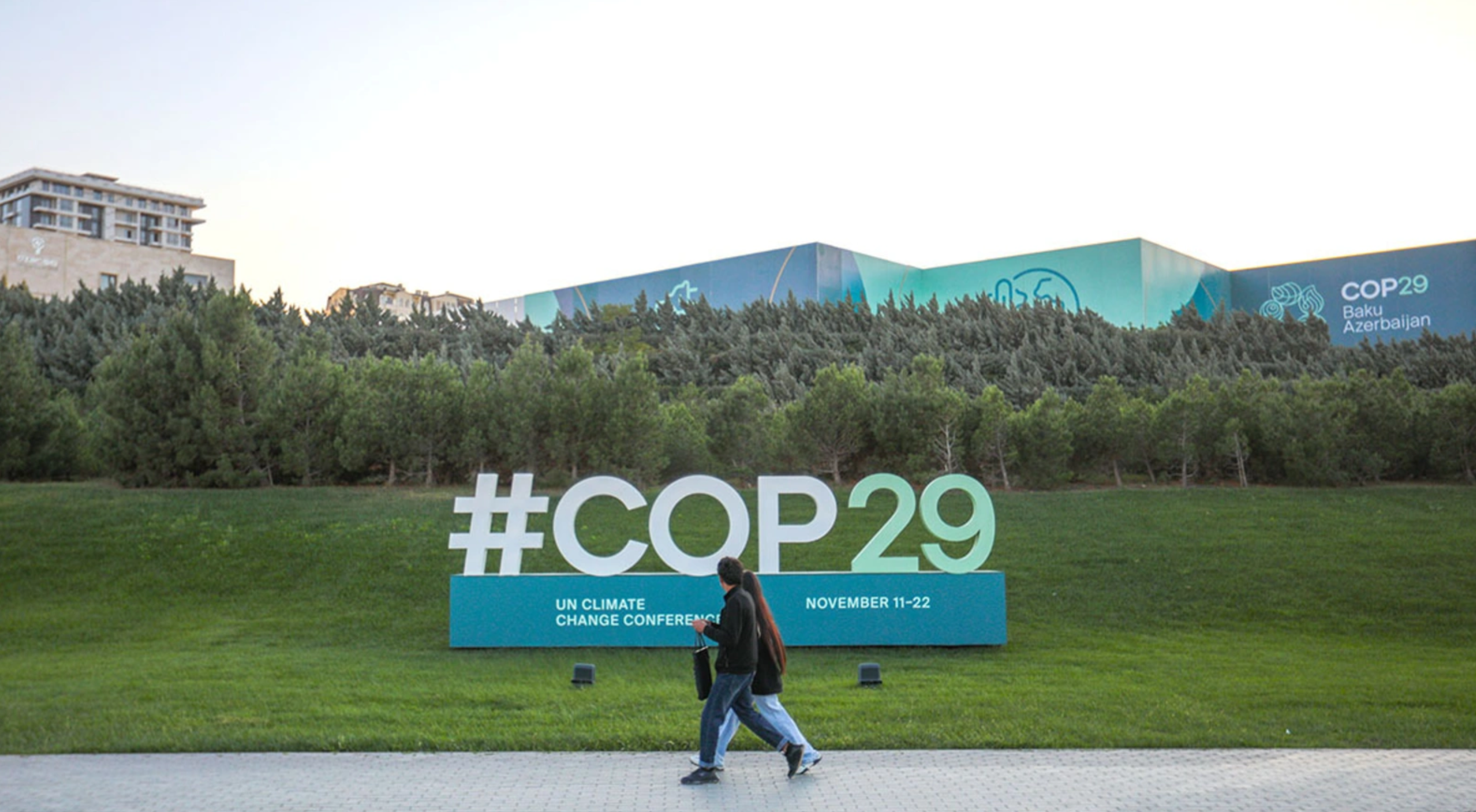
The days are getting shorter, the breeze cooler and this year’s Conference of the Parties looms in the near distance. Before we know it’ll be November, and the rapid arrival of COP29 in Baku, Azerbaijan is a testimony to how far the world has come in recognizing the dire urgency caused by climate change, as well as a reminder of the work we have to improve – and rapidly.
Climate action would not be possible without a strict guideline on transparency to keep the world’s progress accountable. COP29 is an important opportunity to put these guidelines into practice, and enable clear action on every level of the climate agenda.
Transparency in the Context of Climate Change
The UNFCCC defines transparency as follows: To address the climate emergency, “we need to have reliable climate data and information. The reporting, review and consideration of this climate data and information is referred to as ‘transparency.’”
“Transparency is central to mutual trust within the UNFCCC process,” COP29 President-Designate and Minister of Ecology and Natural Resources of the Republic of Azerbaijan H.E. Mukhtar Babayev writes in his Letter to Parties and Constituencies.
The aforementioned climate data includes reports on greenhouse gas emissions, the effect of policies, financial needs and advancements toward targets, and more. In other words, transparency measures climate data in order to keep all stakeholders – from countries to multinational corporations to private enterprises – accountable to predetermined goals.
Transparency measures also allow for the assessment of progress as well as enabling trust among parties and helping administrations make fact-based decisions. Trust, however, is a work-in-progress.
“I don’t think there is a lot of trust in the system right now because the $100 billion didn’t come,” Marcos Neto, Assistant Secretary General, Assistant Administrator and Director, Bureau for Policy and Programme Support of the United Nations Development Programme (UNDP), tells The Brussels Times. He’s referring to the yearly finance goal that developed countries pledged to support developing countries’ climate aims back in 2009. The $100 billion per year was supposed to be reached by 2020, but that was only achieved two years later.
Transparency serves to rebuild this trust and is a central element of the Paris Agreement, which created various mechanisms to incorporate clarity into the world’s climate action. These mechanisms have deadlines, some of which are due this very year and bring further urgency to COP29 in Azerbaijan.
Enhanced Transparency Framework
In 1997, 192 parties signed the Kyoto Protocol: a treaty that set binding emission reduction targets for 37 countries, as well as a monitoring, review and verification (MVR) system to periodically report on their individual progress. The new Enhanced Transparency Framework (ETF) was initialized by the Paris Agreement in 2016 to gradually replace the MRV system, with the expectation that the ETF will begin to operate fully in 2024.
In his Letter to Parties and Constituencies, H.E. Mukhtar Babayev writes that, the COP29 Presidency launched a flagship initiative, the Baku Global Climate Transparency Platform (BTP) during the High-Level Dialogue on Climate Transparency held on 3 September 2024 in Baku. The main objective of the BTP is to enhance confidence and support Parties in preparing and submitting their BTRs, and achieve full implementation of the ETF, in particular, supporting the capacity-building efforts of developing country Parties along the way. The BTP will also collaborate with existing transparency platforms and initiatives, by mobilizing resources for the implementation of the ETF and promoting cooperation and knowledge exchange on the full spectrum of the ETF to advance the transparency agenda during COP29 and beyond.
“The COP29 Presidency has been actively working with the UNFCCC to ensure that the Enhanced Transparency Framework (ETF) reporting tools are ready on time, and to build confidence amongst the parties in the process,” he explains.
The Biennial Transparency Reports (BTRs) are a crucial element of the ETF. Within the Enhanced Transparency Framework, Parties are required to submit them every two years. Per the United Nations, the reports include: “information on national inventory reports (NIR), progress towards NDCs, policies and measures, climate change impacts and adaptation, levels of financial, technology development and transfer and capacity-building support, capacity-building needs and areas of improvement.”
The ETF also includes a Technical Expert Review process to solidify the aim of trust building and to highlight areas where improvement is needed.
Global Stocktake
As the name suggests, the Global Stocktake is a system that takes stock of the world’s progress on climate action since the Paris Agreement. It’s a two-year process scheduled to be put into practice every half-decade. Unlike the Enhanced Transparency Framework, which keeps tabs on the progress of individual countries, the Global Stocktake assesses the world’s collective progress – including countries that are not signatories to the Paris Agreement – with information including the BTRs, and identifies potential gaps in which countries should mobilize more aggressive climate action.
Tim Reutemann, COO of climate fintech company ClimateCains, tells The Brussels Times, summarizes it nicely: “One of the main functions of the UNCCC is that countries know about each other’s emissions. The global stocktake is basically everyone telling everyone how much greenhouse gasses they emitted, how much progress they made on the promises they gave.”
The first Global Stocktake was implemented at COP26 in 2021 and concluded at COP28 in 2023, where the reports provided the most extensive review of climate action to date, per the United Nations. The reports were dire, warning that the world is off-track from its goal of maintaining global temperatures beneath 1.5 degrees above pre-industrial levels.
One of the most glaring details was a lack of reduction in greenhouse gas emissions and a confirmation of developed countries' role in historical and current greenhouse gas emissions. Additionally, it addressed the damage caused by deforestation and the need for nature conservation to keep us on track with our climate goals; called for the transportation sector to decarbonize and highlighted the importance of the reduction of methane emissions. The report also provided actionable recommendations, however, including the role that finance and technology should have in meeting our climate goals.
Transparency to rebuild trust
The world finds itself at a critical point in the climate emergency. If we continue as we have been, we will almost certainly overshoot not just the 1.5-degree target, but the 2-degree target as well. COP29 provides the opportunity to course-correct, and transparency can enable effective global climate action by monitoring progress, empowering nations to make fact-based decisions and building trust through accountability.
