
The European Court of Auditors (ECA) plans to conduct up to 70 audit assignments in its new work programme published on Tuesday.
The programme contains a list of 65 audit tasks for 2025 and 2026 and four reviews, divided into four strategic priority areas; The EU’s economic competitiveness, resilience to threats to the Union’s security, and respect for the European values of freedom, democracy and rule of law. Climate change, the environment, and natural resources, and finally on the EU's fiscal policies and public finances.
A new European Parliament and a new European Commission bring revised – and sometimes also redefined – ambitions, according to ECA. There is a renewed focus on the strategic priorities of EU leadership and on actions that will shape the future direction of the EU and its 450 million citizens. The work programme has been drafted with this in mind.
“With increased EU spending and emerging priorities come greater budgetary risks, as well as challenges in maintaining sound financial management and the effectiveness of public investment”, said ECA President Tony Murphy. “Now more than ever, our role as the EU’s independent watchdog is crucial to ensure optimal use of taxpayers’ money.”
Tony Murphy, an Irish national, was elected by the ECA Members in September 2022 to serve as the institution’s 12th President for the period from 1 October 2022 to 30 September 2025.
With a focus on issues that are key for the competitiveness of the EU’s economy, ECA will audit among others the European microchip industry, different aspects of EU’s post-COVID recovery fund (RRF), the sustainability of pension systems, and the approach to digital payments. Work will concentrate on RRF funding in support of labour markets and the business environment.
On the environment and energy, the work programme includes subjects such as the modernisation of EU electricity grids, managing forest wildfire prevention and recovery, the supply of critical raw materials for the energy transition, the EU’s protected marine areas, and the EU support for the green agenda and sustainable connectivity in the Western Balkans countries.
The ECA will also continue to examine the EU’s external action, with topics ranging from military mobility and nuclear safety cooperation to fighting hunger in third countries and funding for NGOs. Cooperation between EU bodies fighting fraud will also be audited.
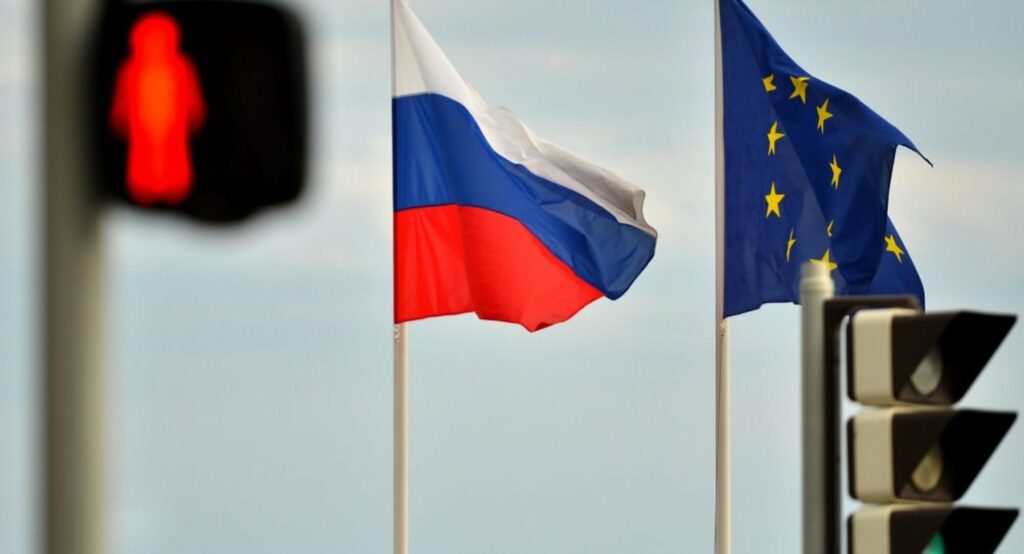
In the area of fiscal policies and EU public finances, the auditors will assess financial and trade sanctions against Russia, the European Fund for Strategic Investments (EFSI), measures to combat tobacco trafficking, and more. On health-related topics, the audit of the ‘Pharma strategy’ to ensure the availability of medicines is worthy of note, as is the assessment of the EU’s ‘Beating Cancer Plan’.
Did ECA consult external stakeholders during the planning process? “For building our work programme, we asked the Committees of the European Parliament and the permanent representatives of the Member States to provide us with the audit suggestions,” an ECA spokesperson told The Brussels times.
“We conducted a comprehensive assessment of each proposed audit task before including it in the work programme. Scope, audit questions and data collection methods are part of the assessment.”
Which EU institutions and Directorates-General of the European Commission will be audited? “Our main auditee is the European Commission. Our new audits cover a wide range of EU action and therefore most of the DGs will be involved. More detailed specification is made in the task plans of each audit, that are approved by the Court.”
Do you leave space for unplanned audits? “We do have flexibility in amending our work programme at any time of the year. These amendments usually involve modifying the type of an audit product, cancellation of an audit task, split or merger of audit tasks, or adding a new task to the work programme, as happened in 2020 due to the COVID-19 pandemic.”
The ECA audits the economy, effectiveness, efficiency, legality, and regularity of EU action, programmes and decisions. The vast majority of the upcoming special reports are performance audits, focusing on sound financial management of the EU funds. A few can be considered as compliance audits and some audits assess both compliance and performance.
M. Apelblat
The Brussels Times
