
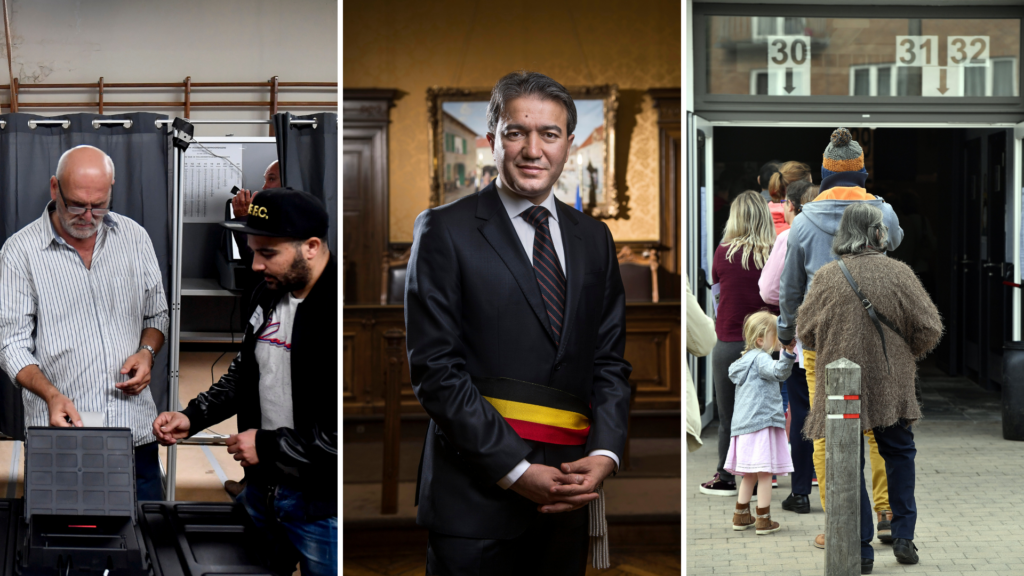
Polling stations in Belgium have been unusually busy this year, with voters called to booths twice as the five-year national elections and six-year municipal elections coincided. And as the wrangling over the results of these ballots has dragged on for months, paralysing decision-making in the process, the efficacy of Belgium's democratic process has been in the spotlight.
But as well as the systematic complication of assigning executive power, the way that people actually vote also has its issues. Noteworthy as Belgium's poorest commune, the Brussels municipality of Saint-Josse is also politically striking, with its mayor Emir Kir securing an absolute majority in the October local elections – despite not being member of any political group. However this resounding victory was on Tuesday declared invalid as a court found evidence of electoral fraud.
The news has dominated national headlines, with media attention focusing on Kir's divisive personality: he was expelled from the Socialist Party in 2020 for his ties to the Turkish extreme right but enjoys strong support in the most densely populated area of Belgium's capital. Yet the specifics of this scandal also throws doubt over how votes are cast.
Saint-Josse recorded an outstanding proportion of proxy votes: 7.5% compared to roughly 1.5% in neighbouring municipalities. Rival candidates complained that these were subject to various irregularities.
Voting in Belgium is mandatory: failure to do so incurs a fine (in theory at least). Without a system of postal votes, anyone unable to go to a polling station on the assigned Sunday must nominate a proxy to vote on their behalf. The conditions attached to doing so are precise and require written justification, for example a doctor's note or a signed letter from your employer.
Kir's critics celebrated the ruling, saying that his fraudulent practices have finally come to light. Kir painted it as a blow to democracy: "Vox populi, vox dei," he vowed to outraged supporters on Tuesday.
The ruling prevents a new administration from taking up residence in the town hall. And although it might be "Aux urnes!" yet again for residents in the commune, a campaign re-run could be "explosive", commentators warn. But in the meantime, indecision à la belge blossoms once more.
Belgium in Brief is a free daily roundup of the top stories to get you through your coffee break conversations. To receive it straight to your inbox every day, sign up below:
1. Brussels local elections: Saint-Josse results declared invalid
Mayor Emir Kir has seven days to appeal, if not the people of Saint-Josse-ten-Noode will have to vote again. Read more.
2. Brussels metro station Simonis evacuated after bomb threat
Shortly after 11:30, the police received a report of a bomb threat at the station. Read more.
3. British priest died in Antwerp after MDMA consumption
The initial investigation revealed that the two men had taken ecstasy and poppers, and had also engaged in sexual activities. Read more.
4. Rising wave of fraud threatens Belgian consumers as Black Friday approaches
"A bank will never ask you to share your personal codes and bank card, or transfer money to an account that is not yours to supposedly secure your money." Read more.
5. New European payment system officially launched in major Belgian banks
Once Wero is fully integrated into Belgian banks, it will replace Payconiq. Read more.
6. Where are Belgium’s richest and poorest municipalities?
The capital region is overrepresented when it comes to poor municipalities: six of the ten places with the lowest incomes in Belgium are located in Brussels. Read more.
7. Belgium’s government formation for dummies
From who is leading which party, Bart De Wever's infamous 'supernote' and the King's role in all this, here's a simple guide on everything you need to know. Read more.
