
Industrial production in the European Union has fallen by more than 10% in two years. In Belgium the situation is even more bleak, with a 13% drop in industrial output, according to initial figures from a Deloitte study on the competitiveness of European industry revealed to L'Echo.
The downward trend is particularly clear in the steel industry (where in ten years Europe has gone from being a net exporter to a net importer) and the Belgian chemicals industry, the newspaper reports.
"If we don't change anything, this is just the beginning," Rolf Driesen, CEO of Deloitte Belgium, told L'Echo. "I am not sure that everyone is aware of the problem, if we lose our industry."
The study specifically pointed out electricity prices for industrial users, which are on average two to three times higher in Europe than in the US, and twice as high as in China.
Additionally, Europe is dependent on energy imports for 63% of its supply, compared with 21% in China. The United States, meanwhile, is a net energy exporter. "This energy dependence makes Europe vulnerable to price rises and geopolitical fluctuations," Driesen stressed.
Excessive delays
Nearly one in three European companies (32%) consider regulations to be a major barrier to long-term investment. The Deloitte report highlights this: authorisation procedures for industrial projects take far longer in the EU than in the US and China, with delays of up to nine years for major projects (around 1.5 to 2 times longer than the US average).
The complexity of EU regulations already in place, as well as those that will be implemented, will exacerbate the problem, warns Deloitte's specialist in industrial energy and resources Frederik Debrabander. "Companies that want to invest cannot do so as quickly as they would like, because of the complexity of the regulations."
The firm highlighted the Corporate Sustainability Reporting Directive (CSRD) and the Corporate Sustainability Due Diligence Directive (CSDDD), which respectively focus on sustainability and human rights. These measures create additional administration and costs for companies in Europe.
China on the other hand has a "streamlined" process that is often three to five times faster than in Europe. Permits are issued "within a few months" for prioritised sectors. Though questions are being raised about China's commitment to sustainability and respect for human rights.
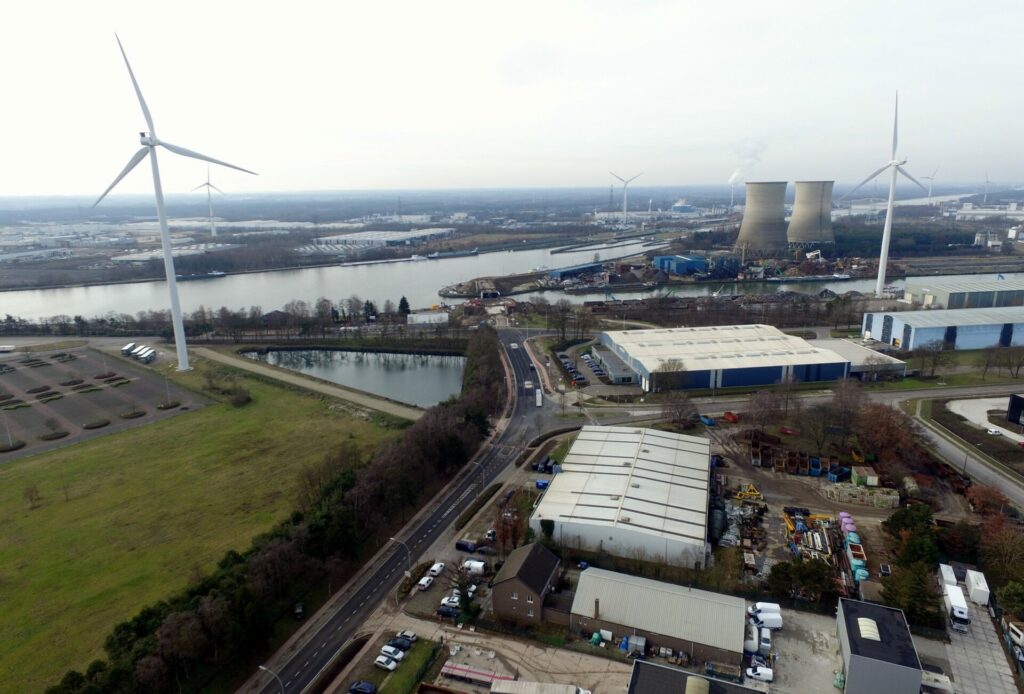
The industrial park Genk Zuid, with steel production plant Aperam and several wind turbines. Credit: Belga/Eric Lalmand
Still, the EU also has several strengths. It leads on innovation in green technologies with €18 billion of venture capital raised by the end of 2023, compared with just €12 billion in the United States.
"This is increasing in Europe while it is stagnating in the United States," the report reads. Additionally, renewable energies account for a much higher proportion of the energy mix in Europe (29%) than in the United States (19%) or China (13%).
But the lead is diminishing: China is already building turbines twice as big as Europe's. "Let us not forget that most industrial companies are global. They are wondering whether it is better to invest in Europe, the United States or China. I cannot see any criteria today that would make Europe stand out as a 'place to be' for investment," said Debrabander. "But the situation is urgent."
