
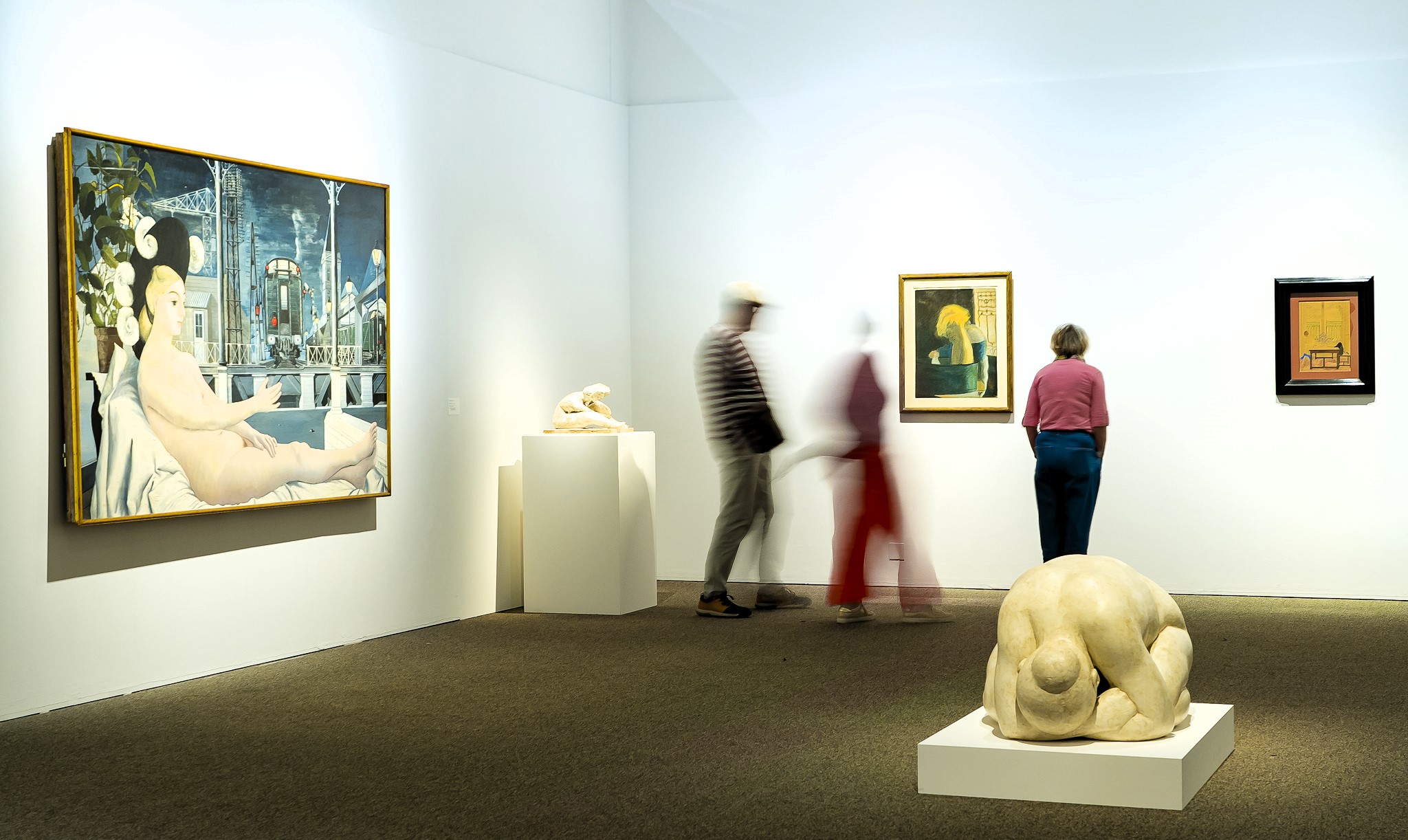
At any given time, around 90% of artworks held by museums around the world are hidden away out of view. It seems a shame, all that art in storage. But every museum struggles to decide what comes out and when – decisions resulting in themed temporary exhibitions.
Mu.ZEE in Ostend, however, now has a different approach. While the museum does host temporary exhibitions, its permanent collection also changes every year. So the Mu.ZEE you saw last autumn is not the Mu.ZEE you’d see today.
“When I began working here, temporary exhibitions were the main focus, and the permanent collection was sort of seen as filling in the gaps,” says Mu.ZEE curator Mieke Mels. “It felt strange to me. For a long time, I didn’t even fully grasp what was in our permanent collection.”
With 8,000 pieces, Mu.ZEE – a museum dedicated to the last 150 years of Belgian art – has the largest collection of Belgian art in the world. So over the last few years, the curatorial team changed theirapproach.
“We decided to have the core of the building focused on the permanent collection,” Mels says.
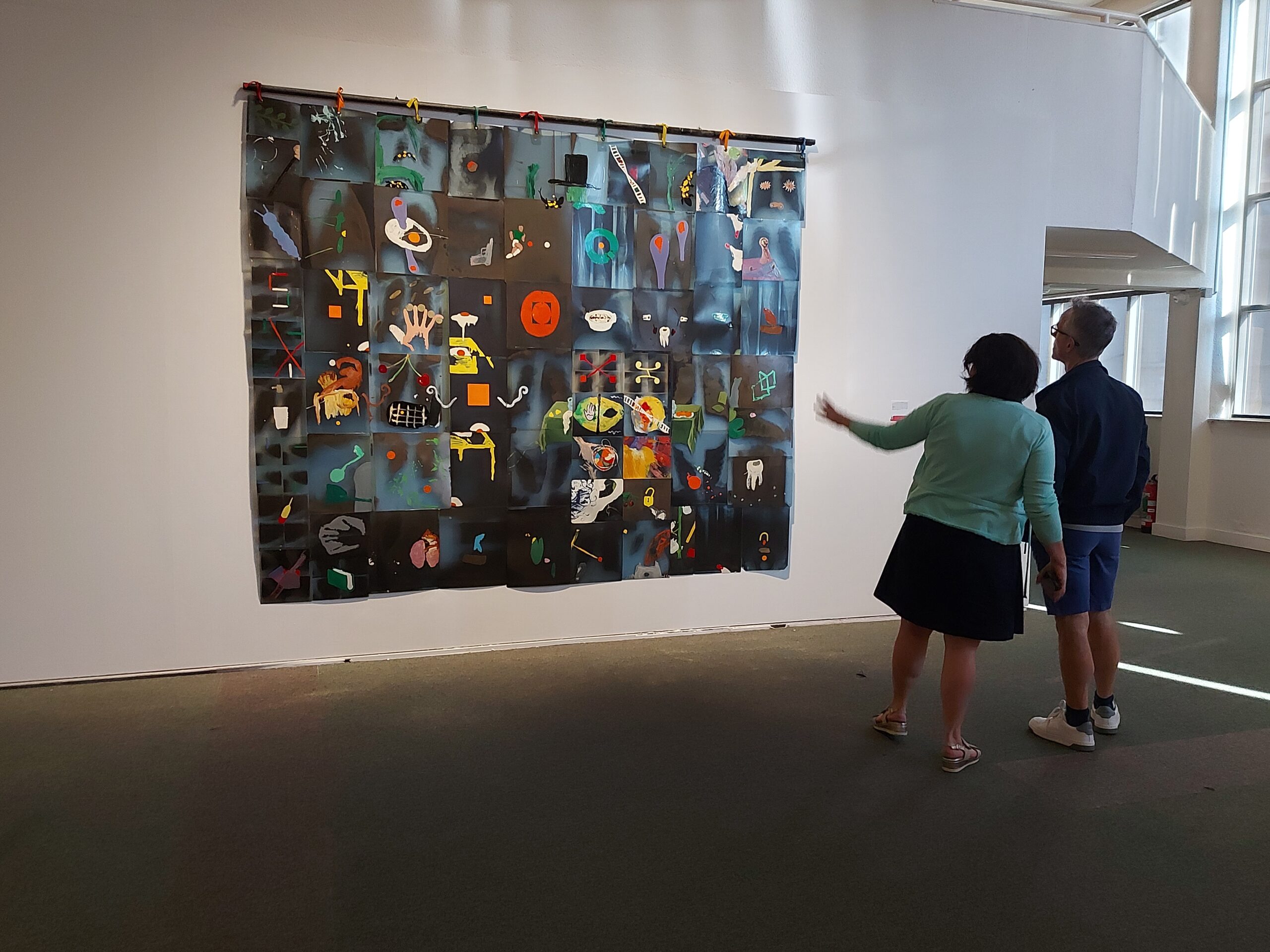
Showing more
The museum closed for a few months during the Covid crisis and re-opened with a striking change: the walls on the second floor were partially knocked down to create mezzanines that allow visitors to peer down to the first floor. Both floors are now devoted to the permanent collection, which hosts about 200 pieces at any given time.
One of the more daring decisions, however, was to axe the wings dedicated to James Ensor and Léon Spilliaert – not only two of the greatest Belgian artists of the 19th and 20th centuries, but both sons of Ostend. Some of their works are now mixed in with the rest of the collection.
“We wanted to stay true to the idea of showing more of our collection and establishing our identity as representing local art,” Mels says. “You can’t cover that with just Ensor and Spilliaert. There is so much more.”
This is no more evident than in Full House, the name given to the latest layout of the permanent collection. Spilliaert’s most famous self-portrait is on show, as are several drawings and engravings by Ensor. But the place of honour goes to contemporary artists.
“We try to think of what it means to have a collection of ‘Belgian artists,’” says Mels. “What is Belgian? We say it’s artists related to the Belgian cultural context. Because you have artists who live here but have come from abroad, artists from the diaspora, especially Congo.”
Store-turned-museum
The permanent collection on show has also shifted from a chronological journey through Belgian art to a thematic one.
“Over the last few years, we experimented with a few things in consideration of what we might do in the future. We have specific ideas about what we want to explore while we are closed.”
On January 6, Mu.ZEE will shut its doors for a full three years for a major restoration and renovation project. The building desperately needs to modernise to conform to museum standards in terms of temperature, light and humidity – not to mention its creaky old elevators – but also to offer more structural options for exhibitions and more social options for visitors.
That’s because the Mu.ZEE was not built to be a museum. It was built to be a department store.
The building on Romestraat went up in the 1940s and was designed by Gaston Eysselinck, the go-to architect for Spaarzaamheid Economie Oostende (Thrift Economy Ostend), the biggest cooperative West Flanders has ever known. Growing from a 19th century provider of coal to offering an endless number of goods at affordable prices, Spaarzaamheid Economie Oostende(SEO) had outlets all over the city.
Its most iconic contribution, however, was this extension of several of its properties bordering Romestraat, with a dazzling curved glass and marble façade. It served as SEO headquarters and the cooperative’s largest shopping outlet, selling everything from clothes to food to pharmaceuticals.
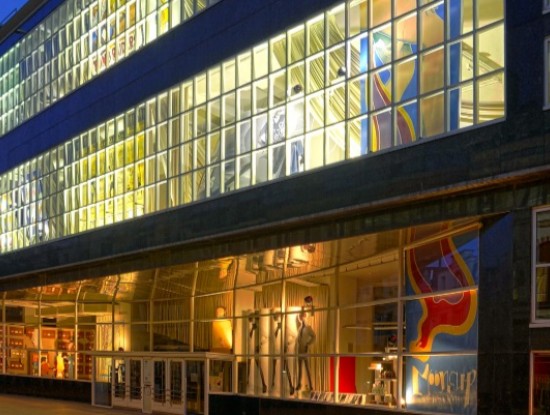
The 1940s façade.
SEO went bankrupt in the early 1980s, and a few years later the province’s modern art collection moved into the building. In 2008, the collection of Ostend’s fine arts museum joined in, and Mu.ZEE was born. The building has been adapted in spits and spats to house precious artworks, but now it’s time for the big changes that will make it a top museum for the 21st century.
The view for visitors
“It bothers me that you come in and immediately bump into this ticket desk,” says Mels. The entire entryway will be transformed into a more public-friendly space, with a new café and tile flooring. “It will be like a plaza, a public space. Not just a place to sell you a ticket.”
The plan also includes re-inserting a large plate-glass window that was removed at the back of the building to allow for more natural light. Other infrastructure changes will allow visitors at the front of the museum to see clear to the back. The library will also be moved to the other side of the building, opening the third floor toworkshops and an open atelier where visitors can watch art restorations live.
“That’s where my office is now, so I’ll have to move out,” says Mels with a smile. “It has the best view, so we’ll be giving that to the visitors.”
Full House: Mu.ZEE goes out with a flourish
You’d be forgiven for thinking that Full House is a temporary exhibition at Mu.ZEE. Normally,the museum does not give the rotation of its permanent collection a title. But because it’s the museum’s last hurrah before closing in January for three years, the staff decided a special designation was in order.
Arranged by themes, Full House is largely dedicated to contemporary art – boldly, wildly so. Anchored with several monumental sculptural works, visitors entering the exhibition spaces hardly know where to look first, or next.
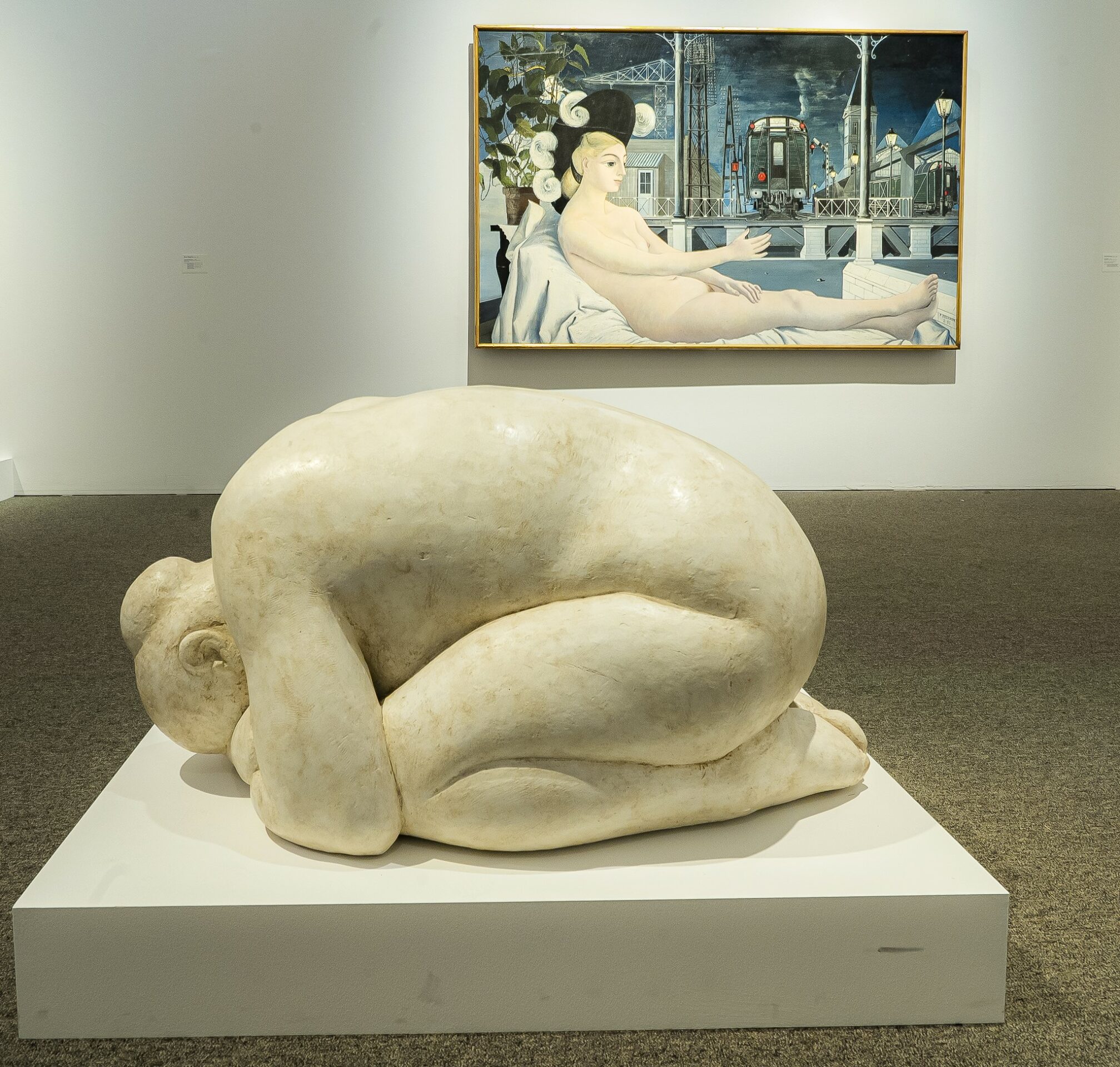
Full House collection. Credit: Yvan Mahieu
Stand-out pieces include Freedom to Think of Things in Themselves, Valérie Mannaert’s massive sculpture reminiscent of a warrior tunic, and The Course of Empire, a nine-metre-long hand-tufted tapestry by Brazilian-born artist Elen Braga that ties the history of the world in with a sci-fi future.
Braga is also responsible for the giant piranha hanging face down from the ceiling, ready to gobble up passersby.
