
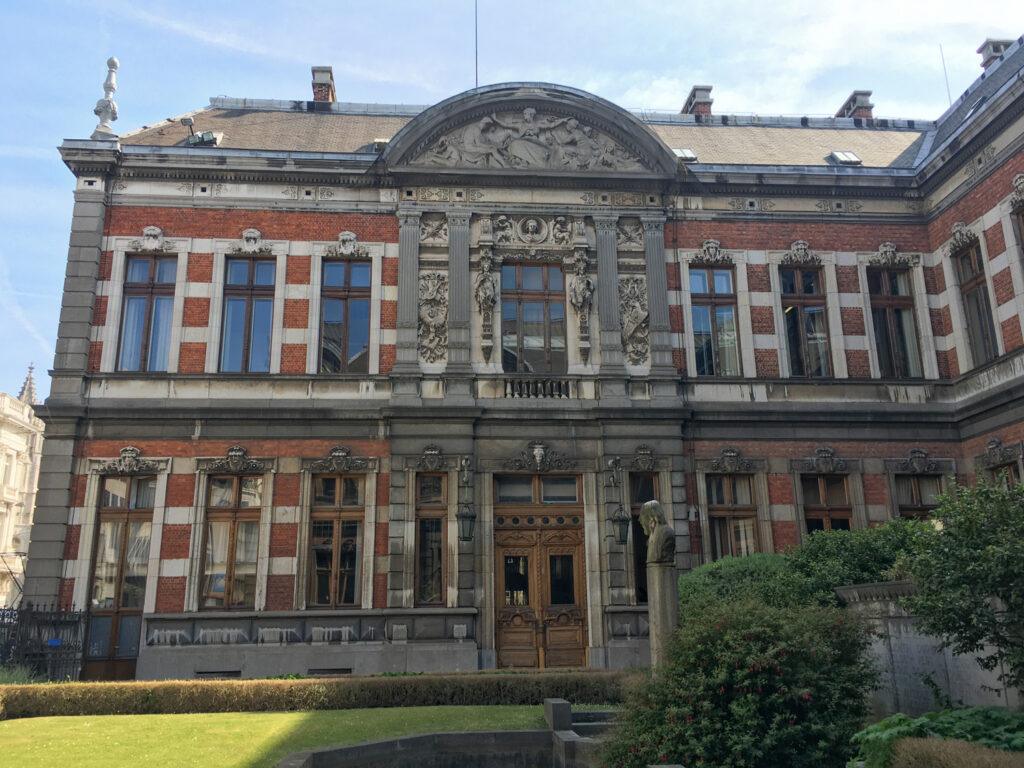
Since Monday, pickaxes and hoovers have replaced the sound of music escaping from the Royal Conservatoire in Brussels. The elegant colossus is getting ready for a facelift, but before restoration and modernisation go hand in hand, it will need to be cleaned up and asbestos removed, announced Brussels-based public works contractor Beliris on Tuesday.
More than 150 years after its foundation stone was laid, the Royal Conservatoire of Brussels and its Dutch-speaking sister institution, the Koninklijk Conservatorium Brussel (KCB), are shedding the first layer of their dusty mantle.
The building that housed the library, in particular, will be stripped of 1,500 m² of floor space that has been impregnated with asbestos since the 1950s. Local work will also be carried out on joints, heating pipes, ceilings and floor tiles in the building that houses the concert hall.
Prized for decades for its insulating and fire-resistant properties, the material has proved particularly harmful to health once degraded and inhaled. Since the end of 2001, it has been totally banned in Belgium. However, many buildings still contain asbestos, and removing it is a costly and technical operation.
The worksite will therefore be carried out ‘mainly in a sealed area, to keep environmental and neighbourhood nuisance to a minimum (noise, dust, vibration)’, says Beliris.
In the meantime, the 1,200 or so students from the two conservatoires are practising their skills in the new reception facilities, on the Rue du Chêne site for French-speaking students. The administrative staff and management have moved to Rue Royale.
Completion of these preparatory works (estimated at €320,000) is scheduled for the spring. The major renovation work should then begin at the end of the year, with a few months to allow for any surprises.
The Royal Conservatoire of Brussels was founded in the Rue de la Régence at the end of the 19th century. The main building was designed by Jean-Pierre Cluysenaar, architect of the Saint-Hubert Royal Galleries. The project included three wings arranged in a U-shape around a main courtyard and the residences of the school's director and secretary, built on the corner of Petit Sablon.
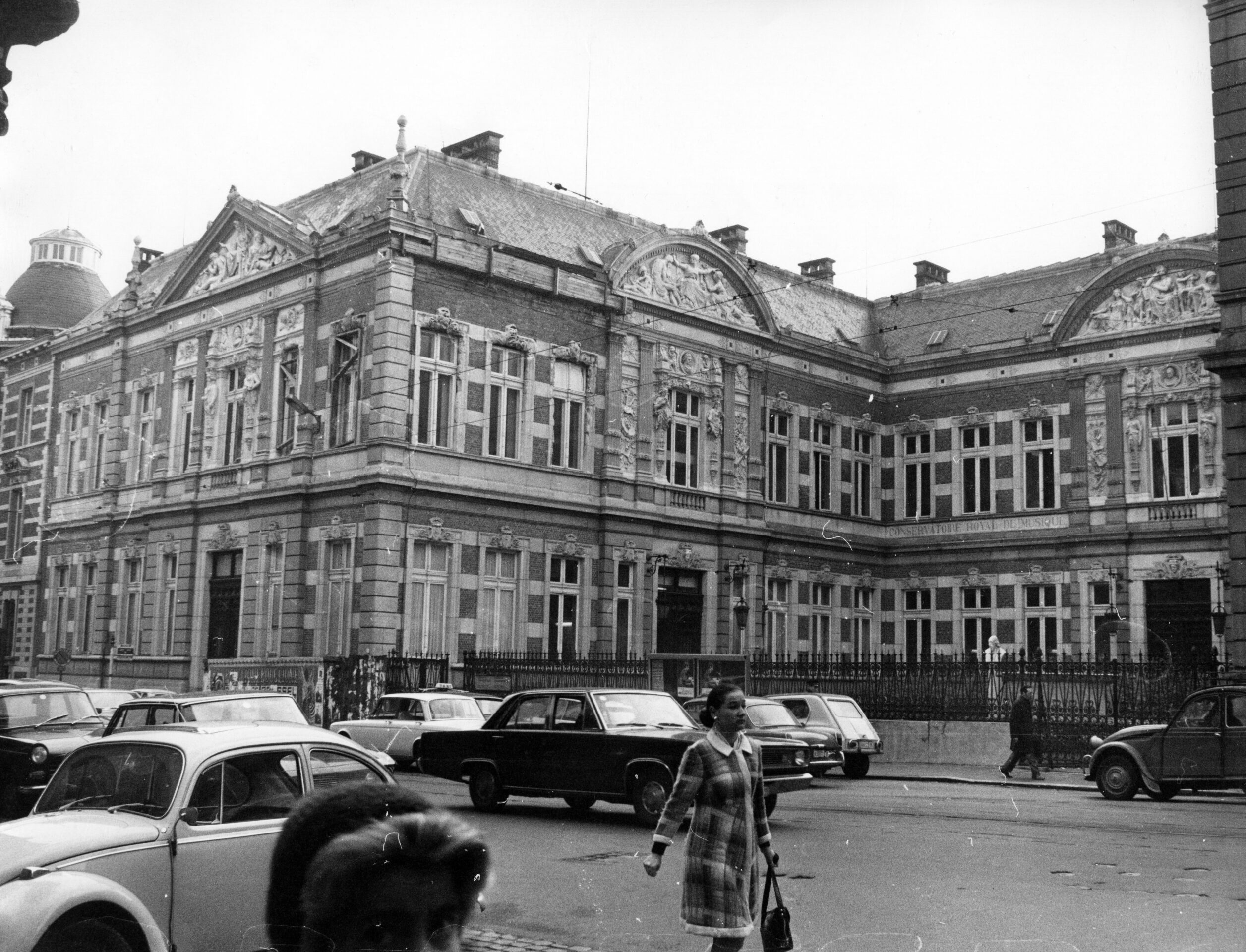
The Royal Conservatoire of Brussels, 7 December 1970. Credit: Belga Archives
Over the years, five private mansions (some dating back to the 17th century) on Rue aux Laines were added to the complex.
Several renovations were carried out during the 20th century to remedy the lack of space and meet the needs of this double school. The many interventions gradually transformed the complex into a darkened maze with unhealthy nooks and crannies.
A long-awaited renovation project was finally launched in 2018. The project was unveiled four years later, and is designed to accommodate a growing number of Belgian and international students in this listed building. A new building will replace the old library, offering two concert halls and master classes.
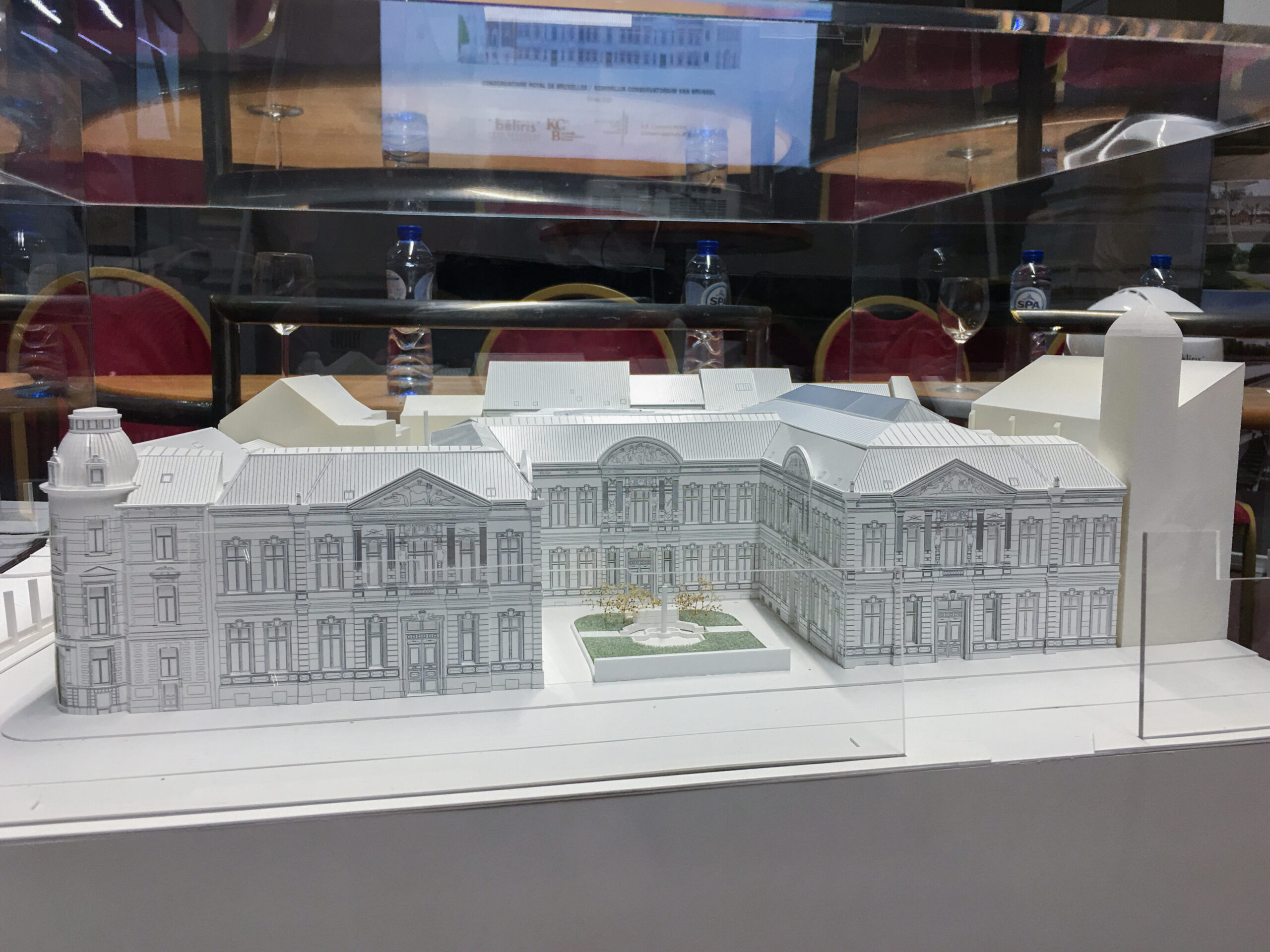
A maquette of the Conservatoire renovations shown during a press conference, May 2022. Credit: Belga / Morgane Berger
Combining the old and the new will also involve restoring the prestigious 1880 organ. Crafted by Aristide Cavaillé-Coll, one of the greatest organ builders of the 19th century, the instrument has suffered a number of mishaps, including being converted into an electric instrument in 1960. The contract to breathe new life into the organ will be awarded by the end of the year, according to Beliris.
Brass and strings should once again resound throughout the building in 2030, at an inaugural concert.
