
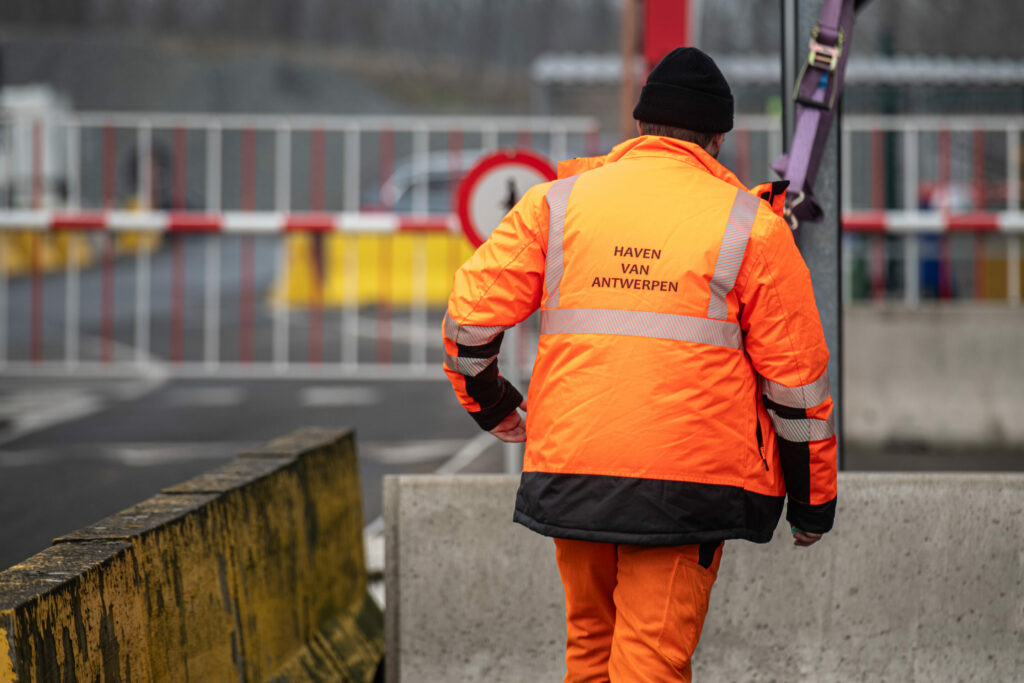
To create safer ports in Belgium, the Justice Ministry is implementing the 'AIGIS' system to efficiently monitor whether there is an official ban in place for people trying to gain access to port facilities in the country.
Currently, 235 port bans have been issued in Belgium. AIGIS is a new platform that centralises the management of these bans and helps companies efficiently control access to port facilities to enhance port security.
"This system ensures that port bans no longer disappear in Excel lists, but are instead kept on a secure platform to which inspectors have direct access," said outgoing Minister of Justice and the North Sea, Paul Van Tigchelt (Open VLD).

Outgoing Justice Minister Paul Van Tigchelt (R) assists during the official presentation and demonstration of AIGIS. Credit: Belga / Jonas Roosens
"This is an important step in the fight against crime and in strengthening our port security. With AIGIS, we will reinforce security in our ports in an efficient and privacy-friendly way," he added.
A port ban is a measure that applies to all ports and port facilities, and concerns both an occupational and location ban. It can be imposed by a judge or investigating judge as a condition in a judicial investigation or as an autonomous punishment, and can have a maximum duration of 20 years.
Most of the port bans (222 of the 235 currently in force) were imposed by the correctional court and the court of appeal in Antwerp. These final port bans are also mentioned in the special extract of the criminal record.
How does AIGIS work?
Companies can consult the application to check whether people (employees as well as visitors) are allowed access to the port facility. This system will soon replace the current procedure and ensures that port bans are handled uniformly and privacy-proof.
As soon as a port ban is issued, it is entered into AIGIS. When a person with a port ban reports to a port facility, the system automatically sends a notification to the public prosecutor or the police. Additionally, AIGIS provides timely notification when the term of a port ban is about to expire, so that steps can be taken for extension if necessary.
AIGIS will be implemented in three phases. The first phase encompasses checks at the reception of port facilities, similar to the system for casino bans. This will start with some large companies and will shortly be rolled out to the rest of the port.
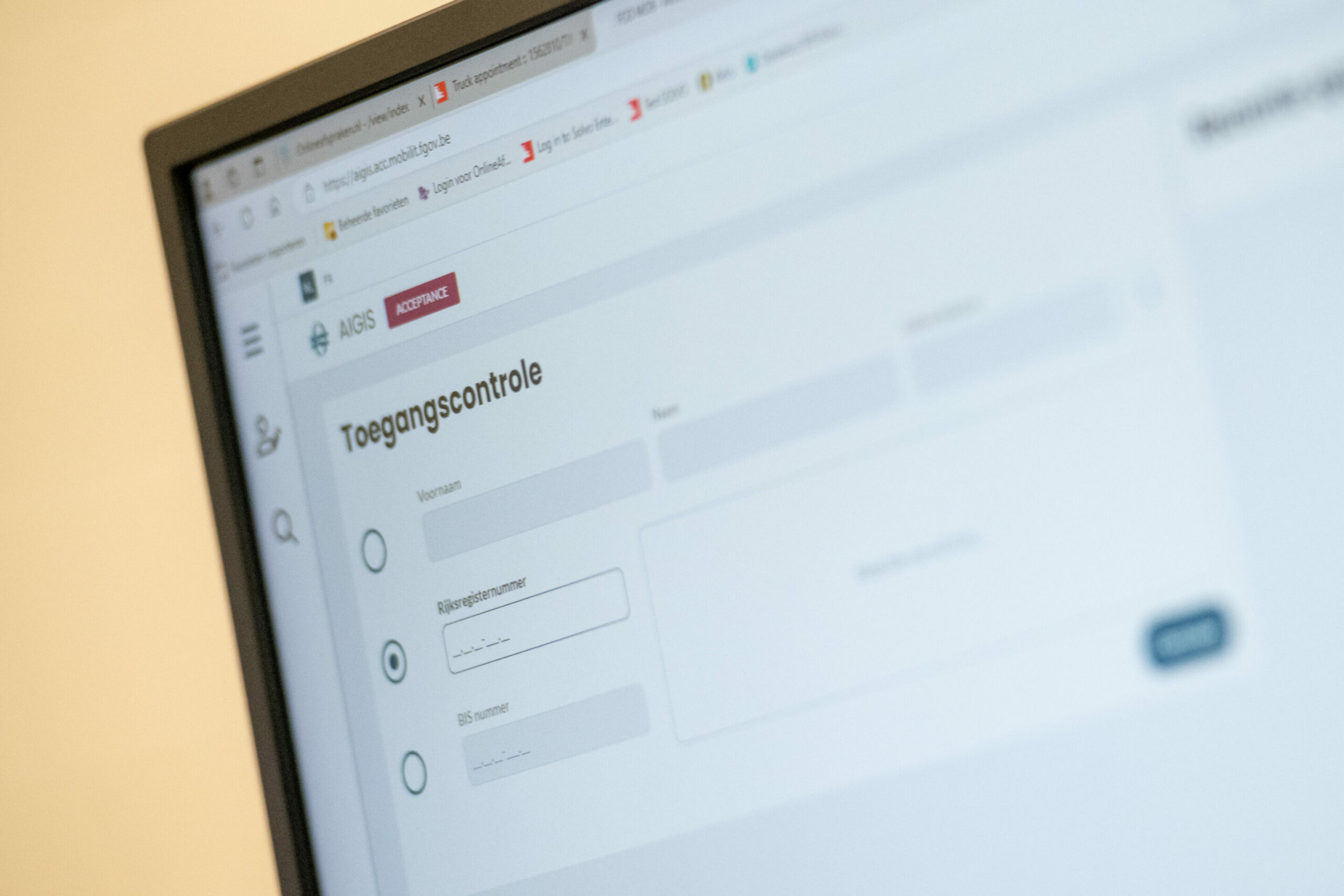
A computer screen with the application is pictured during the official presentation and demonstration of AIGIS. Credit: Belga / Jonas Roosens
The second phase will start in February. It will see a daily check of staff and badge holders, such as lorry drivers with an Alfapass. The third and final phase will start in March. It will involve checks of all other people not covered in the first or second phases.
Services such as police, shipping control, customs, and security agencies have access to AIGIS, as do those working in the prison system. All accesses and changes to the platform are accurately logged.
"With this system, we can proactively keep banned people out of our ports," said Peter Claeyssens, Director-General of DG Shipping at the Mobility and Transport Ministry. "This system not only supports port facilities to keep their workplace safe, but also ensures that judges' rulings can actually be enforced."
