
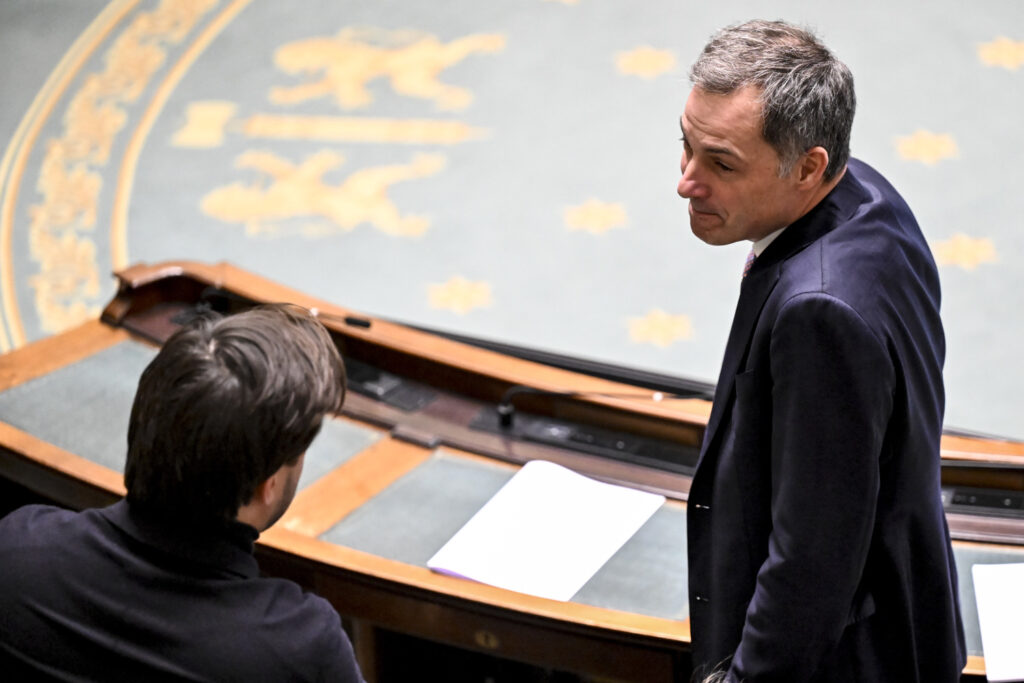
The caretaker government of Alexander De Croo will prepare a new emergency budget to ensure the continuity of state services for the second quarter of 2025.
In the absence of a fully functioning government, no executive body currently has the authority to draft a federal budget for 2025. As a result, the Chamber adopted provisional twelfths for the first three months of the year. This method involves releasing each month one-twelfth of the last budget approved by the Chamber (plus indexation) and is adopted on a quarterly basis.
"The first tranche of twelfths is not enough," stated outgoing Prime Minister Alexander De Croo during a plenary session of the Chamber on Thursday. He added that "Even if a government agreement is reached quickly, it will be impossible for the assembly to vote on everything by 31 March," which is when the first emergency budget approved in November expires.
“I informed the formator (Bart De Wever) and his team of this situation. He believed it logical for the government to prepare a new tranche of twelfths for April to June.”
De Croo said this was a necessary measure to prevent a situation in which government services would be "shut down" because there would be no money to pay for them.
The outgoing Prime Minister also confirmed an extension granted by the European Commission to Belgium for presenting its budget plan, under the excessive deficit procedure. This new deadline runs until the end of April. If unsuccessful, Belgium will be forced to follow a strict savings plan over four years, rather than spreading it over seven years.
Where are the Federal Government negotiations?
The formation talks should be entering their final phase this weekend. On Friday, formator Bart De Wever will present negotiators from the "Arizona" parties – N-VA, MR, Engagés, Vooruit and CD&V – with a revised version of his socio-economic note, which will outline the key programme of reforms that the next government will pursue.
However, negotiations on this point will not begin until Sunday. On Saturday, the presidents of the five “Arizona” parties will focus on the institutional aspect.
Negotiators recently reviewed amendments to the socio-economic note, which covers pensions, employment and taxation – three of the key areas of structural reforms. These issues are at the heart of the negotiations and are linked to the budgetary framework for the next legislature.
