
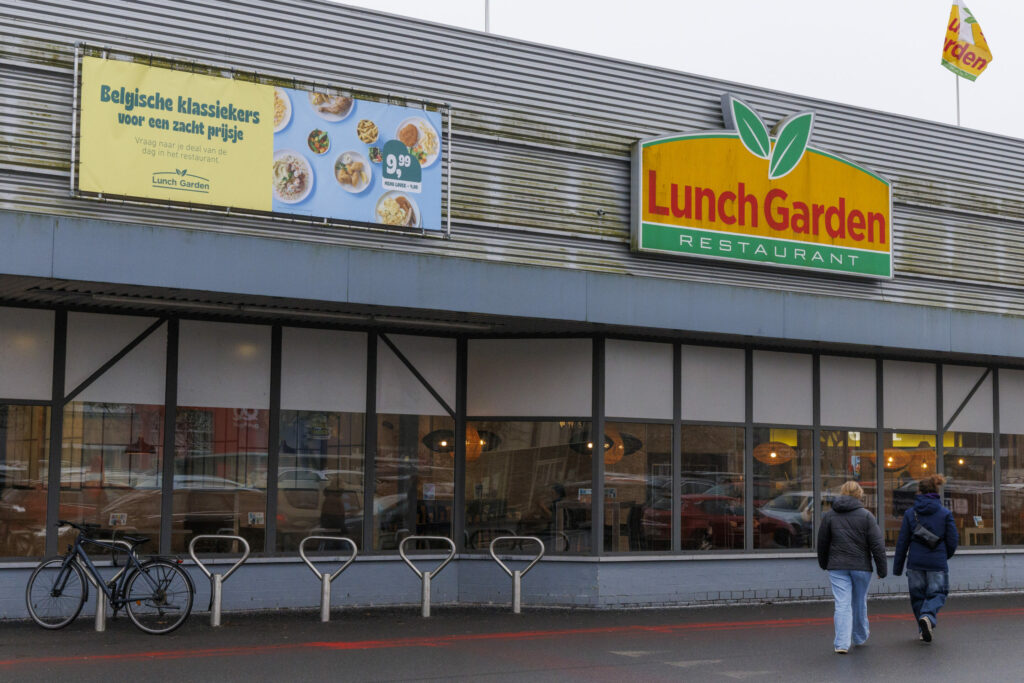
Lunch Garden announced on Monday during an extraordinary works council meeting that it has filed for bankruptcy.
The company has secured a new shareholder, CIM Capital, for part of its operations. This will allow 42 of its 62 restaurants to remain open. The impact on employment is not yet clear.
Originating in the 1960s, Lunch Garden was known for its cafeterias that were built alongside supermarkets so customers could eat something during their shopping trip. It was previously known as GB Resto.
When GB's parent company took over the self-service restaurants from the Sarma and Nopri retail chain, they continued together under the name Lunch Garden. In recent decades, the company has changed ownership several times and now probably again.
Management expects to retain around 300 employees, roughly half of the permanent staff. Including staff losses from closing franchise restaurants, the total job losses could reach 400, according to estimates by ABVV union member, Bjorn Desmet.
Unions warn that unpaid year-end bonuses, January wages, and severance pay will all be tied up in the bankruptcy. For a company with a high average length of service, this will be an especially bitter pill for employees. "That payment will come through the closure fund for enterprises, which will likely take months," stated the unions.
In a statement, management said they are aware of the enormous impact on staff. "This is an extremely difficult decision, but it is the only way to ensure a sustainable future and preserve the maximum number of jobs," they added.
Lunch Garden asserted it is "working intensively" with the curators and CIM Capital to finalise a recovery plan as quickly as possible.
The company has faced challenging years, struggling particularly with the financial impact of mandatory closures due to the pandemic.
Despite two more promising recent financial years, it remained dependent on financial injections from its main shareholder, the British fund ICG, which they noted "was no longer viable."
