
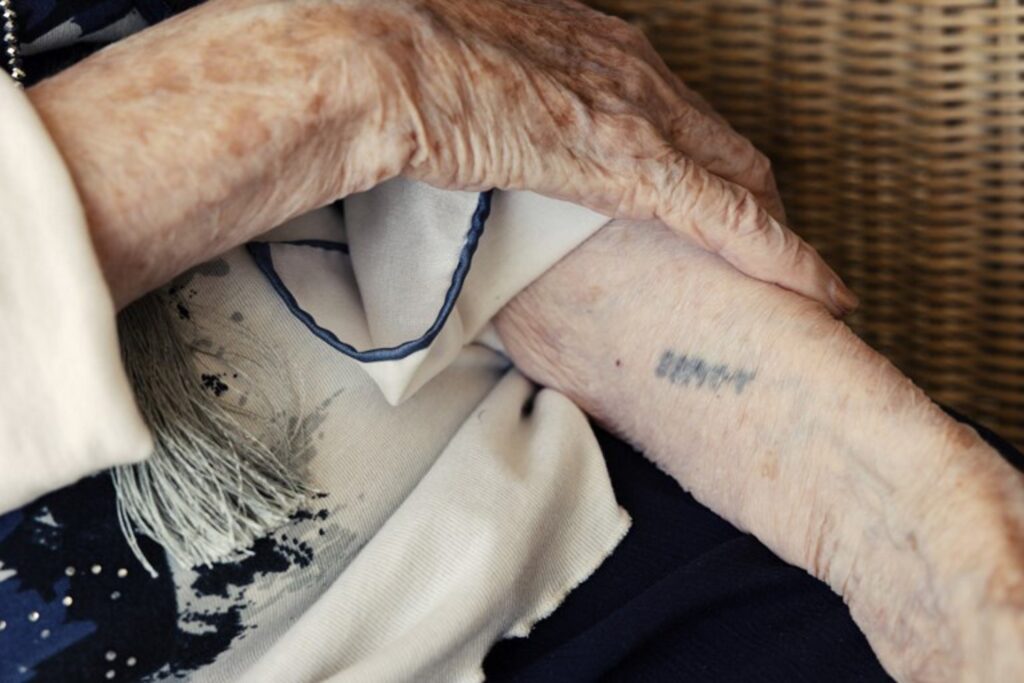
On this day 80 years ago, thousands of prisoners were freed from the deadly Auschwitz-Birkenau camp in Poland. Today, world leaders will gather there to honour victims' memory at a time when antisemitism and extremism are on the rise.
A commemoration event for the 80th anniversary of the liberation of the Nazi Auschwitz-Birkenau extermination camp by the Soviet Red Army takes place today (Monday 27 January). In 2005, the United Nations recognised the date as International Holocaust Remembrance Day.
Commemoration service
All remaining Auschwitz survivors have been invited to the event at the former camp. Some 50 are expected to attend. During the 75th anniversary of the liberation in 2019, around 200 attended.
"Nothing will be easy about returning to Auschwitz, 80 years after I was liberated. This commemoration will be the last of its kind," said one Auschwitz survivor Michael Bornstein.
Survivors will deliver the main speeches during the 90-minute commemoration. It will begin at 16:00 local time and will be held in front of the infamous gate to the former camp. Museum director Piotr Cywinski will also speak and tribute will be paid to the victims by survivors and heads of state. No political speeches will be made.
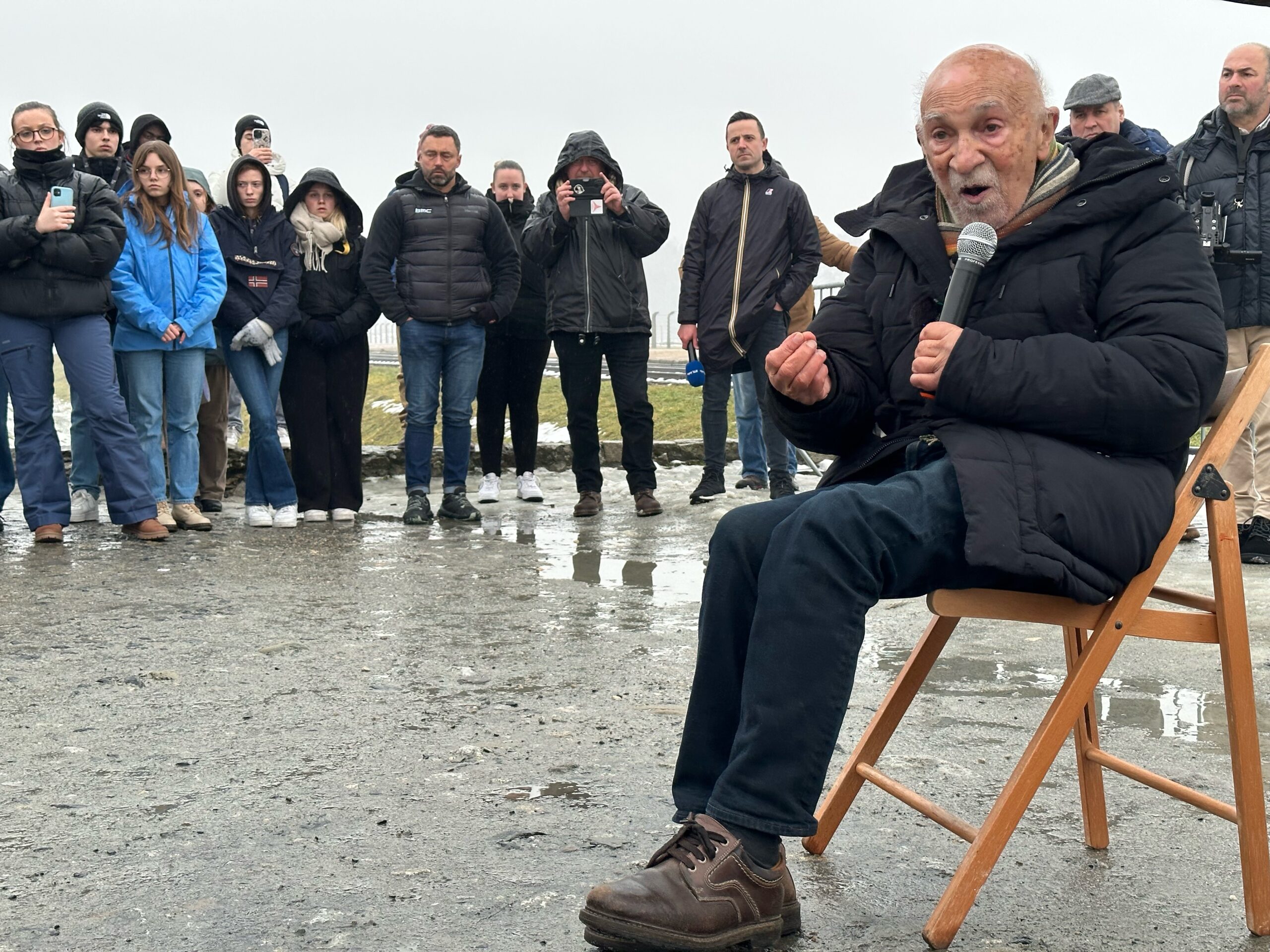
Holocaust survivor Simon Gronowski talks to a group of young Belgians during a school memorial trip. Credit: Belga/ Maarten Weynants
Dozens of official state delegations, world leaders and members of royal families will attend the memorial. The Belgian delegation will include the King and Queen of Belgium as well as outgoing Prime Minister Alexander De Croo (Open VLD). President of the European Parliament, Roberta Metsola, and the president of the European Council, António Costa, will also be present.
To symbolise the remembrance, a goods train wagon will stand in front of the gate. These wagons are a reminder of how Auschwitz came to exist: the site had good rail links which led the Nazi authorities to use it to bring in deportees from across the continent using this type of wagon. The Belgian railway company SNCB was also complicit in the deportations.
Cog in the wheel of genocide
When the camp was liberated by the Soviets on 27 January 1945, the Red Army soldiers discovered some 7,000 survivors and unveiled the horrors of the Third Reich's extermination efforts.
Around 1.1 million people were murdered in Auschwitz during the Second World War. The majority, 1 million, were Jews but also Poles, the Roma, Soviet prisoners of war and people of other nationalities perished there.
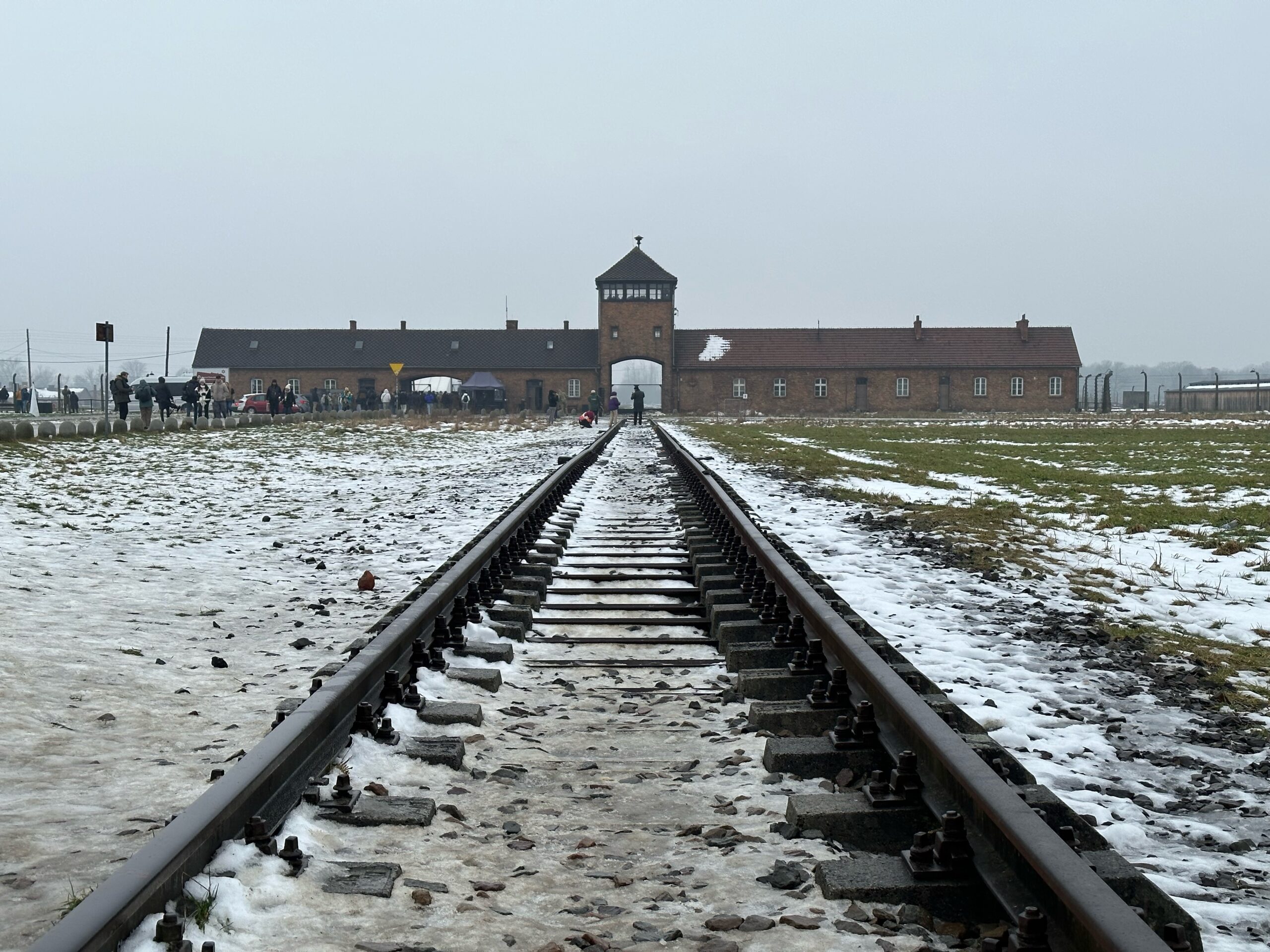
Railway tracks towards the entrance to the Auschwitz camp. Credit: Belga/ Maarten Weynants
Construction on the Auschwitz II-Birkenau camp started at the end of 1941 when the initial Auschwitz I camp was no longer sufficient for the number of prisoners taken captive and the Jews sent to their death there by Nazi Germany.
It later became an extermination camp and has become the most known death camp of many in the Holocaust which was planned and coldly executed by Nazi Germany and its collaborators in occupied Europe. From 1942, people deemed unfit for forced labour – including children, the elderly, pregnant women and the sick – were sent to the gas chambers as soon as they arrived, without even being registered.
Learning from history
The commemoration comes at a time of growing antisemitism across Europe. Meanwhile, the far-right German AfD party emerged as the second political force in the legislative elections last February.
The Auschwitz-Birkenau State Museum, which is responsible for preserving the site and documenting the crimes committed there, has published online lessons and a podcast to educate people and ensure that history does not repeat itself.
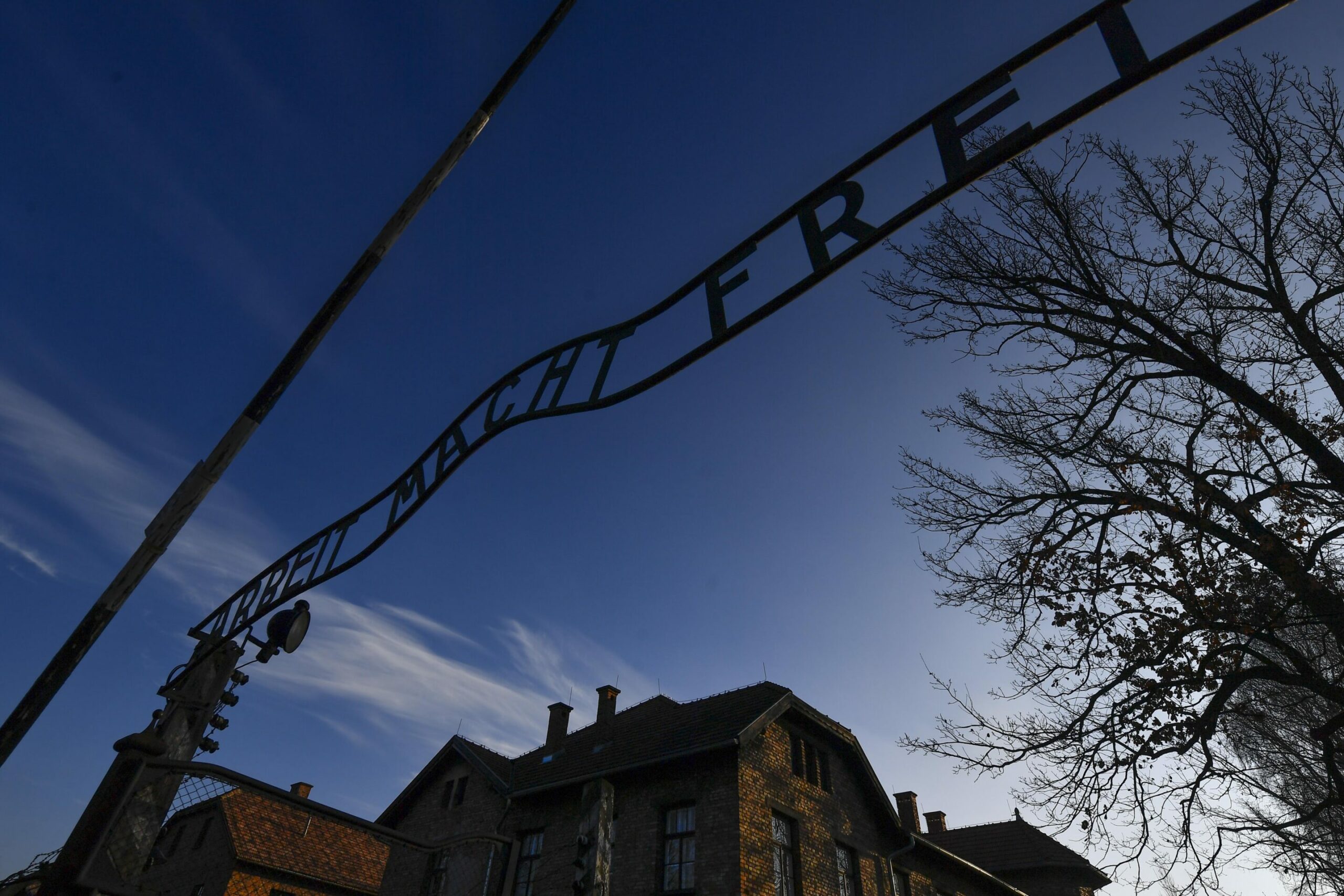
The entrance sign 'Arbeit Macht Frei' at the gate of Auschwitz camp. Credit: Belga/ Dirk Waem
For the same reason, commemorations are organised every year on the International Holocaust Day. Many memorial events will be taking place across Europe on Monday, including in Brussels.
The European Commission illuminated the façade of its headquarters at the Berlaymont building on Sunday evening (26 January) to mark the Holocaust Remembrance Day: “We remember”. Earlier in the week, the Commission organized a Holocaust Remembrance Conference titled “Remembering the Past, Shaping the Future”.
On Monday, the members of the European Council issued a statement on the occasion of International Holocaust Remembrance Day.
The events held in the Belgian capital include a study day on Jewish communities in the country after 1945, an event including lectures, discussions and a guided tour of the former Jewish quarter organised by the Centre Communautaire Laïc Juif David Susskind (CCLJ) and an exhibition highlighting the history of post-war Jewish holiday camps.
Related News
- Holocaust remembrance in the EU: ‘Everyone who listens to a witness becomes a witness’
- Kazerne Dossin to host exhibition on the athletes of Auschwitz
- Some 100 Belgian students to visit Auschwitz on Thursday
The House of European History is offering a free ‘IWalk’ guided walk through Marolles and Brussels city centre, areas that were home to large Jewish communities at different times.
The EU will organise an official ceremony at the Palais de Nations in Geneva, which will be shared online. The event will pay tribute to those who perished in Nazi death camps, and Holocaust survivor Evan Lefkovits will speak about his family's experience.
"These efforts to remember the Holocaust and learn from history are critically important in the current context, characterised by antisemitism and Holocaust denial, and distortion and trivialisation of history, caused or amplified by digital technology, social media, and foreign interference and propaganda," a European Parliament statement read.
