

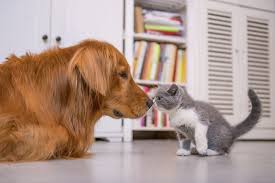
It is estimated that with 79 million cats, and 68 million dogs, at least half of EU households are home to a companion animal. According to surveys, a majority of European citizens have asked for better protection of all companion animals. The legislation on the welfare of cats and dogs is currently under discussion in the European Parliament. This is one and only opportunity to demonstrate just how much we care for them
With almost 6 million dogs needed each year to meet the demand across the EU (for a comprehensive report on the illegal puppy trade, see FOUR PAWS report). Almost 80 % of puppies are coming from unverified sources, which arguably do not pay taxes.
Even in a conservative scenario of €800 per puppy, the dogs coming from unverified sources could constitute up to €3.8 billion in lost revenues and VAT annually. With trade in dogs and cats in the EU exponentially growing online, it is the time to act. If done right, tackling the illegal pet trade with improved traceability could also offer a lasting solution to the management of stray populations and bring the numbers of free-roaming animals down.
What is at stake?
With the upcoming debate at the AGRI Committee on Wednesday (29 January), we are entering an important phase in the negotiation process of the European Commission’s proposal from December 2023 for a regulation. This long-awaited legislation would ensure, among other things, that cats and dogs are registered and identified and that their data is included in a centralised EU database; that breeders and keepers abide by stricter rules; and that cosmetic procedures are banned.
The proposed law also includes more stringent requirements for online trade, a domain where illegal trafficking is rife, causing serious animal welfare issues, but also harming consumers and public finances.
There are welcomed opinions which we applaud and that must make it to the final proposal such as including the provision whereby identification and registration should be preconditions for importing animals into the EU.
The ENVI committee’s call for a positive list, which would specify the animal species allowed to be kept and placed on the market. Such a list would enable the EU to better regulate the ownership of exotic, traditional, and non-traditional pets, and ensure that only species suitable for private care are kept as companions.
The Belgian EU presidency finalised during its last week in June 2024 a Council negotiating mandate for a proposal for a regulation on the welfare of dogs and cats and their traceability that addressed some of the previous loopholes, at least partly.
What should be improved?
We are concerned that some elements of the utmost importance for European citizens are still missing. In particular, all dogs and cats must be correctly identified and registered, and not only the ones that are kept in establishments or put on the market.
We would also like to see improved and more comprehensive requirements on the housing of cats and dogs and a health and welfare certification system covering the peculiarities of excessive body characteristics, as well as restrictions on the selection and sale of individuals with extreme physical features (short muzzles, small heads, bulging eyes, hairless, dwarf, etc.).
A ban on inbreeding regardless of function (i.e., breeding of related individuals) and a ban on advertising cats and dogs with extreme physical features would greatly improve animal welfare.
Several countries across Europe have adopted strict measures on which breeds of dogs and cats can be sold and kept as pets, among strong calls from the scientific and veterinary community to fundamentally reconsider the way cats and dogs are bred. We maintain that curbing the phenomenon of “designer” breeds and breeds whose physical characteristics are incompatible with the animals’ health and welfare should be a priority in this new EU legislation.
In our view, key measures should ensure that health is favoured over looks, that all cats and dogs are registered and identified at the source, and that breeders and sellers are verified and operate according to the same rules, aimed at protecting both the animals and the prospective owners.
The price to pay if we do not get this regulation right will be high, not only in economic terms but also psychologically, because these are the animals with whom we share our lives, relying on them for companionship, support, and comfort. We owe them this much.
