
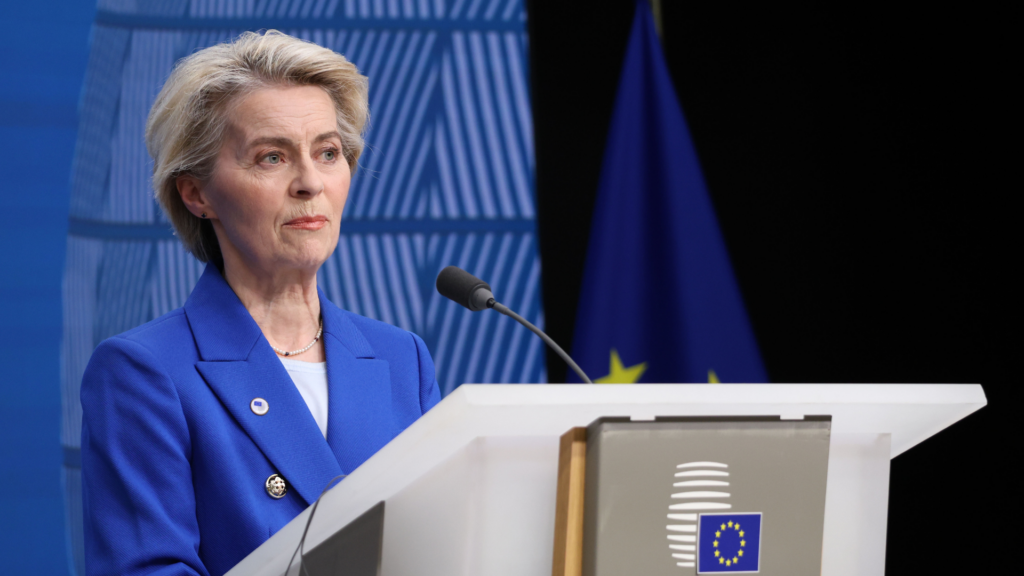
The European Commission adopted a "competitiveness compass" on Wednesday, outlining actions it plans to undertake in the coming years to address the competitiveness gap highlighted by the Draghi report.
The Commission acknowledges that Europe has lagged behind other major economies over the past two decades due to a persistent productivity growth gap. The new framework aims to reverse this trend.
The compass builds on the recommendations of the now-famous Draghi report, translating them into tangible measures, according to Commission President Ursula von der Leyen.
Mario Draghi, the former President of the European Central Bank, caused a stir last September with his grim depiction of Europe's economic future.
In terms of innovation – one of the key areas Draghi identified – the Commission will focus particularly on artificial intelligence (AI). It plans to propose a comprehensive "AI strategy" later this year, von der Leyen announced in a press conference. "Only 13% of our companies use AI," she stated. "This must change."
The strategy will include initiatives to boost industry adoption of AI and the creation of "AI factories" where companies can train their models using supercomputers.
Related News
- European Commission signs contract with Moderna for Covid-19 vaccines
- Belgian who filed complaint against VDL files another against European Prosecutor
In terms of decarbonisation, the Commission promises a "clean industry pact". "We are already global leaders in clean tech," said von der Leyen. "We must work to remain number one."
The clean industry pact includes streamlined state aid for targeted sectors and prioritising measures to address high energy prices. A plan to tackle these structural issues is expected in the coming weeks.
The final key area is reducing excessive dependencies. The EU aims to establish "effective partnerships" through diversified trade agreements with non-EU countries for raw materials, energy and technologies.
