
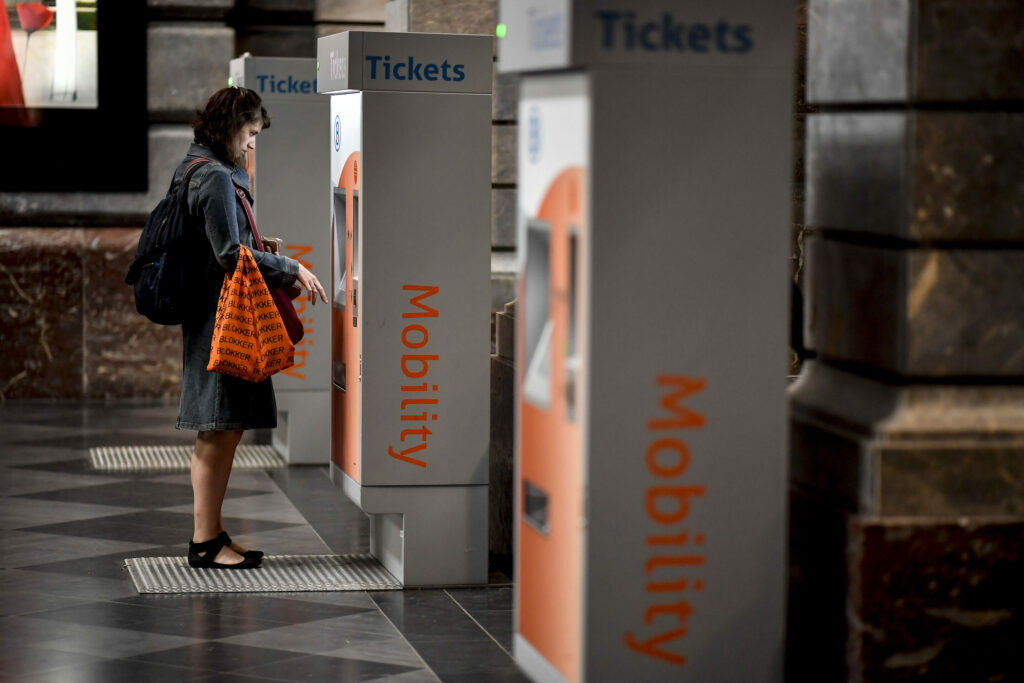
National railway operator SNCB was sued last year for making tickets sold at offices or machines more expensive than when bought on the app. The lawsuit denouncing this "tariff discrimination" will not be heard for over a year, Belga learned on Monday from the Brussels Court of First Instance.
Some SNCB tickets are more expensive when bought in a station than online, while other advantageous offers are only available via the app. This means travellers without a smartphone are at a disadvantage. Equality Centre Unia and consumer rights organisation Test Achats called out SNCB last summer and sued the company in September after it refused to adjust the offering.
Test Achats and Unia announced their intention to lodge a complaint last September. The case was brought before the Brussels Court of First Instance on Monday. The parties have agreed a schedule of hearings that extends over a year. The case will therefore not be heard until next year.
"With this lawsuit, we are signalling that, in addition to the positive aspects of digitisation, there are also many pitfalls that particularly disadvantage certain groups," said Unia director Els Keytsman. "We believe that a public company such as SNCB should set a good example."
What's the case?
SNCB charges more for its ten-journey Standard Multi and Youth Multi (for under-26s) cards at ticket counters and machines. There, they cost €105 and €64 respectively, while app users pay €102 and €62. In addition, the company offers a flex season ticket – aimed in particular at teleworkers who travel the same route two or three times a week – exclusively via the app.
The two organisations argued that this is an illegal form of discrimination, as some passengers do not have the financial means to buy a smartphone, do not know how to use it due to their age or are unable to because of their age, state of health, national or ethnic origin, social status or disability. These groups of people are protected by law against (indirect) discrimination.
Related News
- Belgian equality and anti-Racism body 'outraged' at 25% budget cut
- Flemish LGBTQ+ federation denounces UNIA budget cuts
"It is a shame that this has to come to a court case," said Test Achats spokesperson Laura Clays. "However, it is unacceptable that SNCB is sticking to its fare policy. We will never accept that consumers who do not have the digital skills to participate in our society have to pay more for the same essential services."
SNCB rejected the criticism saying last September that offering a differentiated range – depending on the sales channel – is a widespread practice that is not prohibited by any legislation.
