
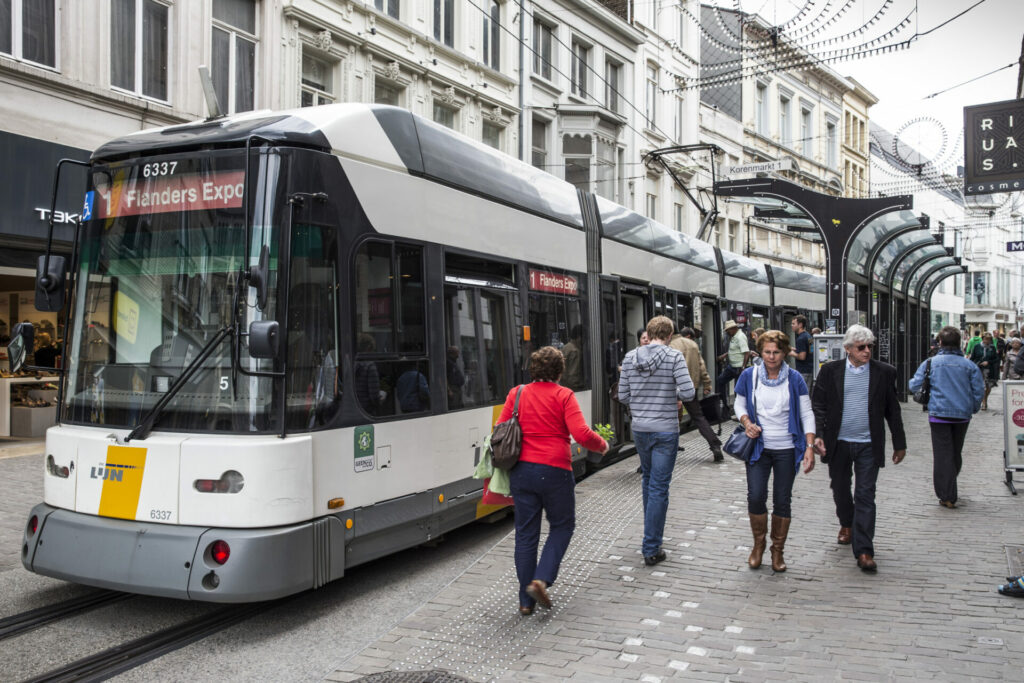
The Flemish Government will increase the price of an average public transport ticket by 20% in April. The measure comes following two years without indexation but has been criticised as excessive. Some people will not be affected.
The final touches are being made to the new fare framework for Flemish public transport operator De Lijn by the Regional Government. Final issues will be resolved this week, but it is already clear that the average ticket for bus and tram rides will increase by 18% in April on top of the health index (expected to be around 3%). This will result in a total rise of around 20%, De Tijd reported.
With this significant rise, the government is catching up after two years without indexation under former Minister of Mobility Lydia Peeters (Open VLD). As the move was not matched with additional government support, it is believed to have driven a €30 million hole into the transport company's budget. De Lijn was therefore unable to absorb the increased wages and energy prices in recent years.
The framework is a guideline from the government; it is up to De Lijn to decide how much more expensive the various types of tickets and season tickets will become. However, because it was closely involved in the process, the expectation is that it will not deviate too far from it.
Prices for all other public transport in the country increased on 1 February.
Who is exempt?
Some groups will be spared from the increase: students, the elderly and people with lower incomes. For the latter group, there will be no extra increase on top of the index.
At the request of Christian Democrats CD&V, the price of a season ticket for pensioners will increase less sharply than the average ticket. Finally, the prices of a Buzzy Pazz for students (18 to 24 years old) will even drop by about a quarter, as requested by socialist party Vooruit.
Flemish Minister of Mobility Annick De Ridder (N-VA) argued that the measure is mainly a matter of putting accounts in order. She stressed that time is money: every month that the prices are not indexed leads to an additional deficit of an estimated €1.8 million.
Chair of TreinTramBus passenger organisation Stefan Stynen said on Radio 1 that he has "some" understanding for the need to raise prices to cover the rising costs, but said the amount is "disproportionate".
Related News
He argued that the government should first work on "reliable public transport" before raising the prices, and in the meantime move forward with a limited 10% increase. Stynen fears that the price hike will result in fewer passengers.
"For the people who are now screaming bloody murder: know that De Lijn is one of the cheapest transport companies in Europe," De Ridder said. The government is also allocating €400 million for the purchase of new buses and trams.
