
The European Commission clarified today that further discussions among the EU Member States are required to decide whether the Memorandum of Understanding (MoU) should be suspended.
As previously reported, EU’s High Representative for foreign affairs and security policy, Kaja Kallas. said in her press remarks at the press conference after the foreign affairs council on Monday that the MoU regarding critical raw materials will be “under review”. In her remarks she described the situation in DR Congo as grave and on the brink of a regional conflict.
“Territorial integrity is non-negotiable in DR Congo as well as in Ukraine. The UN Charter applies everywhere. We support the Luanda-Nairobi peace process clearly, to achieve the results by diplomatic means, but we are also taking several steps.”
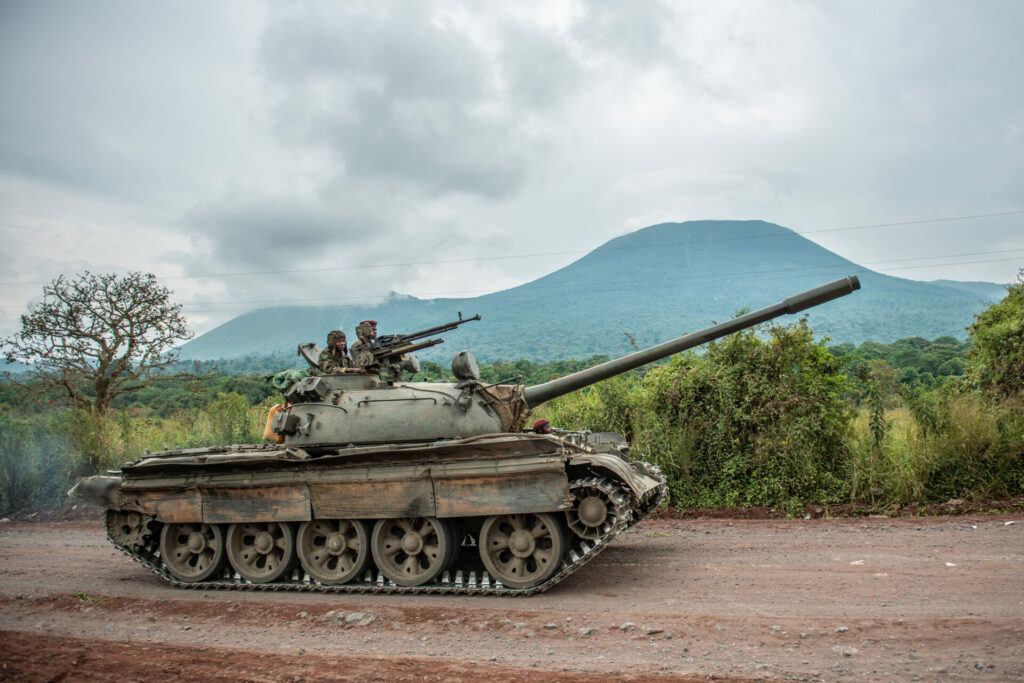
In recent months, the rebel group M23 has seized more territory in the eastern part of DRC, including the capture of the cities Goma and Bukavu, and is marching toward a third city. The group is directed and funded by Rwanda according to the United Nations. During its offensive, thousands of civilians have been killed and hundreds of thousands have been displaced.
The Congelese President, Felix Tshisekeli, said in an interview in The New York Times that Rwanda is using M23 to plunder his country of its mineral wealth and accused the EU of being “complicit in the theft and looting of Congo”. He called the MoU between the EU and Rwanda a “complete scandal”.
The MoU was signed in Brussels in February 2024 and establishes close cooperation between the EU and Rwanda in five areas concerning raw materials that are important for EU’s Action Plan on Critical Raw Materials. It signals both parties' intention to strengthen their partnership for closer integration of raw materials value chains.
According to the MoU, Rwanda is a major player on the world's tantalum extraction. It also produces tin, tungsten, gold and niobium, and has potential for lithium and rare earth elements. However, most critical raw materials are located in DRC and Rwanda is believed to export raw materials with origin in Congo.
EU defence consultations with Rwanda have been suspended, Kaja Kallas said. There is a political decision to implement sanctions dependent on the situation on the ground. The EU has also urged Rwanda to withdraw its troops. As regards the MoU, there was apparently no unanimity in the foreign affairs council and it will be under review.
Asked at the Commission’s daily press conference on Tuesday about the duration of the ‘review’, a spokesperson of the European Commission declined to specify any deadline. It is not a review in the sense of a study that will result in a report on possible options for EU actions, such as the suspension of the MoU, which some Member States, including Belgium, are calling for.
The spokesperson recalled that the main objective of the MoU is to ensure greater transparency, reporting, and traceability of critical raw minerals. The MoU does not include a dedicated fund.
Whether it already has achieved this aim is unclear. The partnership with Rwanda is in an early phase and no concrete steps have been taken yet under it, he said. The review refers to the discussions with the Member States about next steps.
That said, Commissioner Dubravka Šuica, who is responsible for the Mediterranean, said earlier in February on behalf of High Representative Kallas that suspending the MoU “could be self-defeating as it would remove the basis for this engagement with Rwanda and undermine an incentive to ensure responsible mineral production and trade by Rwanda.” The EU still believes that it needs the MoU for greater transparency and that it is key for stability in eastern DRC.
Update: A previous version of the article has been updated for clarity.
M. Apelblat
The Brussels Times
