
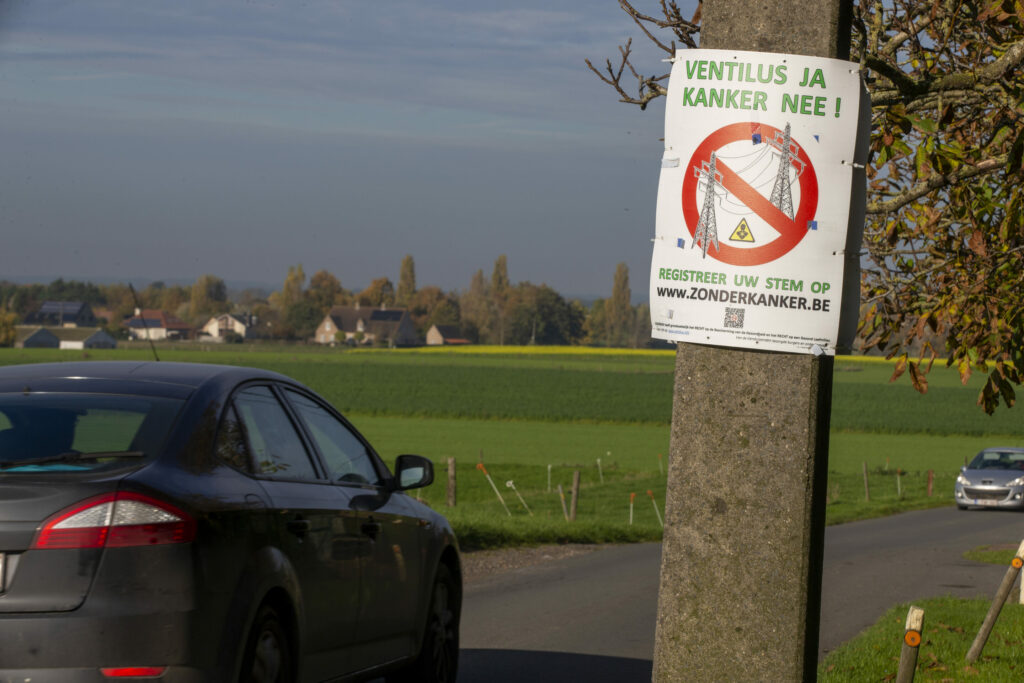
Around 500 homeowners, living within 200 metres of where electricity overhead wires will be placed, will be compensated for the devaluation of their properties. Some 120 people can even sell their houses to Elia, the company behind the project.
The Ventilus project run by the Belgian operator of the high-voltage grid, Elia, consists of an 82-kilometre-long high-voltage line that will run through the heart of West Flanders. It will transport electricity from future offshore wind farms to inland areas. Some sections will be underground, but several kilometres of new overhead lines will also have to be placed overhead.
Several communes in West Flanders have protested against the project for years, citing concerns about the impaired visibility it will cause, and its impact on residents' health. Despite the 3,550 objections submitted by citizens and local authorities during the public enquiry, the Flemish Government approved the project in January last year.
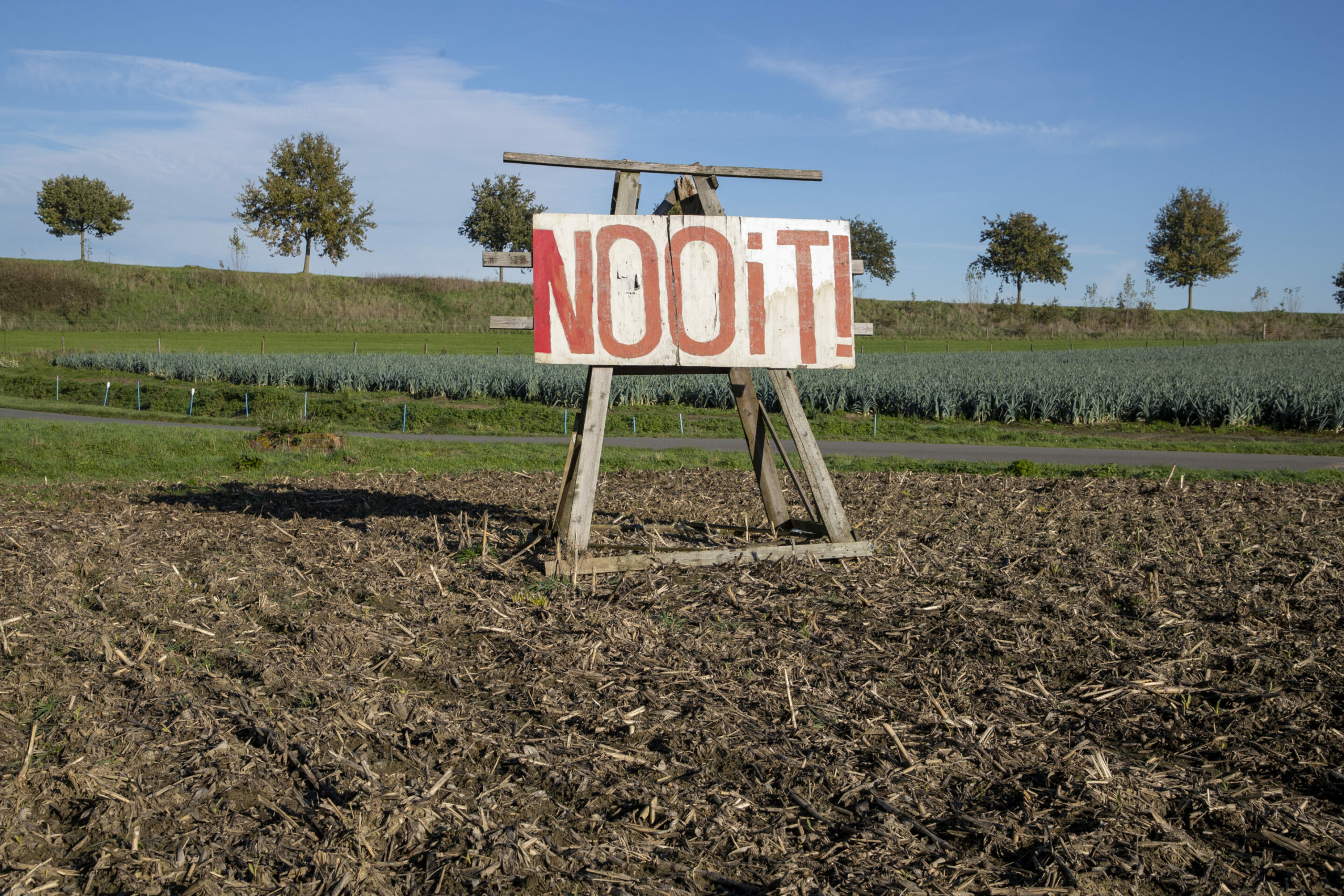
For years, several municipalities have seen protests against the Ventilus project, a new high-voltage line in West Flanders that is intended to bring offshore wind energy ashore. Sign reads nooit! ('never!' in English) Credit: Belga / Nicolas Maeterlinck
Most of the public participation responses also contained questions about the compensation policy for people whose properties are located near the new above-ground high-voltage lines, and this was included in the agreement.
Elia confirmed on Wednesday that around 500 homeowners will be compensated for the devaluation of their properties. Approximately 120 of these people will have the option to sell their houses to the company.
Ambitious timeline
Elia submitted the project's Environmental Impact Report (EIR) to the Flemish Government at the end of last month, marking a new phase for the project. It aims to submit the final EIR and the environmental permit before summer, which will be followed by a public inquiry. The hope is for construction to begin next year, with the new high-voltage line expected to be operational by 2029.
Elia acknowledges that this timeline is ambitious, especially considering several municipalities in West Flanders have appealed to the Council of State against the Ventilus route. The Council has received 25 appeals for annulment, five of which have already been rejected. "Depending on the Council's decisions, we may need to adjust our plans," Elia stated.
Elia has not yet provided clarity on the overall cost of the Ventilus project. "Given the current circumstances, the project cost will be higher."
