
2025 has only just begun, but ZOO Planckendael (in Mechelen) already welcomed the first storks after an absence of a few months. The first count already numbered more than 50 birds in the park – many more than at this time last year.
Every year, the zoo looks forward to the homecoming of the stork colony. But this year has been unusual as the first birds have already landed back in the park. They likely did not fly to the far South but spent the winter closer to home.
"2024 was another record year with 166 young. Most of those young left in mid-August," caretaker Olivier said in a press release.

Credit: Zoo Planckendael/Jonas Verhulst
"In total, ZOO Planckendael has some 376 birds and has also seen an increasing number of breeding pairs and young in recent years. This makes it the largest colony in the country," said Olivier. "These storks do not all go to the same place so their return is also staggered."
Storks that travelled longer distances are expected from the end of February and especially in March.
However, not all storks embark on this great journey every year: several adults spend the winter in the park or the wider area. "For a stork, roaming several hundred kilometres around their nest is not exceptional outside the breeding period," said Olivier. He noted that not all birds have the same migration "strategies".
A record year
Storks have been at ZOO Planckendael since 1990, when six of these black-and-white birds arrived. The young of these breeding pairs were given the chance to leave for warmer places in August.
At the time, there were hardly any storks taking the western migration route. Thanks to their release, the park revived Belgium's stork population. "They migrated as much as 5,000 kilometres to southern Spain and even to West Africa, but came back, again and again."
The colony has grown steadily since then. In 2024, the park counted 166 young, equalling the record set in 2023. "With 71 successful nests and 376 birds in total, it was a successful year for the country's largest colony," said spokesperson Amanda Wielemans.
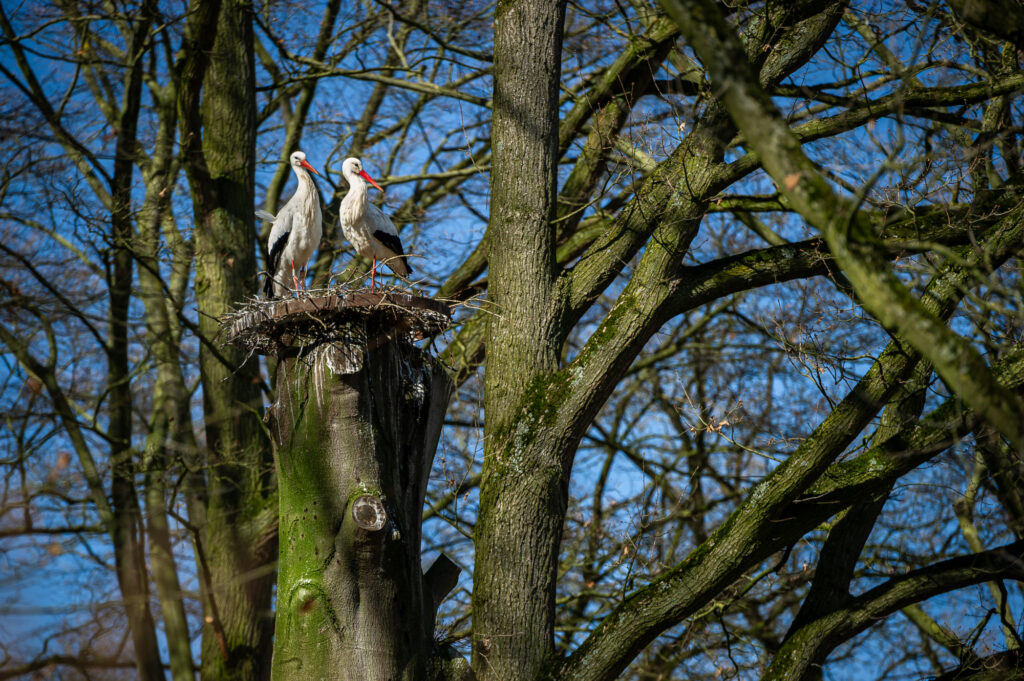
Credit: Zoo Planckendael/Jonas Verhulst
Most of the 2024 stork young left in mid-August in three large groups. However, a small number stayed a bit longer and later joined groups of vagrants as part of the migration.
The adult storks leave for the south around mid-September. Besides the birds staying in the park, some others continue to roam locally: they migrate towards Germany, the Netherlands and northern France in a few days.
Storks are great opportunists when it comes to food. They eat small mammals such as moles, mice, or frogs but insects, carrion and earthworms also taste good to them. If there is enough food to be found in the area, they do not need to fly far away. This group of storks returns earlier and spends the night in the park while looking for food elsewhere.
Counting storks
The national winter count took place in mid-December. "Storks are ideally counted before dawn because they fly out early to look for food," said Olivier. The official count is a snapshot, so additional observations give a fuller picture.
"In the days after the count, we saw the number of storks increasing rapidly. Storks are loyal to their nests: they always return. Empty nests were reoccupied and clattering could be heard all over the park," he added.
The birds are highly territorial and make loud noises to lay claim to their nests. "Some storks are already flying around with branches to decorate their nests, which normally happens later. The mild winter weather in recent months probably plays a role in this."
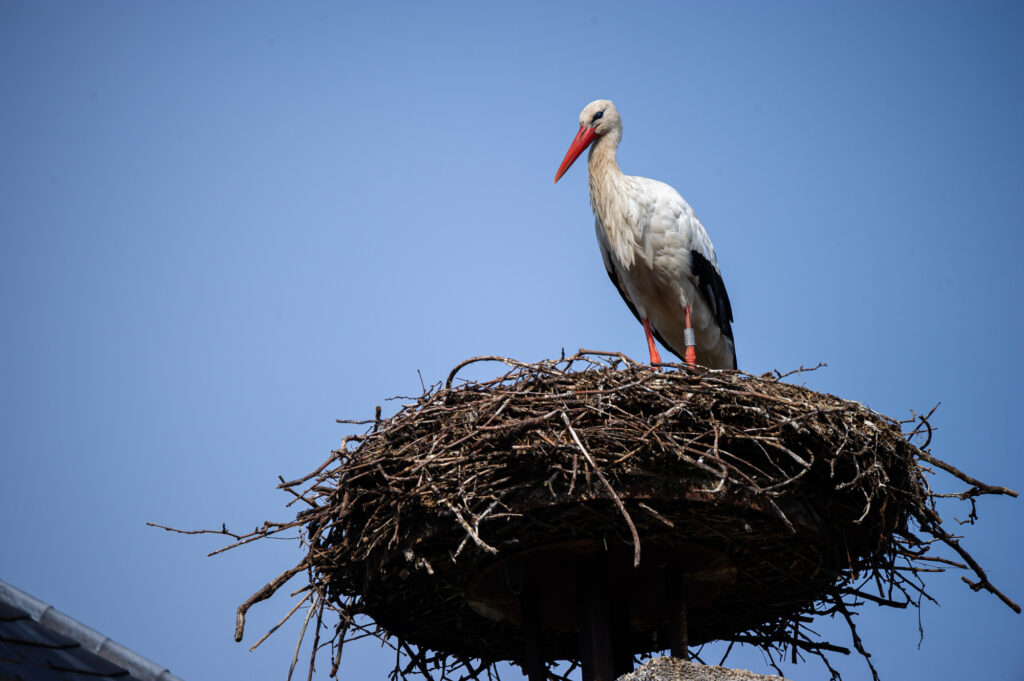
Credit: Zoo Planckendael/Jonas Verhulst
So far, the caretakers have already counted more than 50 storks. "Those that have spent the winter up to a few hundred kilometres from the park are already coming out to peep and reoccupy and beautify their nests," Olivier said.
Visitors to the park will enjoy an unusually high number of the birds. But they can also be seen a little closer to Brussels: storks are well known to have nests on street lights and chimneys in several municipalities just outside Brussels, such as Vilvoorde, Machelen and Grimbergen.
