
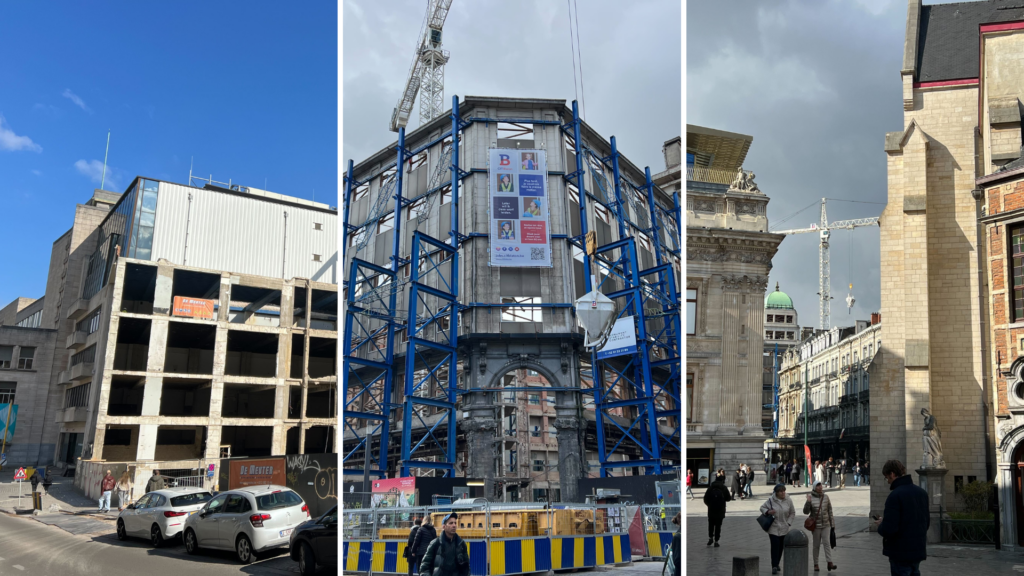
Construction works in Brussels feel endless – but much of it is part of a long-term vision to develop a "mixed and compact" city, says the director of Perspective Brussels, the regional centre of expertise for urban development, Antoine de Borman.
Construction sites are a staple of any growing city, and the capital of Europe is no exception. In Brussels, urban planning will progress to create a city designed for mixed uses, where residents can easily access essential services, explains de Borman.
While the Region is mainly an "economy of services" which inevitably makes office spaces crucial, development projects involve investments in multiple sectors. "The attractiveness of offices is not only dependent on office spaces but also what's around them," says de Borman.
'Share the city'
The director says Brussels has many new inhabitants, and the use of land is more intensive today than before. "The question is: how can we share the use of this land?"
For Perspective Brussels, the answer lies in the revamping of the Regional Land Use Plan (PRAS). Dubbed 'Share the City' the revised project – started in 2023 – aims to be a framework that acts as the “architect” of the city. It sets out to establish what types of spaces are allowed throughout the Region and how they can be distributed.
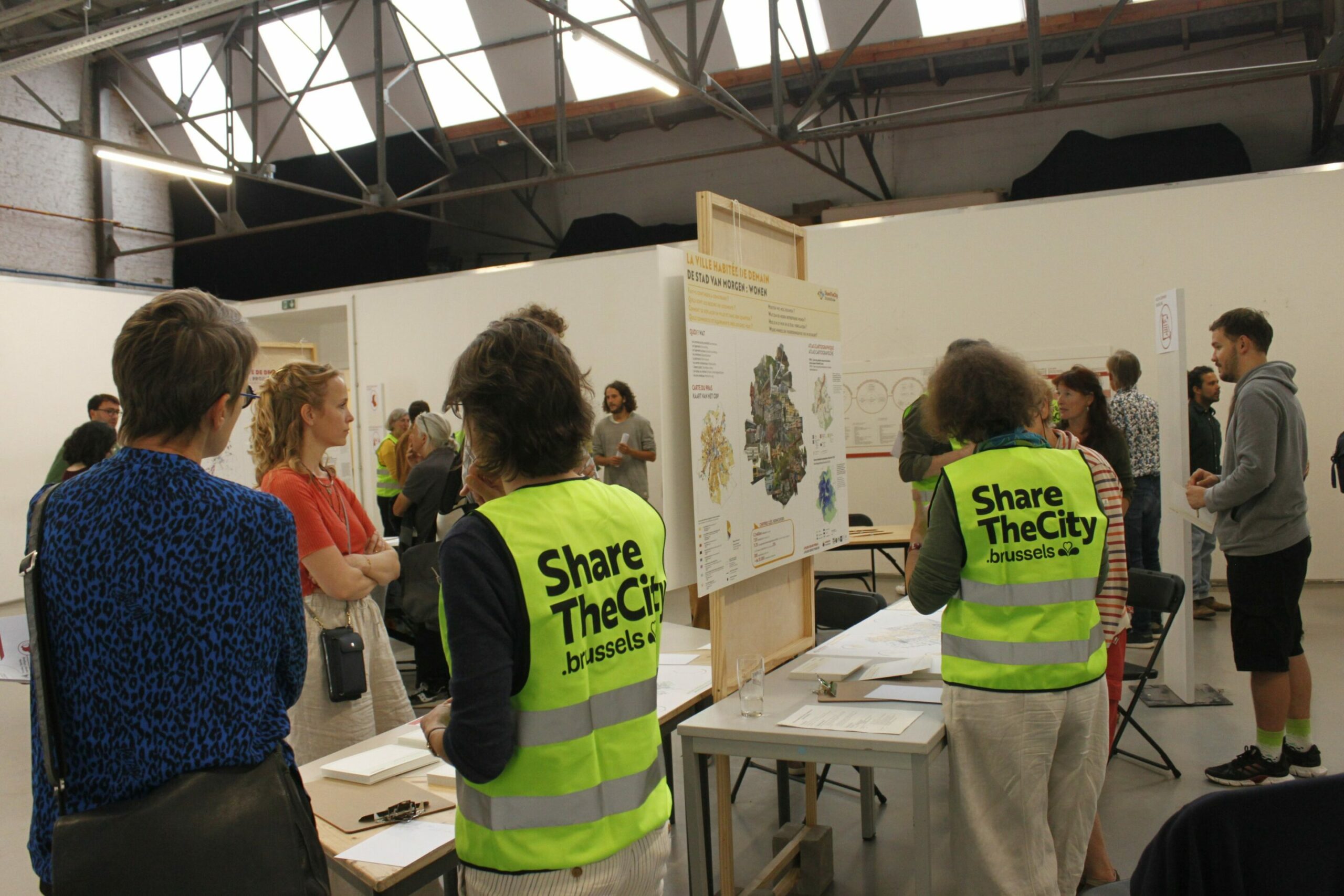
Event to discuss plans with the public relating to the 'Share the city' project. Credit: Perspective.Brussels/X
Part of the strategy relies on identifying or creating spaces that can have multiple purposes. "For example, school infrastructures are usually used during the day on weekdays. Which means that they are available during the evening and weekends," he says.
According to de Borman, the idea of sharing spaces can improve the quality of life, as multiple types of services and experiences can be more concentrated and accessible to different neighbourhoods.
However, he warns that the success of urban development plans requires patience. "We are working on the evolution of the city with a long-term vision. We usually work on plans and strategy for ten or 15 years."
For the revision of 'Share the City', de Borman expects the plans to be concluded in the next two to three years.
Building opportunities
Although developments often target a particular purpose or sector, they are frequently used as a way to address other issues. "Residential development, for example, is also an opportunity to work on the public spaces, green spaces, to work on the amenities," explains de Borman.
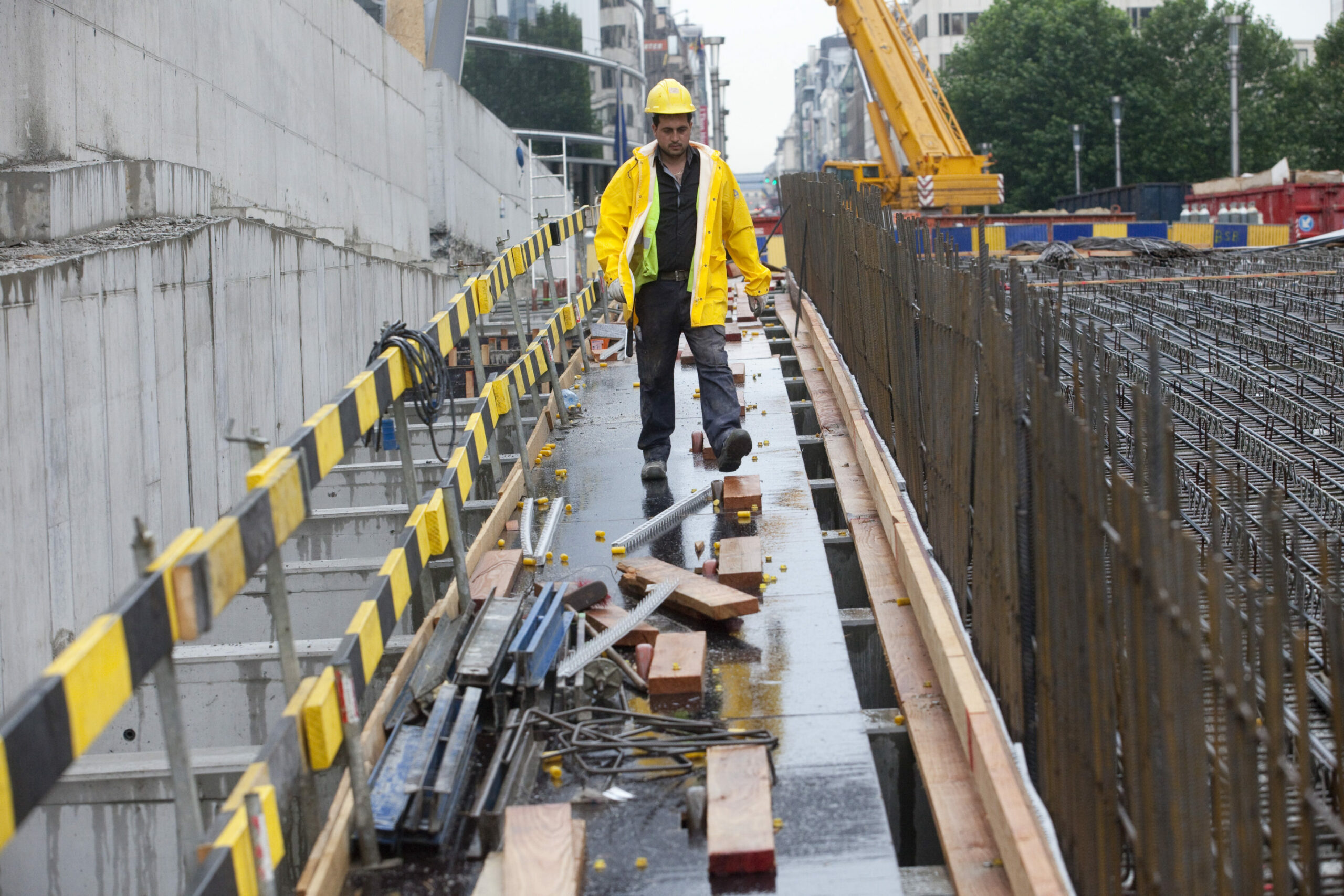
Construction worker in Brussels. Credit: Belga/Bernal Revert
The same approach is involved in improving accessibility. While Perspective Brussels is not directly involved in this topic, de Borman says that every project allows for improvement.
"For example, every time a pavement is reconstructed, the edges can be made more accessible [to those with reduced mobility]," he says. "Every time there is construction, there’s a possibility to adapt the design of public spaces."
De Borman adds that accessibility and inclusivity of all types of inhabitants are key to the development strategy. "Brussels is a city where the inequalities of life are important, so it's really important to be inclusive," he says.
Housing and industry
Amid the growing population of Brussels, providing affordable housing remains a key focus. "If we work on strategic sites where there are new residential developments, a share of that is designed and reserved for affordable housing," says de Borman.
Along with housing projects comes a focus on nearby services. "We want all neighbourhoods to have high-quality spaces…to find all the amenities they need in their daily life, like childcare, schools, parks, transport," de Borman adds.
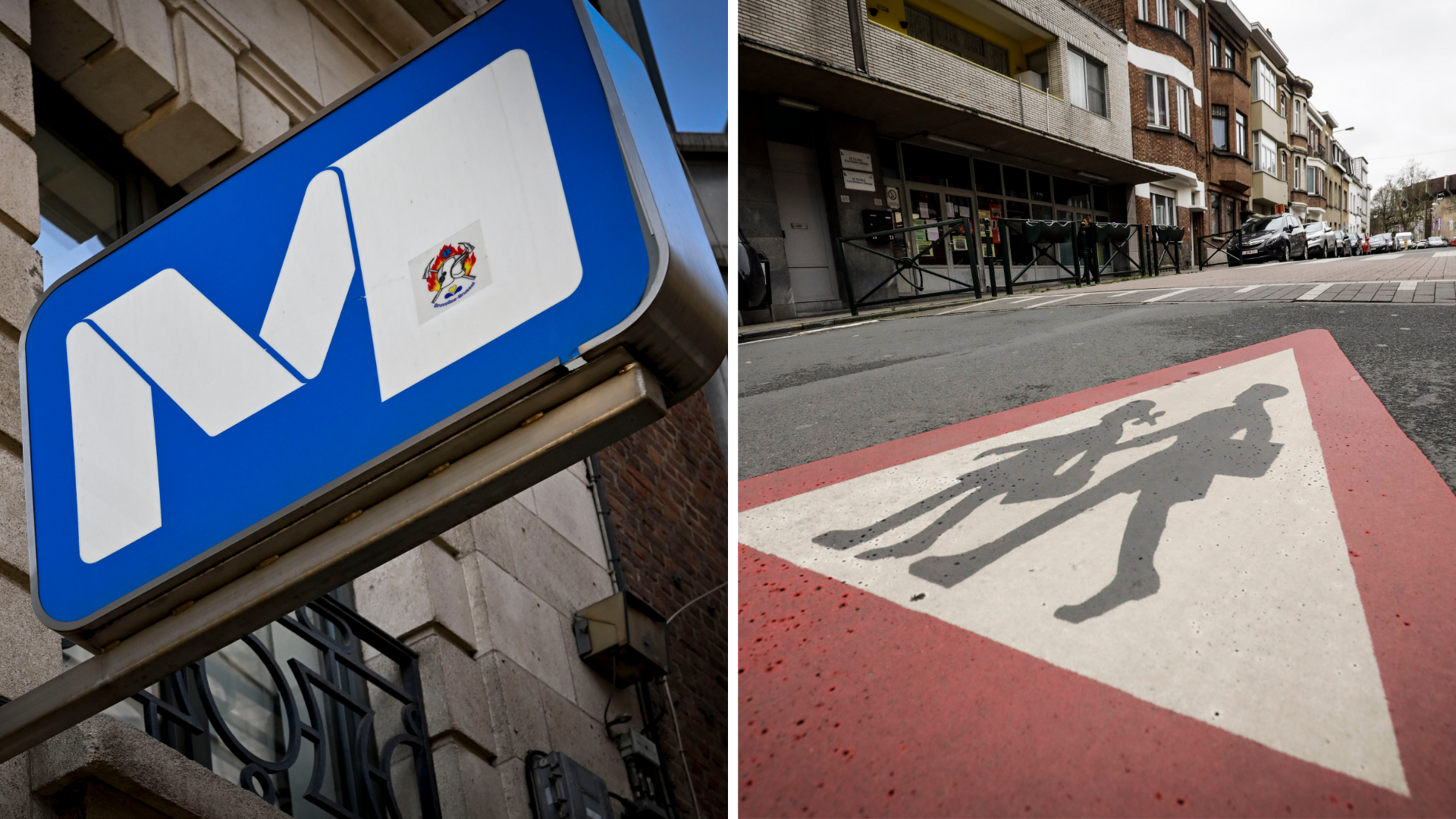
There is a focus on development of nearby services in residential areas. Credit: Belga
Another sector that has gained the attention of developers is the food industry "It’s very active in Brussels. Everybody knows Brussels for chocolate, but it also has its beers. There are a lot of microbreweries. There is a lot of industry around food and its distribution."
However, de Borman notes that the industry in Brussels has been suffering from a lack of space. "The industrial spaces and the spaces for productive activities have been shrinking," says de Borman. Projects to convert old worksites for business or expand spaces are also in the pipeline.
Mobility: Influential 'entry points'
Mobility remains an essential part of Brussels’ growth. "Most of the people who work in offices [in Brussels] are actually coming from outside the city. So it's really important that the accessibility to Brussels is offered by public transportation in particular," says de Borman.
Among the urban development plans, the Brussels-North and Brussels-Midi stations and their surrounding areas will receive "attentive" focus throughout the next five to ten years, according to de Borman.
"We know that the situation there is not good...but I think it's very influential for the attractiveness of the Brussels Region because those are entry points," he says.
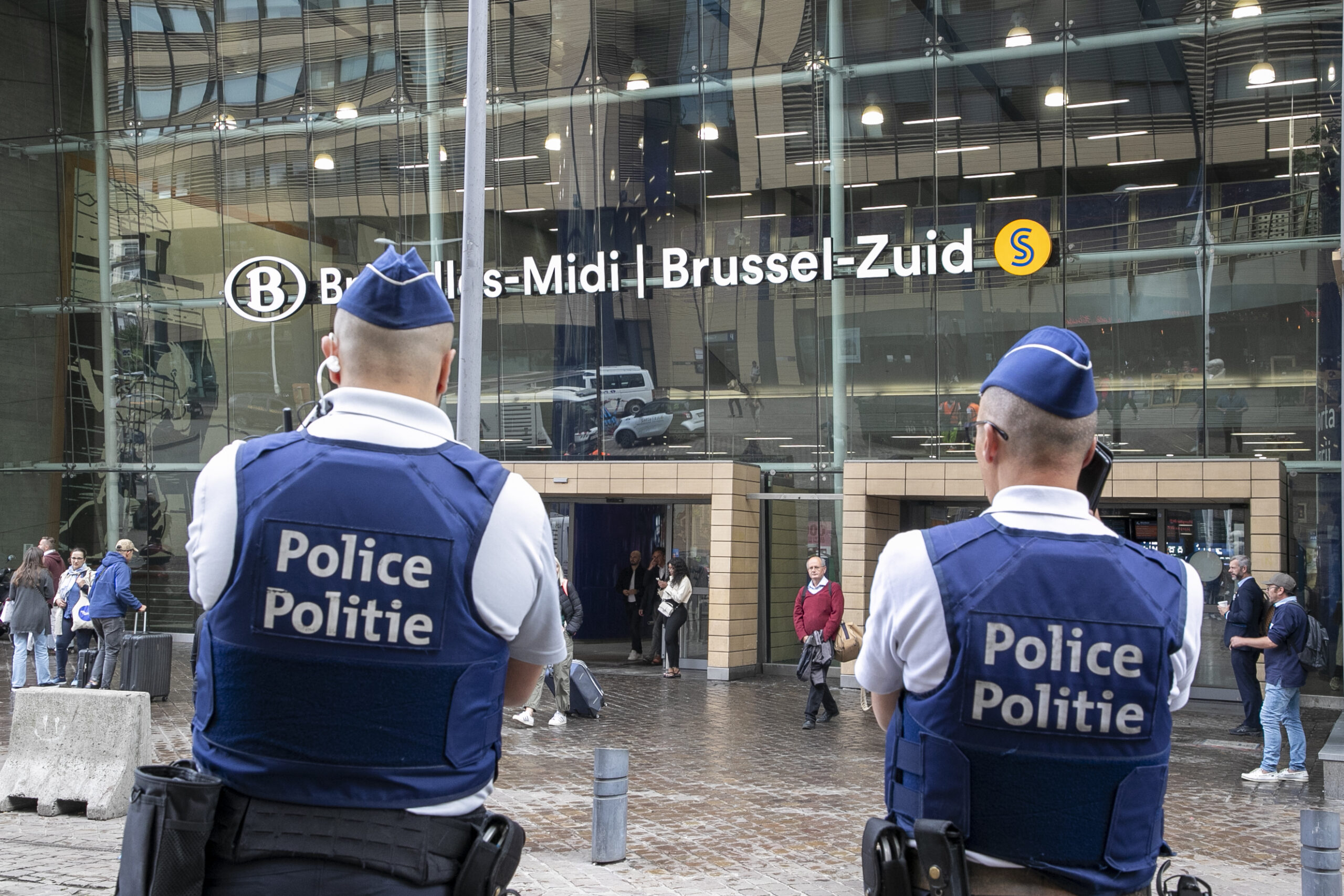
Police officers during a police action related to crime and anti-social behaviour in and around Bruxelles-Midi Station in 2023. Credit: Belga/Nicolas Maeterlinck
"It's not through [urban] plans, of course, that you can contribute directly to the security or the cleanliness of a neighbourhood," he adds "But our conviction as planners is that you can create a virtuous circle so that by improving the neighbourhoods, it creates a positive effect."
'Money is scarce'
While the dedication to planning Brussels' future is abundant, the same cannot be said for the financial resources. "Money is scarce, the finances of the Region are not excellent at this moment," says de Borman.
Though he names financial constraints as the major hurdle for urban development, there are workarounds. "It means that we have to rationalise and prioritise the [development] choices," he says "This also means that doing public and private partnerships are more important than ever."
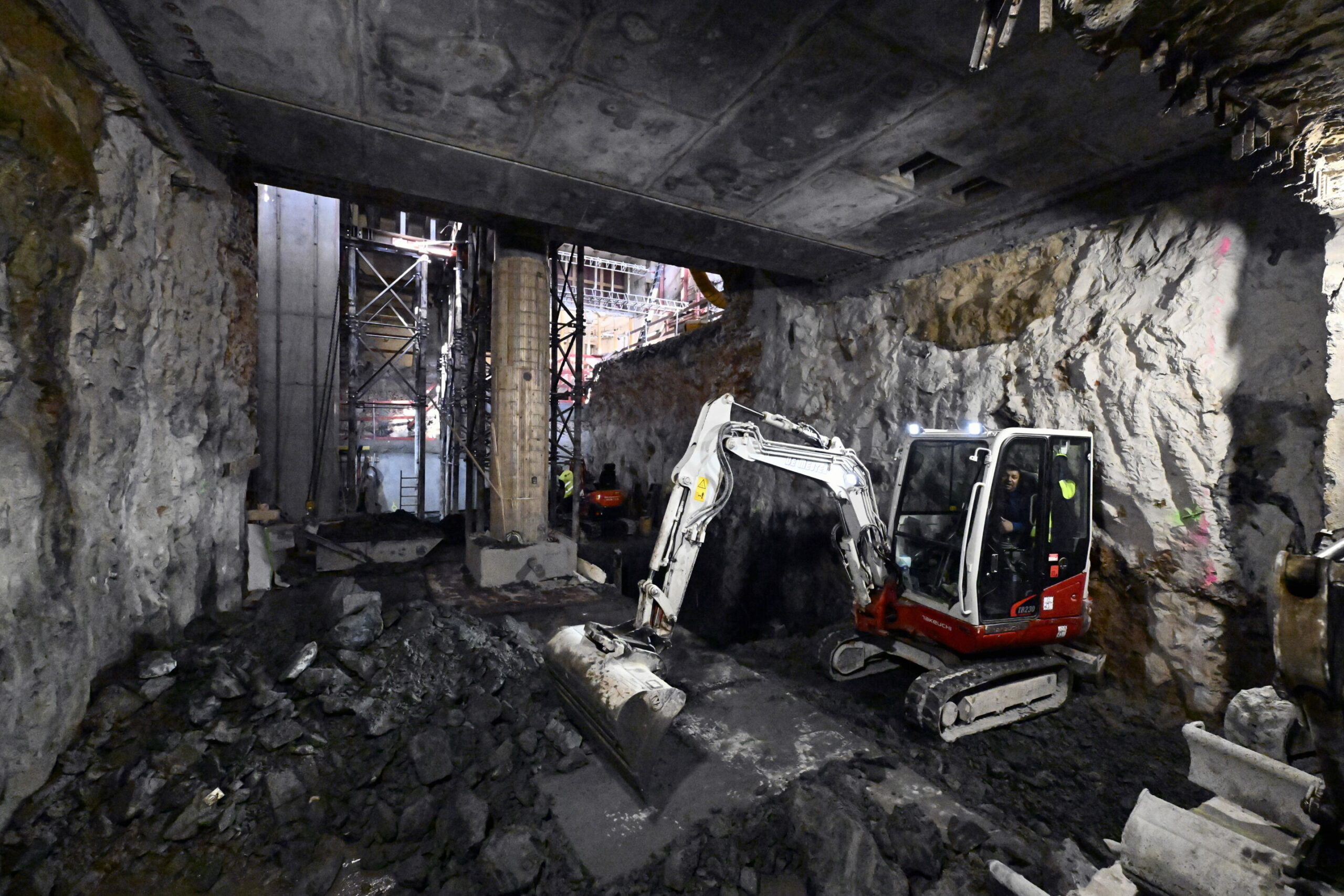
Metro 3 worksite in 2024. While the project is set to expand the transport network, it has faced delays due to budget issues. Credit: Belga/Eric Lalmand
However, de Borman underscores that the role of public authorities is indispensable, particularly infrastructure.
Although the ongoing formation talks for the Brussels government have not significantly impacted de Borman's work, establishing a government remains essential for the future. "We have to have some political decisions at some point to define priorities and choices...and also defend the Brussels Region inside of the State."
Regardless, Brussels will continue to develop and grow. While the (re)construction projects are far from over, de Borman says it's important to acknowledge what has already been accomplished. "Sometimes we are modest in Brussels. We don't always see all the different good elements that do improve."
