
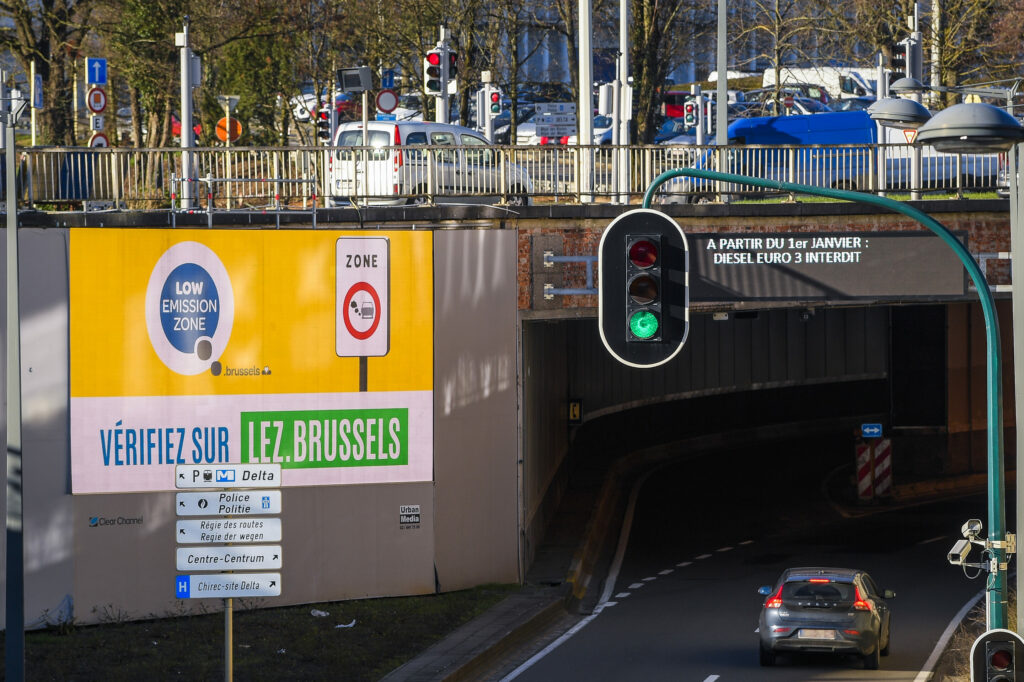
The current (postponed) schedule for Brussels' Low Emission Zone (LEZ) would see greenhouse gas (GHG) emissions almost halve by 2030, a new study has found. This means staying on this course is vital.
Brussels introduced its LEZ, which covers all 19 municipalities, in 2018. Since its introduction, the LEZ has significantly improved air quality in Brussels.
A new study by the International Council on Clean Transportation (ICCT) has now found that, if the current plan is maintained, GHG emissions from road transport in the region will drop by 45% compared to a scenario without LEZ. Between 2019 and 2040, the LEZ would prevent 3.9 million tonnes of GHG emissions, equivalent to the emissions of 83,000 petrol cars.
"This data is based on the government staying on the course we are now on," Pierre Dornier, Director of the non-profit organisation Les Chercheurs d'Air, told The Brussels Times. "This highlights the importance of not further postponing the tightening of rules again."
Weapon against climate change
Earth’s greenhouse gases are gases – like carbon dioxide (CO2, emitted by cars), methane, and nitrous oxide – that trap heat in the atmosphere and warm the planet.
The greenhouse effect in itself is not a bad thing; without it, the planet would be too cold to sustain life as we know it. However, by adding greenhouse gases to the atmosphere, more heat is being trapped, and the entire planet gets warmer. This is human-made climate change.
As part of the 'fit for 55' revision of the Effort-sharing Regulation (ESR), Brussels committed to reducing its 2030 emissions in the effort-sharing sector by 47% compared to 2005.
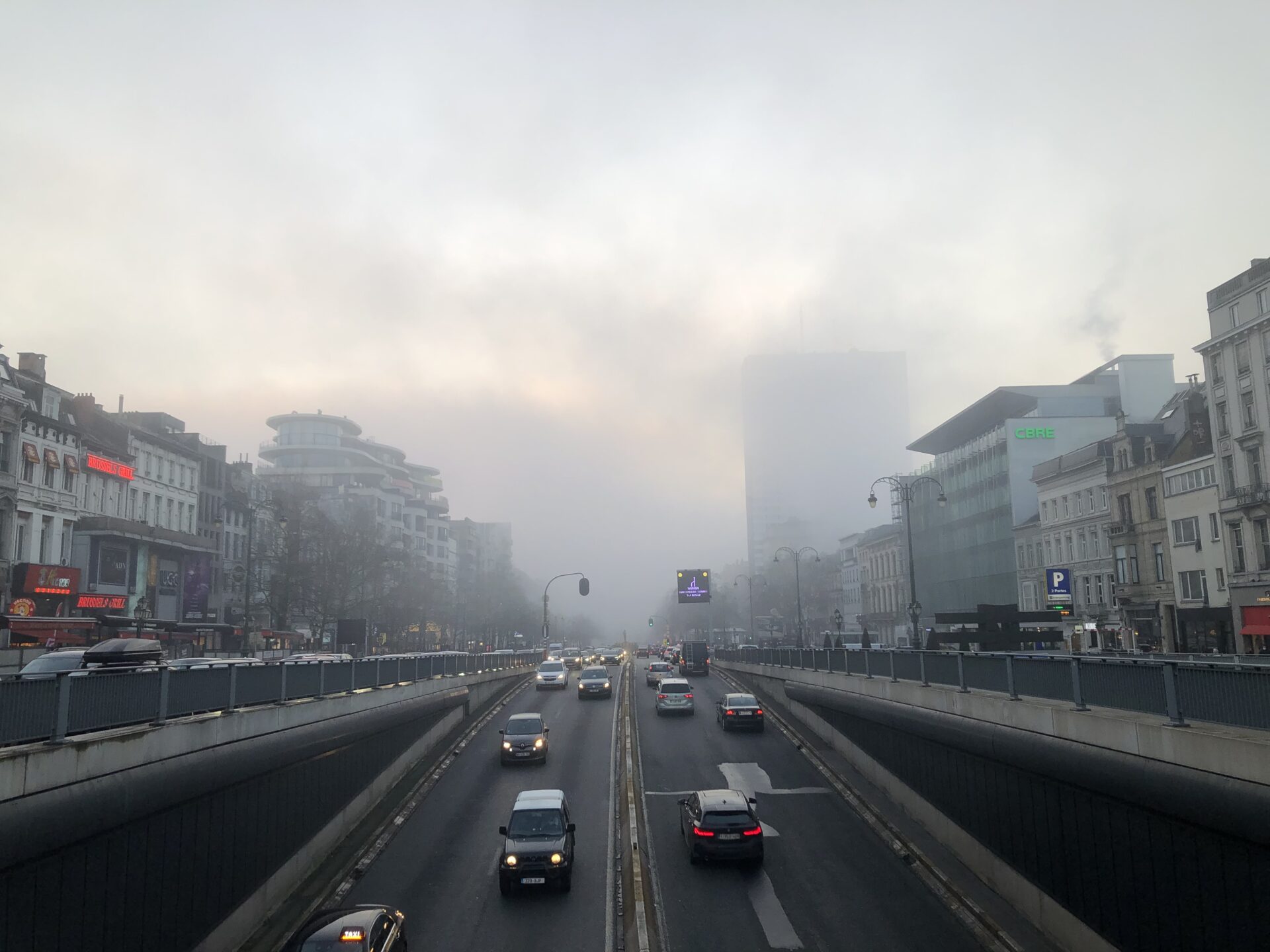
Porte de Namur in Brussels. Credit: Ugo Realfonzo / The Brussels Times
"Not only does the LEZ protect us from air pollution, it is also a formidable weapon against climate change," Dornier said. "Thanks to it, the equivalent of the emissions of tens of thousands of combustion cars is avoided."
The study also analysed the potential impact of other measures complementary to the LEZ. The Good Move plan would make it possible to save an additional 1.8 million tonnes of GHGs by 2040 while introducing a tax on large cars this year, which could encourage owners to opt for medium-sized vehicles, would save the equivalent of the emissions of more than 2,100 petrol cars by 2040.
Delaying progress
Dornier emphasised the importance of staying on the current track to attain this emission reduction goal by 2030. As a reminder, the Brussels Parliament voted in October 2024 to postpone the next LEZ milestone by two years. The rules were due to tighten as part of the next LEZ phase at the start of 2025, banning several Euro 5 diesel and Euro 2 petrol vehicles.
The ICCT study calculates that if the final LEZ timetable is postponed by two years (with diesel phased out in 2032 instead of 2030 and combustion engines in 2037 instead of 2035), the potential reduction in cumulative emissions up to 2040 would be divided by four.
"Weakening the LEZ, therefore, contributes to an increase in the number and intensity of natural disasters, in addition to damaging our health," said Dornier. "Further pushing back the tightening of rules will be bad news for people in Brussels."
Related News
- Low Emission Zones: What are they and what fines do drivers risk?
- De Lijn paid over €70,000 in Low Emission Zone fines last year
Despite the study highlighting that the recently approved two-year delay in tightening rules will not impede achieving GHG reduction targets, Dornier stressed that, from an air pollution perspective, the decision remains abhorrent.
"We are losing two years time in our battle against air pollution, and all the while, people are literally suffering [with asthma, for example], and dying prematurely. This is especially true for young children. So it’s still unacceptable that it was delayed in the first place."
