
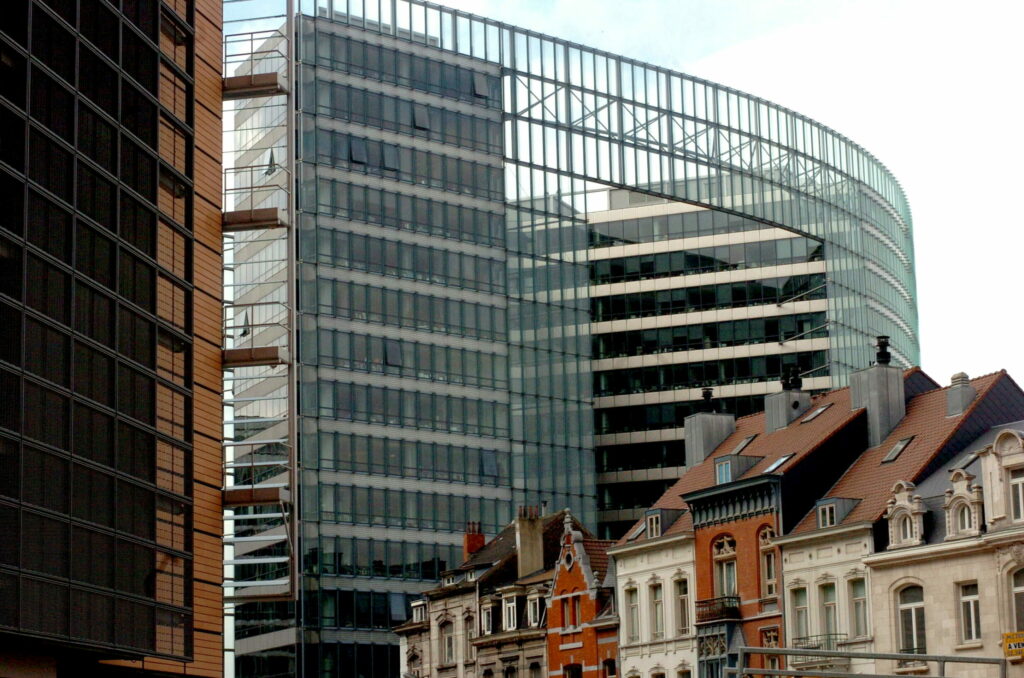
As some of the European Commission's worn-out office buildings in Brussels' EU Quarter are being transformed into 800 new homes, the area will become less office-heavy and more "sustainable and vibrant" over the coming years.
Almost a year ago, it became known that Brussels-based real estate fund Cityforward had managed to raise €460 million to buy 21 empty European Commission office buildings in Brussels' EU Quarter. Now, 17 will be redeveloped in partnership with Home Invest Belgium (HOMI).
"We are proud to be part of this development project with an important societal importance in an absolute prime location in Brussels," said Preben Bruggeman, CEO of Home Invest Belgium, in a press release. The project aims to "improve the social balance of Brussels' rental offer" and contribute to the quality of life in the European district "through planned public facilities."
The agreement covers 75,000m² of space. While Cityforward will focus on developing the office part of the nine projects, Home Invest Belgium will take care of the residential part. The latter consists of housing, commercial spaces and public facilities.
Project clusters
Around 800 new homes are expected to be completed over seven to nine years, with the first apartments potentially being delivered by 2028. In time, this should double the number of families living in the heart of the European Quarter.
"This large-scale project respects both social concerns and economic realities, and gives us great confidence in what is possible in our capital city," said Frédéric Van der Planken, manager of Cityforward, at the time of the sale last year.
The nine different projects are grouped into four clusters. The biggest cluster, called Ilot, comprises 27,500 m² and groups a number of buildings on the Rue Joseph II and Rue de Spa, at a stone's throw from the Berlaymont building.
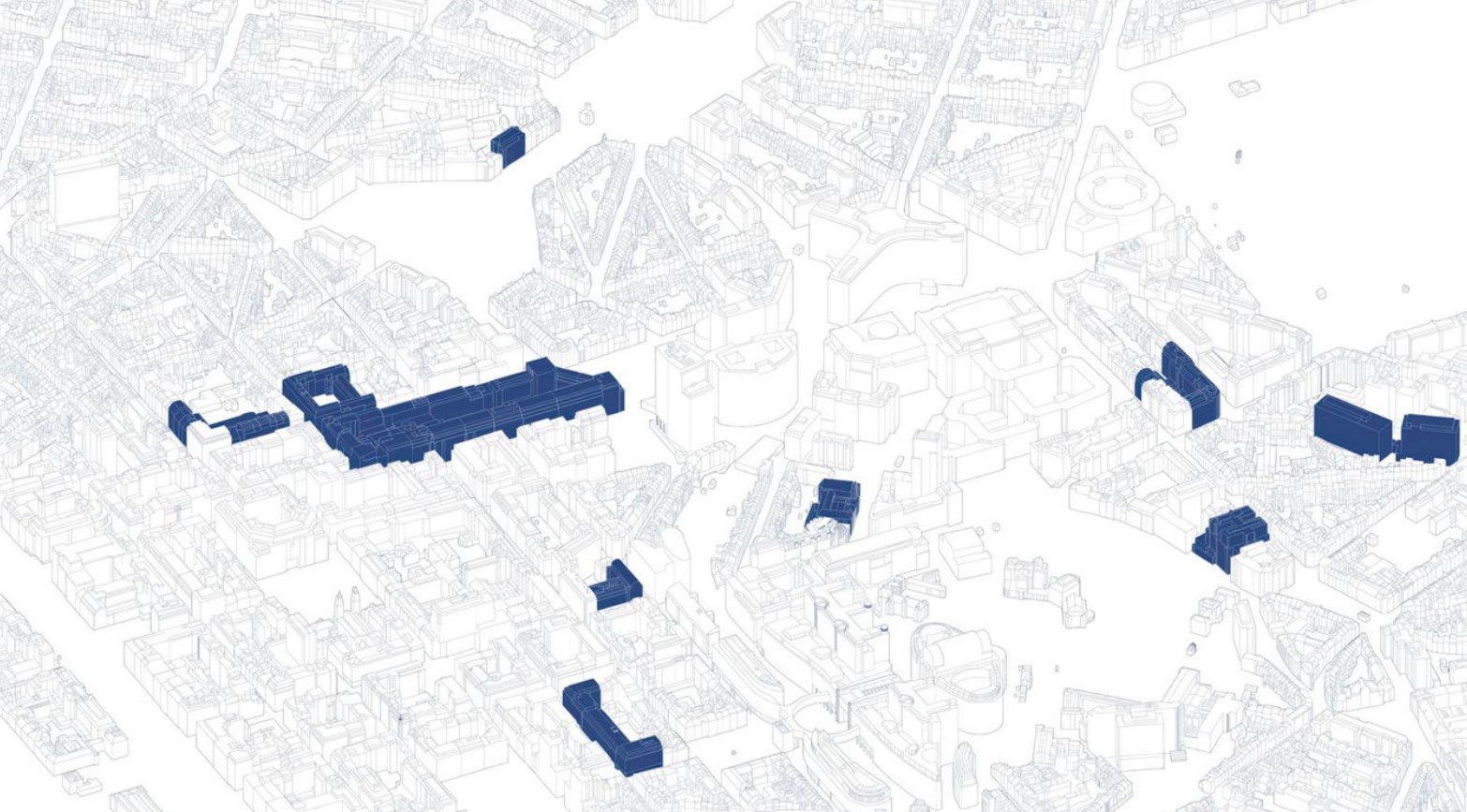
The different project clusters in the EU Quarter. Credit: Cityforward
The Demot cluster (26,500 m²) refers to several buildings located on Rue de Mot, between Parc Leopold and Parc du Cinquantenaire. The Lux cluster (17,500 m²), just off Place du Luxembourg, refers to the building taking up the entire length of the block opposite the Embassy of the DRC, as well as some smaller ones in the area.
The last cluster is the large Palmerston building right next to Hôtel Van Eetvelde, close to Place Ambiorix. Today, the Palmerston and Ilot clusters are in the design phase. The first permits for these clusters are expected to be obtained next year, after which the first apartments could be delivered in 2028.
"Through this transformation, we are strengthening our capital's position as the heart of Europe," said Van der Planken. "At the same time, we are also responding to the strong demand for diversification and additional housing in the EU Quarter."
Tactical urbanism
For decades, the EU office district has been characterised by its lack of connection with what happens outside, with blinds, walls and large stickers on glass windows. On top of that, many of these offices have been largely unused since the pandemic.
"The environment is quite unfriendly to people," Alain Deneef, President of the European Quarter Fund (a think-tank which is part of the King Baudouin Foundation), told The Brussels Times.
"To solve that, we proposed to invest in 'tactical urbanism' measures, which include activating the offices' ground floors: creating restaurants, cafés, shops and meeting places, for example. This has been completely lacking in the EU Quarter," he said. In addition to this, tactical urbanism also includes installing new or more bike parks and greening rooftops, for example.
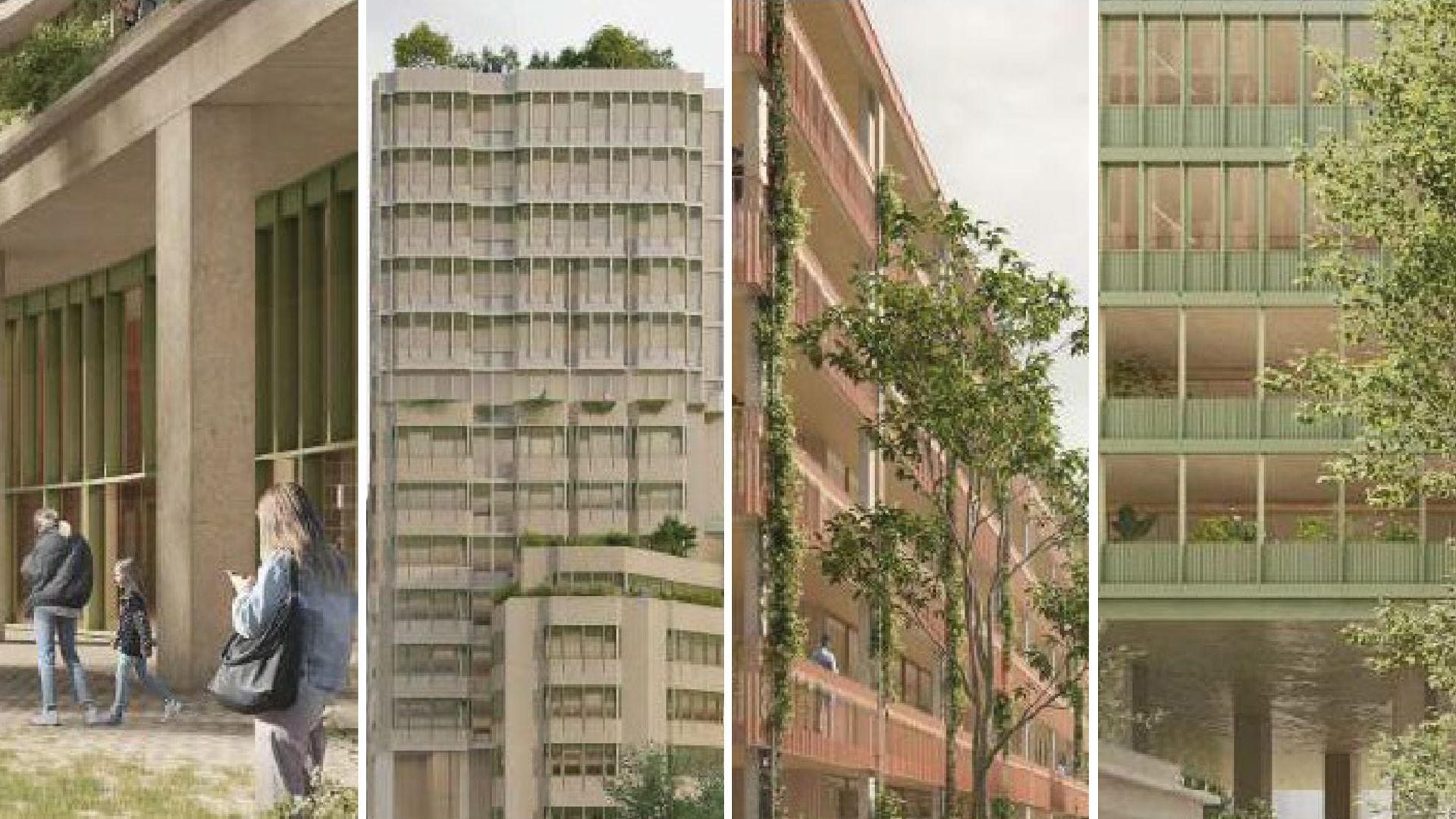
Ilot cluster projection. Credit: Cityforward
Deneef hopes that the transformation of these 20 buildings will turn a critical mass of 300,000 m² into a "virtuous circle," in which owners of buildings close by could be triggered to also make (some of) these changes. "This could finally create change in the European Quarter, which has been waiting for such a change for the last 30 years."
It concerns the offices located on Rue Belliard, Rue de Trèves, Avenue Palmerston, Rue Van Maerlant, Rue de la Loi, Rue Joseph II, Rue de Spa, Rue du Luxembourg, Rue Montoyer, Rue Froissart, Place Madou, Rue Demot and Rue de la Science.
Related News
- 'Tactical urbanism': Belgium to start emptying office buildings in EU Quarter this month
- From EU Quarter to Reyers: What are Brussels' most rapidly expanding districts?
- Brussels' European Quarter to get 800 new homes from converted offices
- Belgium: House prices in your area, trends and analysis (interactive map)
- Brussels’ office bailouts: Empty floors, full price, no spies
