
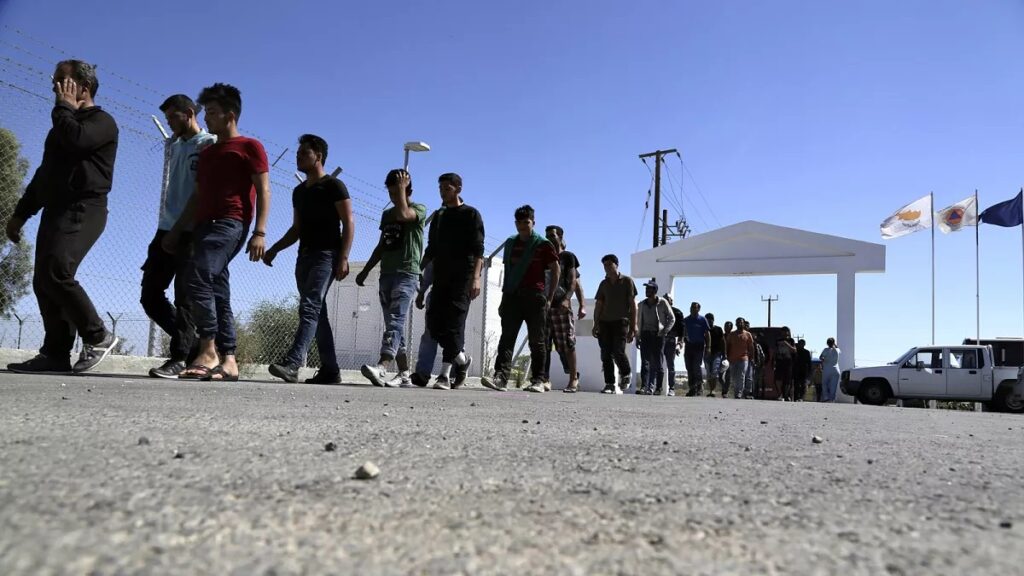
Only with extensive externalization – including a major legislative reform mandating that asylum seekers apply for protection outside the Union and are resettled through a quota system in accordance with the integration potential and willingness of each Member State – can Europe establish a common sustainable and fair migration system.
Freedom Requires Borders
The 2015 refugee crisis exposed fundamental weaknesses in Europe’s dysfunctional migration policy and placed EU member states under immense social, cultural, and economic pressure.
The consequences of the open-borders and open-hearts approach remain evident and will continue to affect Europe until decisive action is taken.
The lack of borders has not expanded freedom; instead, it has decreased Europe’s safety and security, thereby restricting freedom within the continent, not least in terms of the growing number of internal border controls within Schengen and several member states starting to advocate for a return to national law supremacy in all migration matters.
The EU Migration Pact, adopted one year ago, does not address the core issue: Migration challenges will persist under the current legal framework as long as the number of people seeking to enter Europe exceeds the continent’s capacity and willingness to receive them.
In other words, the Migration Pact fails to balance the right to seek protection with the EU’s ability to integrate newcomers effectively. Only a major overhaul of the migration system, requiring asylum applications to be submitted outside the EU and providing protection through Resettlement programmes in accordance with each EU Member State’s integration potential and willingness, can achieve this goal.
Rethinking Asylum in the 21st Century
When the 1951 Refugee Convention was drafted in the aftermath of World War II, it was designed to address the displacement of millions within Europe. Today, it applies to all present and future refugees worldwide. Given the significant changes since 1951 – and the reality that migration pressure on Europe is unlikely to decrease – it is evident that the current system is no longer fit for purpose.
Requiring migrants to reach European territory before processing their claims is both impractical and ethically indefensible. Europe’s current approach – on paper defending asylum rights while simultaneously deploying measures to curb migration – has led to an unworkable and often inhumane situation. A new, more coherent system is urgently needed.
A new system for asylum outside Europe
Migration patterns will continue to put Europe under pressure; The urgent need for a more orderly and controlled migration system; Our moral obligation to provide asylum to those most in need, rather than those able to travel to Europe irregularly. These are the three key reasons why we propose a new system for asylum outside Europe, one that addresses the core issues left unresolved by the pact adopted last year.
Firstly, we propose that asylum seekers be required to apply for asylum outside the EU, at EU Liaison Offices. This would remove the incentive for dangerous journeys across the Mediterranean, that claim hundreds of lives every year and during which women migrants are raped to an alarming extent, and ensure that applications are processed for those in genuine need – not only for able-bodied economic migrants with the means to pay smugglers and traffickers.
The current model, that the migration pact adopted last year will preserve at its core, overwhelmingly favours young men with resources, while vulnerable women, children, and the elderly are left behind. This imbalance also undermines the UN’s quota refugee system, which is designed to identify and assist the most at-risk populations.
Secondly, we propose that these applications be processed in accordance with EU law. This is a more responsible and humane approach compared to other proposals, such as the Rwanda model famously proposed by the Tory government in the UK a couple of years ago. The EU has both a moral and practical responsibility to protect those fleeing war and persecution, and we can afford to guarantee to do such under our own laws, as opposed to those of third countries.
Thirdly, we propose that protection for those granted asylum be provided through expanded resettlement programs and new partnerships with safe third countries. The EU should take inspiration from Canada’s approach, where both humanitarian need and integration potential are considered in resettlement policies.
To accompany the integration of asylum seekers whose applications have been approved, EU Member States may explore different solutions, according to their capacities, such as putting in place categories that could reflect distinct situations : high integration potential, family reunification, specific social needs.
As the goal is not only to provide protection here and now, but also to preserve the legitimacy of the system, which is the only way to provide protection in the future, it is crucial that that the decisions are linked to integration and that each Member State always has the final say.
This structured approach would entirely replace the current practice of seeking asylum at EU borders, ensuring a more orderly, humane, and controlled migration process.
Tackling the Issue at Its Core
The European Commission proposed a new Regulation on Returns March 11th. At the same time, additional revisions to enable return hubs in safe third countries are foreseen. These developments are welcome, as a "no" must mean no in migration policy.
After having imposed so much legal and jurisprudential constraint on returns, making it nearly impossible, the fundamental function of the revision of the Return regulation should be to give back to the Member States the capacity to decide and to deliver in this matter
However, the time has come to address the migration issue at its core. The need for more effective returns arises from outdated legislation that incentivizes economic migrants to travel to Europe to apply for asylum. Any sustainable solution must be built on changing this fundamental regulation.
Lawmakers Should Not Be Intimidated into Inaction
Critics may argue that this is not feasible, citing international law obligations. To them, we say:
Firstly, the new system for asylum outside Europe would repair an already broken system. It is time to update the interpretation of the 1951 Refugee Convention, which is already being undermined in a less transparent way, for example, through the emphasis on so-called pushbacks.
Secondly, nowhere in the relevant conventions is it stated that asylum seekers have the right to apply for protection in the country of their choice. Protection, not location, is what matters.
Thirdly, lawmakers entrusted with responsibility by their constituencies should never claim there is nothing they can do. We were elected to change laws when needed. Both the European Court of Justice's and the European Court of Human Rights’ interpretations have grown increasingly expansive, but they are not immutable.
Protecting Europe’s Values and Security
If Europe is to remain Europe – if we are to protect Jewish communities as we vowed after the Holocaust, if we are to safeguard free speech without fear, and if we are to preserve the freedoms that attract so many to our shores – we must reinforce our borders in every way possible - including a new system for asylum outside Europe.
Europe must act decisively. The time for half-measures and ineffective policies is over. A well-regulated, fair, and sustainable migration system is not just an aspiration - it is a necessity.
