
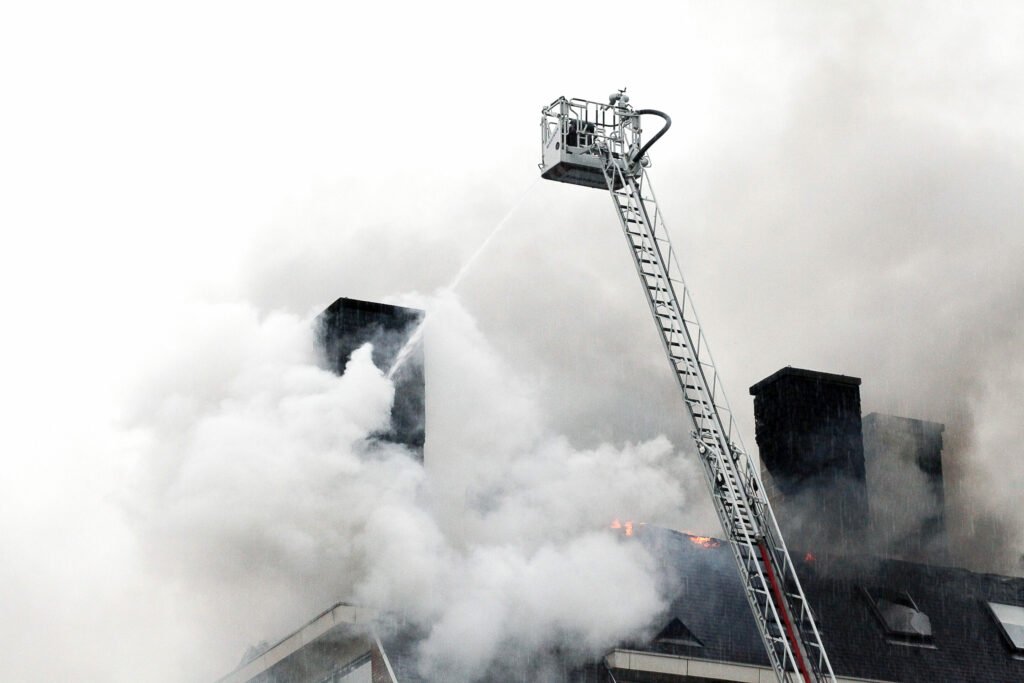
In Belgium’s bid to conserve energy and stay warm during bitter winters, many homeowners have turned to retrofitting cladding onto their homes to help insulate, reinforce and protect their buildings from the elements. But what rules do homeowners need to follow; and does cladding amount to a fire risk?
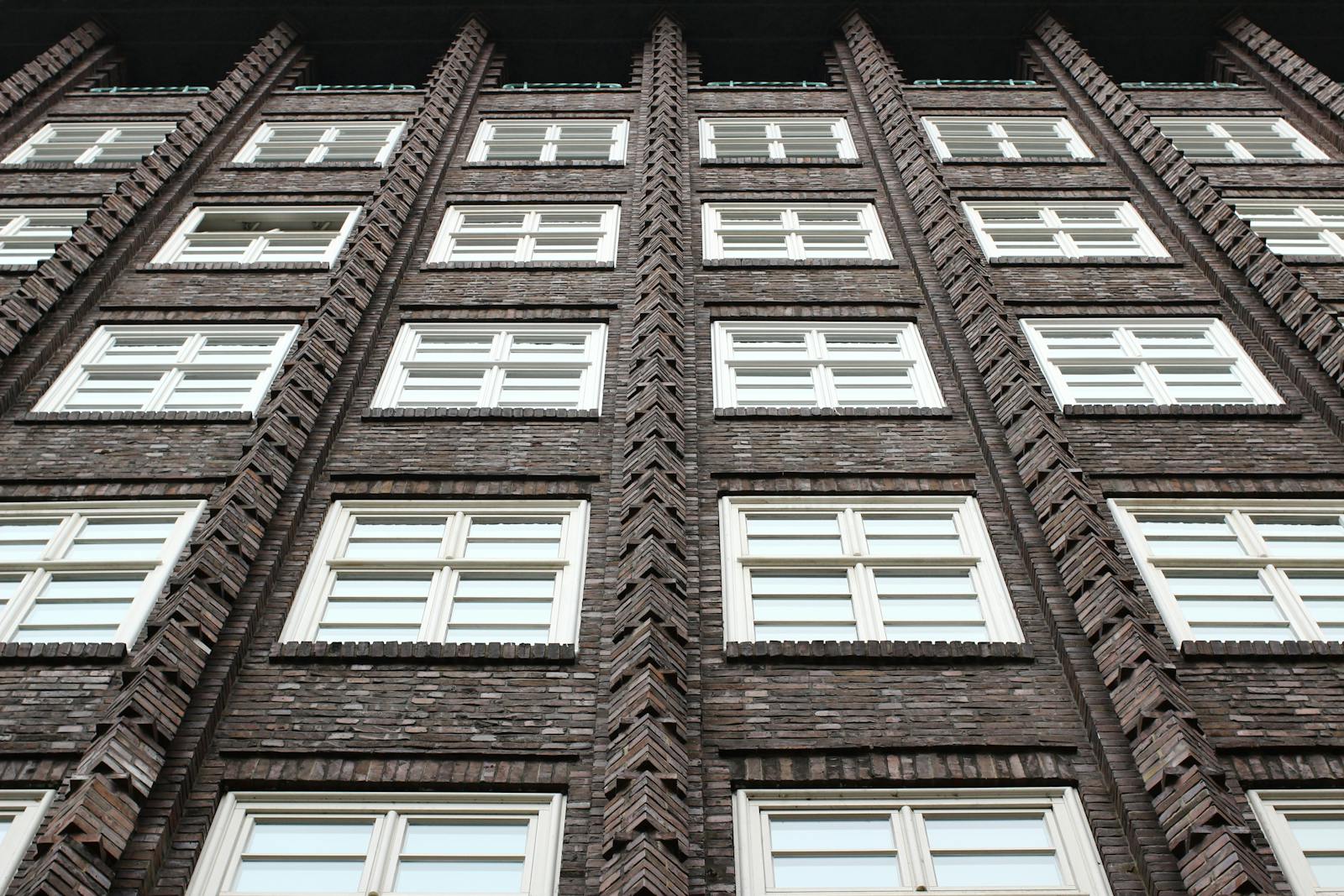
Belgium’s cold winters and increasingly hot summers place great stress on the façades of buildings, which often crack and crumble due to thermal shock. As the saying goes, “every Belgian is born with a brick in his stomach”, and most traditional Belgian buildings feature stone or masonry façades. Sadly, these are not easy to maintain.
Façade repair companies are busy throughout the year, fixing and replacing damaged stonework exposed to the elements. With regional governments offering generous grants and banks giving preferential loans to Belgians wishing to renovate their homes, especially to make them more energy efficient, some homeowners are simply putting new materials directly on top of existing brickwork.
External render, particularly External Thermal Insulation Composite Systems (ETICS), not only provides a neat and tidy appearance but can also significantly boost a property’s EPC rating. Over 54% of homes in Belgium were built before 1960, and many are in urgent need of insulation to align with the country’s 2030 climate goals.
Regional incentives make the prospect even more appealing. Grants can reach up to €180 per square metre in Wallonia, cover up to 35% of the investment cost in Flanders, and provide up to €90 per square metre in Brussels.
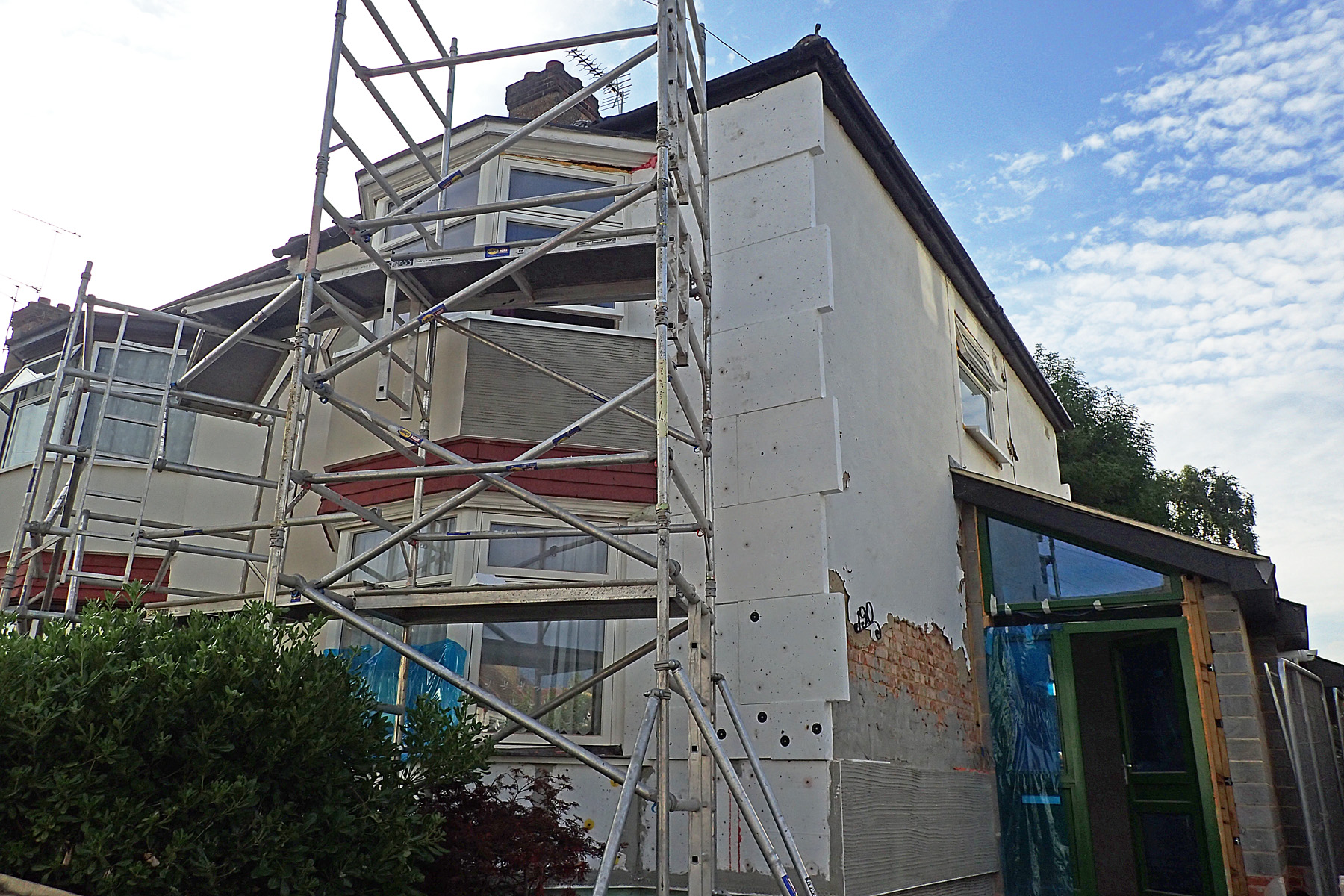
A home with cladding being applied. Credit: Sean Wallis/Flikr
ETICS is now the most widely used method for exterior insulation. In 2020 alone, over 330 million square metres of ETICS were installed across Europe, according to a recent industry forum held in Poland.
These systems typically consist of insulation panels fixed to the outer walls, reinforced with mesh and finished with a stucco render. They are popular for both improving energy efficiency and giving façades a clean, modern look.
Cheap and easy
In Belgium, the most common form of ETICS cladding uses expanded polystyrene (EPS) boards. EPS is a lightweight foam material, similar to what is used in packaging. These blocks are coated and encapsulated to form a protective layer. This method has become increasingly popular in the past decade, particularly for retrofitting older homes.
Cheap, light, and easy to install, EPS ETICS now represents around 70% of the European market. Other cladding types, such as PVC, vinyl, fibre-cement boards, timber, or high-pressure laminates, are available, but they are less common in Belgium.
Cladding, once a technical or niche topic, rose to international attention following the Grenfell Tower fire in London in 2017, which claimed the lives of two people and injured over 70.
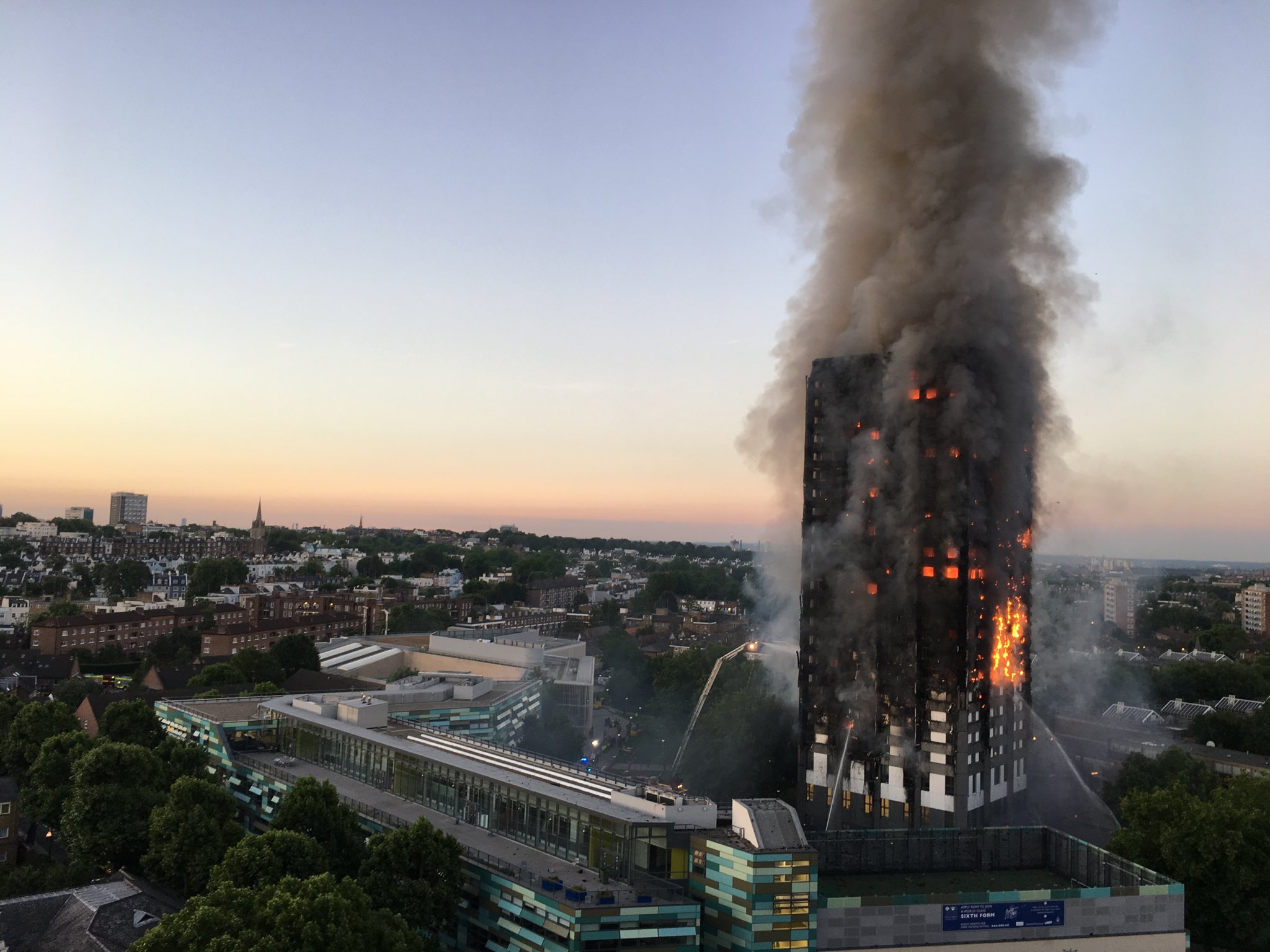
The Grenfell Tower fire led to renewed concerns over external cladding. Since the accident, the UK will spend over €26 billion on replacing potentially dangerous cladding following the disaster. Credit: Natalie Oxford/Wikimedia Commons
Grenfell’s external panels, made from Aluminium Composite Material (ACM) with a polyethylene core, were found to be highly flammable. ACM remains in use in some parts of Belgium, though it is less common than other materials and now subject to far more scrutiny.
The fire, which raged for over 60 hours, led to sweeping reforms across Europe and a spike in public concern about the safety of cladding. EPS cladding, while not used at Grenfell, has been at the centre of fire safety debates ever since. In the UK, many tall housing projects now remove EPS cladding in favour of alternatives.
Safety concerns
EPS is classified as highly combustible, rated “E” under the Euroclass fire classification system. It begins to melt at around 100°C and ignites at roughly 350°C. Once alight, EPS behaves similarly to petrol: it burns intensely, emits toxic smoke, and produces flaming droplets that can ignite materials below.
However, when encapsulated within a properly constructed ETICS system, EPS insulation can achieve a system-wide fire rating of “B” or “C” depending on the render and reinforcement used. Flame-retardant additives can also reduce ignition risk and allow the material to self-extinguish in some cases.
Nevertheless, fire safety experts remain cautious. EPS can allow vertical fire spread if flames penetrate the protective outer layer, usually through unsealed gaps around windows, chimneys or vents. Critics argue that using plastic foam externally adds unnecessary fuel to building façades, which ideally should resist fire rather than feed it.
Major international fires have raised alarm bells. The Lacrosse Tower fire in Melbourne in 2014 led to a ban on EPS cladding in buildings above 11 metres-tall across Australia. High-rise fires in the UAE, and the 2021 Torre dei Moro blaze in Milan, have also involved EPS insulation systems.
What do Belgian homeowners need to know?
Credit: Pixabay
Fire safety depends heavily on proper installation, quality materials, and adherence to regulations. Fortunately, fires involving EPS façades are rare, thanks largely to rigorous safety measures.
Belgian law allows EPS to be used in façades but only under strict conditions. In multi-storey buildings, horizontal strips of non-combustible material, usually mineral wool, must be placed at least every second floor, and sometimes on every floor, depending on the building’s height. Vertical fire stops may also be required, particularly on extensions.
Proper sealing around windows is especially critical. Fire typically enters the insulation layer through gaps around window or door frames. Belgian regulations now require that window embrasures be finished with fire-resistant materials to prevent such breaches.
When selecting a cladding installer, homeowners should verify that contractors are ETA- or ATG-certified and follow the system supplier’s technical guidelines. This includes correct adhesive application, mesh overlaps, and final rendering, all of which are key to achieving the tested fire rating.
Related News
- Flying tiles: Safety works started after problems with Antwerp MAS museum façade
- Smoke detectors in Brussels: What are the rules and who is responsible?
- Fire in apartment building in central Brussels
In the wake of Grenfell, Belgium revised its national fire safety rules in 2022. A working group under the High Council for Fire and Explosion Safety introduced tighter restrictions. EPS is now strongly discouraged for use on high-rise buildings and is effectively banned in critical buildings such as hospitals or care homes, unless additional fire-resistant barriers are installed.
In Brussels, urban planning rules are particularly strict. Renovating a façade with cladding requires a permit, and the fire brigade has the authority to mandate higher-grade, more fire-resistant materials, especially for taller buildings or those in sensitive areas.
For maximum safety, homeowners are encouraged to choose façade materials with the highest Euroclass fire ratings. Traditional brick façades, while less insulating, offer excellent fire resistance. Natural stone, ceramic cladding, or brick slips preserve the historic aesthetic while enhancing protection. Fibre-cement, HPL panels, or metal claddings are also excellent options, combining durability with high fire performance.
Ultimately, cladding can be a safe and efficient way to insulate Belgian homes, but only when chosen wisely, installed correctly, and maintained with fire safety in mind.
