A Zinneke is a dog that pees. Like the Manneke Pis, it's small but it takes up space. It's a name linked to the post-medieval city of Brussels (16th century): people adopted dogs to eradicate rats, and these dogs, once they had served their purpose, ended up in the Senne (the Zinne), the city's waterway. "ke" means small, not important. But everywhere. And invisible.
Is that why, in 2000, in connection with Brussels 2000, the European Capital of Culture that year, the non-profit organization Zinneke was created, small, and then eventually established itself, large and ubiquitous, in the cultural and social arenas of Brussels and beyond?
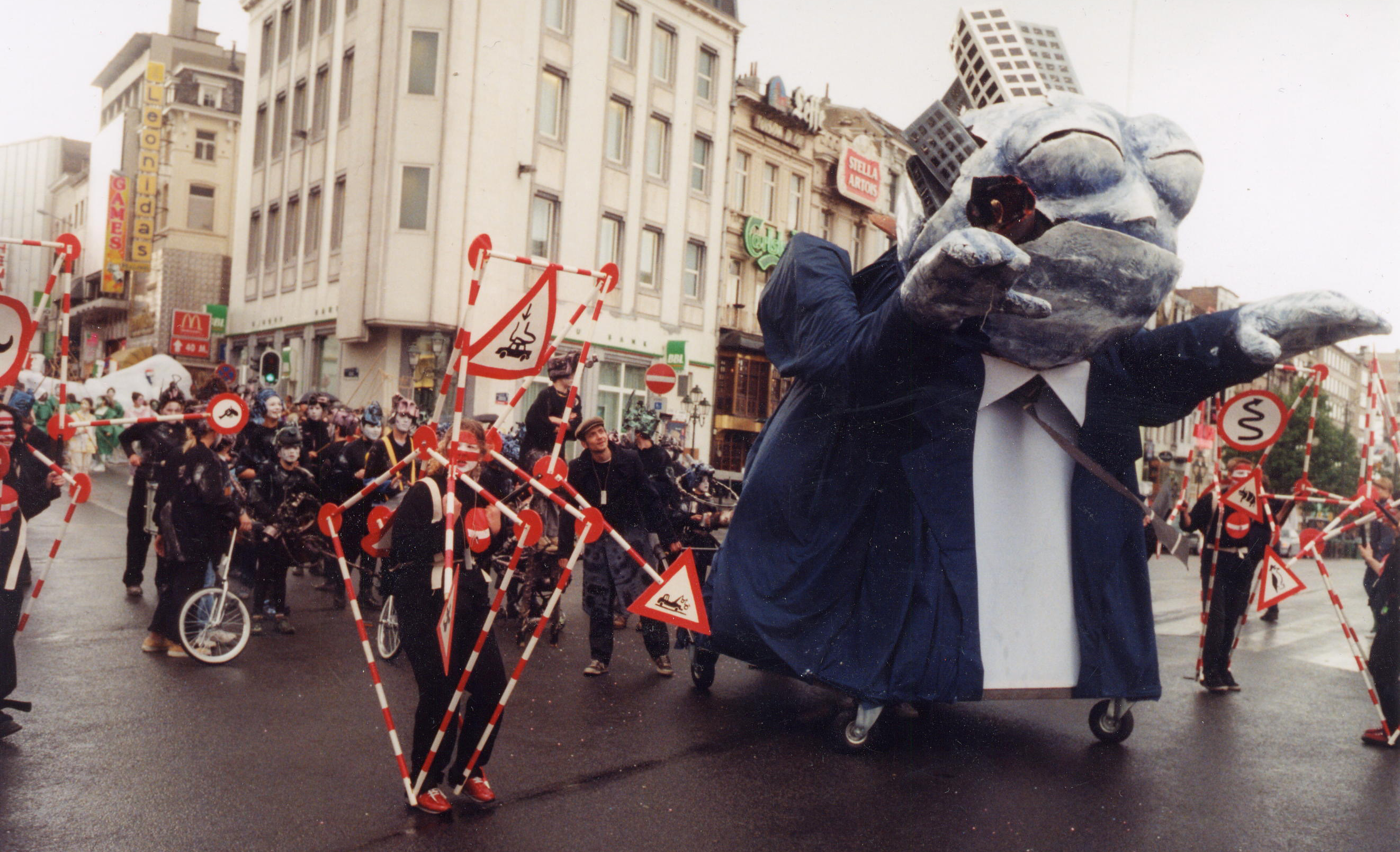
Zinneke. Like a space that unites. And a space that can't be reduced to a single event, the Zinneke Parade. Today, it's no longer just a space, but a multitude of spaces. It's rooted in local roots and boasts numerous partnerships. It's 25 years of collective creativity in public spaces, working hand-in-hand with various associations, artists, and citizens.
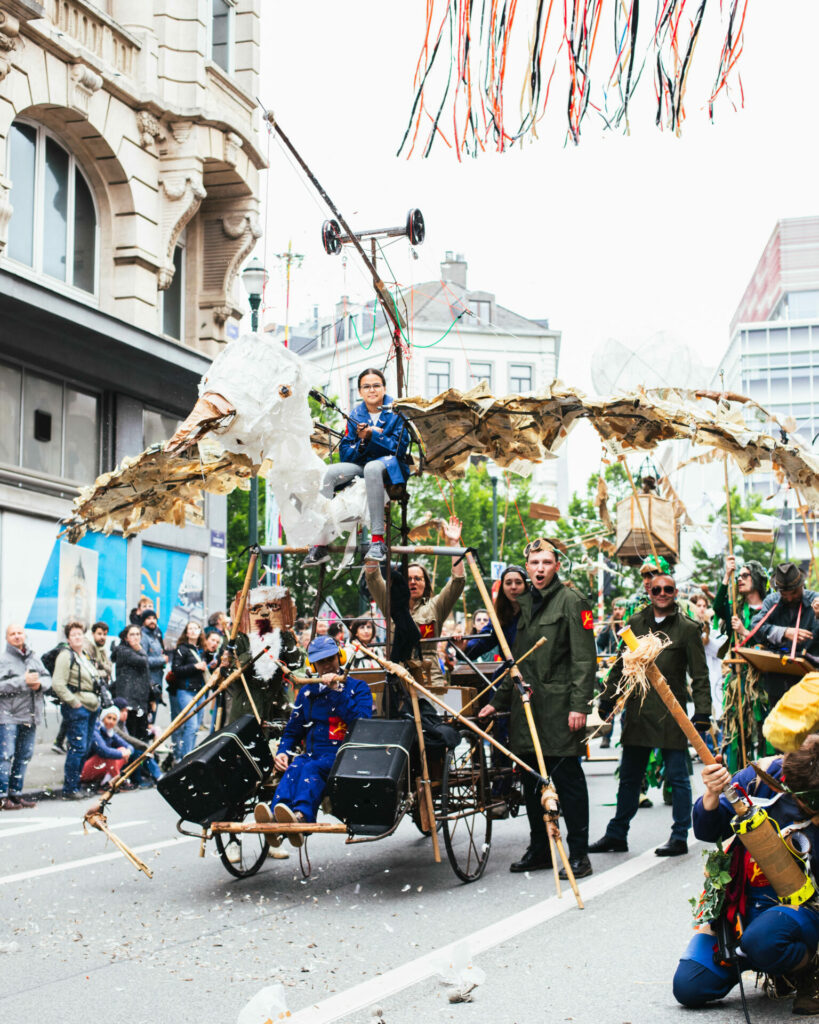
Zinneke Parade 2024 ©MAO
Alliances and sharing
For all Brussels residents, Zinneke is a parade held every two years, which winds through the streets of the capital with Zinnodes, dances, and songs. But what is a Zinnode? It's a collaborative and artistic group that, for over a year, designs and produces an artistic project for a parade together, involving partners, an artistic team, and participants from diverse linguistic and community backgrounds. Because, prior to the parade—whose theme is democratically chosen by a vote of the public, its participants, and residents—creative hubs form in different neighborhoods of the capital, each with the goal of contributing to the development of a Zinnode.
And all talents are put to use during free workshops. From crochet to carpentry, including sewing or... design improvement. The Zinnodes gather around a designated theme and work over a long period of time, in a tangible (creation of costumes, dramaturgical props, various structures) and human way. For one group, it might be the creation of a children's choir, for another, a dance trail, for a third, a fanfare featuring objects made from recycled materials.
The list is long. The months drag on until we achieve a colourful yet structured result on day Z. Speaking of which, the call is out: Zinneke is looking for participants in the Zinneke Parade 2026. Its theme? DREAM. Interested in a joyful collective reverie? Are you an artist, an organization, or a resident? Go for it! And don't worry... you'll be supported throughout the creative process by Zinneke's dynamic, logistical, and artistic teams.
Metal and recycling
Concerning construction, the "hard" structure of the Zinnodes' floats is provided by the Metal workshop, located on Zinneke's premises. There, students spend six months learning how to handle metal, and also how to understand it, during practical seminars. Then, a few months before the parade, everything is in full swing: the teams meet and draw up a schedule to structure the construction of the floats. All floats must meet the dimensions of fire trucks: simply so that the Parade can pass through all the streets of the capital (particularly the alleys around the Grand-Place).
At Zinneke, they advocate a real recycling policy: if part of the structure of a float from a previous parade or the creative materials made available to participants can be reused, they are reused for the current parade. And this is also reflected in the very vision of the restoration and use of Zinneke's building.

Bastard.e.s Van Bruxelles @ Zinneke Parade 2024 ©Adam Chami
A place, many places
In 2013, Zinneke ceased to be nomadic—as it had been since its beginnings. Zinneke settled in Place Masui, in the former Atelier Général du Timbre. A 3,000-square-meter space that offers multiple possibilities. First, it's a place open to the neighborhood, a third place, as we say today. A nursery too.
A place that, at the front, houses the administrative buildings and a diverse visual artists' studio. A courtyard—where people gather in the sunshine to discuss projects and the future. Then a rear building, other artists' studios, a multipurpose room where numerous associations meet, another large multipurpose room. In the basement, the Stock MatOS, a huge reserve based on the collection of industrial waste and other materials, and a reserve of clothing used as the basis for the parade costumes. In short, a place to dig into and recycle. Because, as we've said, Zinneke's policy is to make new from old. Whether for the parade, its festivals, its Zinnodes, or the layout of the studios that the organization rents to cultural, social, and creative artists.
Zinneke is a world. And a world that turns a little more fairly, a little more rounded, a little more common. A place that welcomes. A place that unites. A place that allows and supports creation, training, and production between the people who work there, those who live nearby, and even further afield. Zinneke is a place where the desire for co-creation and encounters simmers, a place where imaginations multiply. Life unfolds there in all its beauty.
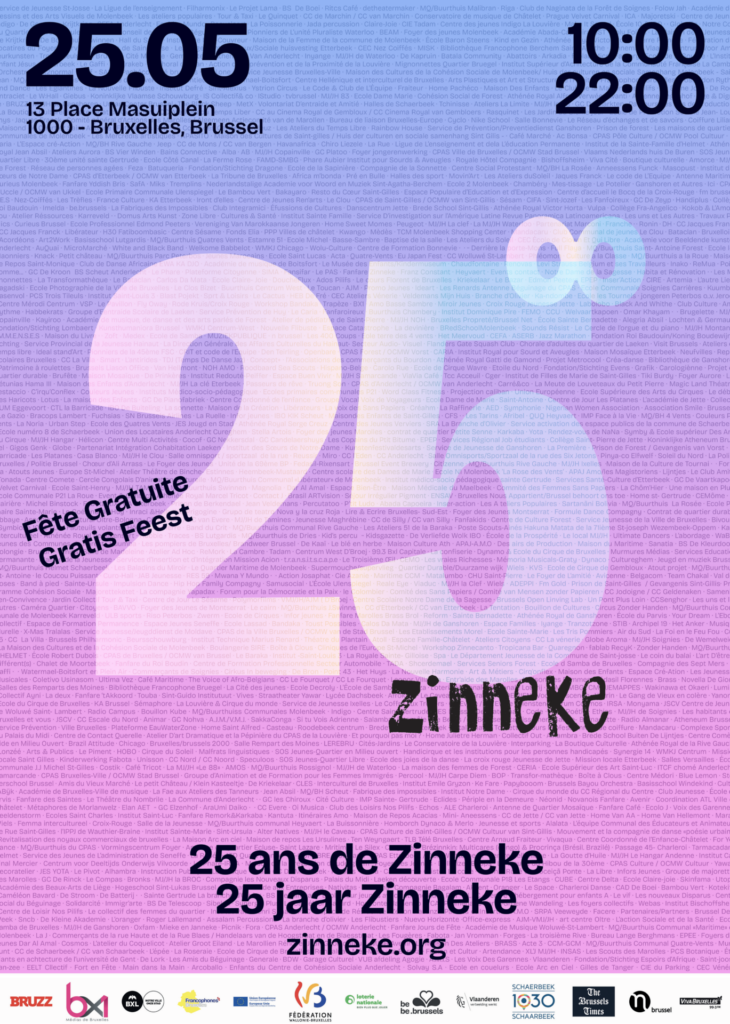
Zinneke celebrates its 25th anniversary on May 25th, with a host of varied activities: concerts, workshops, children's activities, a hypnosis workshop... there's even talk that AI will be involved.
Meet us on May 25th at Place Masui to discover this place full of life. And, above all, celebrate! All the information at www.zinneke.org
Article written by Yvanne Litt