
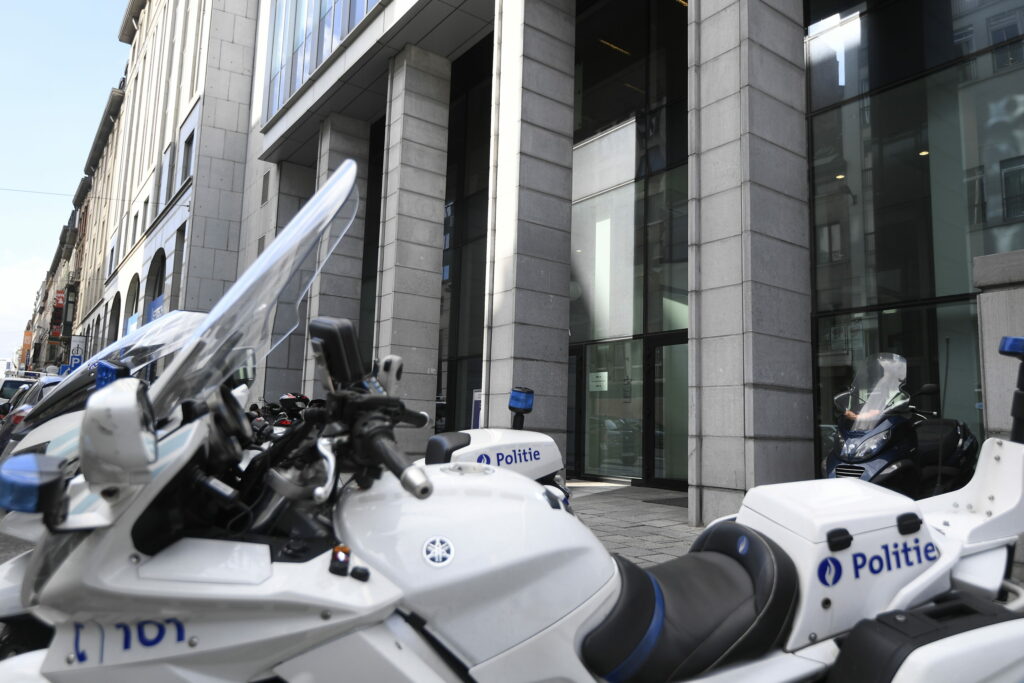
More than €1.4 million has been seized by the Brussels Federal Judicial Police as part of a major money laundering investigation. The operation, carried out on 23 April, also led to the arrest of ten people and the seizure of six vehicles, the Brussels Public Prosecutor's Office announced on Friday.
The operation involved 160 police officers who carried out a total of 36 searches, targeting 18 suspects' homes and 18 company headquarters, according to a press release. Ten people were arrested and six vehicles were seized. Approximately €130,000 in cash was discovered and bank accounts totalling at least €755,000 were frozen.
The ten people who were arrested were all charged with participation in a criminal organisation and money laundering, and some of them with forgery and use of forged documents.
The investigating judge placed four of them under arrest, one of whom was an accountant. The six other defendants were released, five on bail and one without conditions. The court decided to keep two of the people under arrest, including the accountant, in preventive detention and to release the other two on bail.
The alleged leader of the criminal organisation has fled to Dubai and is actively being sought, the Public Prosecutor's Office added.
'Serious indications of money laundering'
Since the investigation began in late 2023, no less than €130,000 in cash and €1,287,000 in bank accounts have been seized. The investigation is still ongoing.
Led by an investigating judge, the case began following a report from the Financial Intelligence Unit (CTIF) revealing "serious indications of money laundering" and the alleged existence of a criminal organisation.
According to the Public Prosecutor's Office, the suspects allegedly used a "compensation" technique that allowed criminals with cash, mainly from drug trafficking, to cooperate with companies looking for cash to pay undeclared workers.
In return, these executives allegedly made bank transfers for equivalent amounts to accounts in Belgium or abroad for the benefit of the criminals, using false invoices as cover.
The alleged criminal organisation is said to have generated €54 million in illegal capital since 2020, transferred via shell companies run by front men, according to the Public Prosecutor's Office.
