
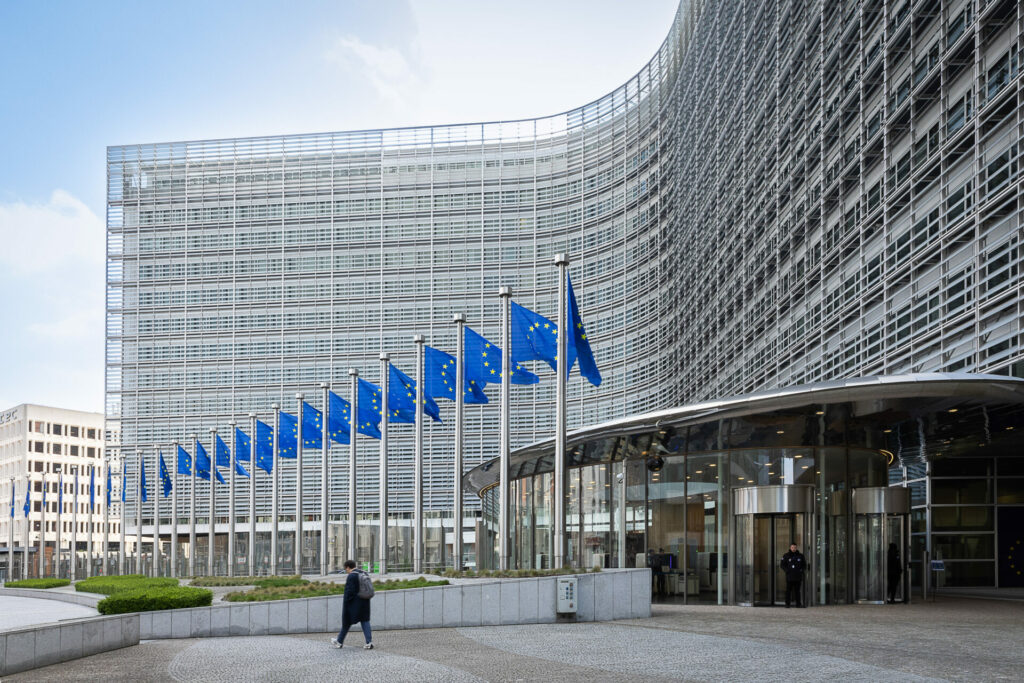
The European Court of Auditors (ECA) published on Monday its annual activity report on its work during 2024 covering a wide range of special performance audits of EU policy areas.
The recent past has shown how quickly EU priorities can shift, and how rapidly the budgetary landscape can evolve as a result, according to the report. In this context, the ECA remains committed to fulfilling its crucial role as the EU’s ‘watchdog’, playing a key part in ensuring that taxpayers’ money is used properly and pinpointing issues that directly affect the wellbeing of EU citizens.
“As the independent auditors of the EU’s finances and action, we are mindful that significant changes in how the European budget is implemented will have an impact on how we can achieve our mission”, said ECA President Tony Murphy. “While we support the aims of flexibility and simplification, it is essential that these efforts do not come at the expense of accountability and transparency.”
Tony Murphy, an Irish national, was elected by the ECA Members in September 2022 to serve as the institution’s 12th President for the period from 1 October 2022 to 30 September 2025.
He was among others referring to the Recovery and Resilience Facility (RRF) where the EU for the first time has used common borrowing and financing not linked to actually incurred costs on a large scale. The error rate in cohesion funding was also a hot topic in 2024. The ECA and the European Commission were at odds about the findings and recommendations in the audit reports on these topics.
In 2024, besides the annual reports on the EU budget and the EU agencies, ECA published 28 special reports on various topics, four reviews, and three opinions on legislative proposals. These publications serve as a crucial source of information for EU citizens and policymakers, offering independent and objective analysis of key issues for the EU.
Last year, the ECA’s audits covered topics such as the security of gas supplies, food labelling, artificial intelligence, rule of law issues, such as such as the legal framework in case of breaches and infringement procedures, lobbying, the EU’s defence industry policy, support for refugees in Turkey, the role of the European External Action Service (EEAS), zero-emission vehicles, and much more.
In disseminating the reports, ECA is counting on a growing interaction with the press. During 2024, it held 20 online press briefings and 14 additional country-specific press briefings for the annual report but the physical press briefings in Brussels have not returned since the COVID-crisis.

ECA President Tony Murphy, credit: ECA
ECA’s own our website received over 780 000 visits, with 1 295 025 unique page views and 56 440 downloads. By the end of 2024, its four main social media accounts (X, LinkedIn, Facebook, and Instagram) had attracted over 61 500 followers.
ECA’s head office is located in Luxembourg but its auditors frequently check various bodies on the spot. These include the European Commission (the ECA’s main auditee), other EU institutions and bodies, international organisations, and the national, regional, and local authorities that handle EU funds. In doing this, ECA also to some extent relies on the state audit offices in the Member States.
The EU auditors also check the recipients of EU money on site, both within the EU and beyond its borders. In doing so, the auditors obtain direct evidence not only from those responsible for managing EU policies and programmes and handling EU funds, but also from those who directly benefit from the money.
As a result, the EU auditors make relevant recommendations in the reports. In 2024, they analysed the recommendations addressed to the Commission and other institutions in its 2020 reports. The analysis showed that 93 % of the 19 recommendations made in the 2020 annual report and 88 % of the 186 in the 2020 special reports had been implemented either in full, or in some or most respects.
A closer look shows that the glass can be seen as half empty or half full. Of the recommendations in the 2020 special reports, 52% were fully implemented and 48% implemented in most (16%) or some respects (19%) or not implemented at all (13%).
Based in Luxembourg, ECA employs 882 permanent and temporary staff of all EU nationalities. Of these, 558 (63 %) worked as auditors, 141 in administration, 128 in translation and 55 in the Presidency, (the President’s private office, the Directorate of the Presidency, the Legal Service and the Internal Audit Service). In addition, ECA employed 84 contract staff and 26 seconded national experts.
Independent supreme audit institutions, together with ombudsman institutions, are often considered as the fourth branches of power, besides the executive, legislative, and judicial branches of government. They are necessary parts of the checks and balances in every democracy which is threatened in the EU and globally.
