
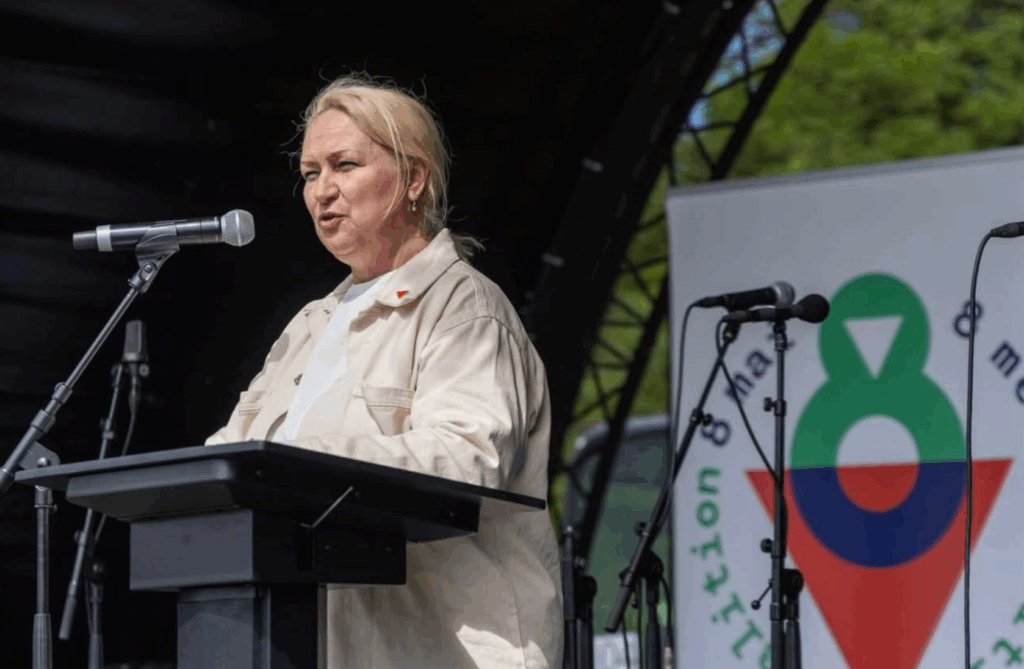
8 May used to be a public holiday in Belgium but the day off was abolished in 1974. Motivated by a family tradition of resistance to fascism, one Flemish woman is trying to bring it back.
On 8 May 1945, the Nazi regime capitulated to Allied forces in Berlin, marking the official fall of fascism in Europe (although Belgium had already been liberated on 19 September 1944). The date is celebrated with a bank holiday in France.
This was the case in Belgium until 1974, when the decision was made to reduce public holidays to ten a year and prioritise religious occasions over secular ones. In addition, three public holidays during the month of May (Labour Day, Liberation Day and Ascension Day) slowed down economic growth at this time of year.
Ellen De Soete founded the 8 May Coalition in 2022 when she was compelled to renew her country's efforts to commemorate resistance to fascism. A Bruges native, several of her family members were active members of the Belgian Resistance during the Second World War. Her mother was imprisoned and tortured by the Gestapo (Nazi secret police) as a teenager and only opened up about her experience just before her death in 2013.
"If you don't know your history, you can't be critical about the present," De Soete told The Brussels Times. "My mother told me, 'You must do everything you can to stop history from repeating itself. We fought for our freedom, for your freedom and for your children's freedom. Do everything you can to preserve it.'"
Betrayed, imprisoned and tortured
De Soete's mother Bertha Serreyn was born in 1925 and became involved in the resistance at age 16. Her brother was an active resistance member in Bruges and recruited his sister to deliver messages (and eventually ammunition) to the Port of Zeebrugge. As a teenage girl on a bicycle, Serreyn did not attract much attention.
The resistance cell was infiltrated by a young man in 1944, who took part in multiple activities and gained the others' trust before convincing them to forgo their aliases and share their real names. Soon afterwards, the Gestapo showed up at every one of their homes and arrested every single family member they found.
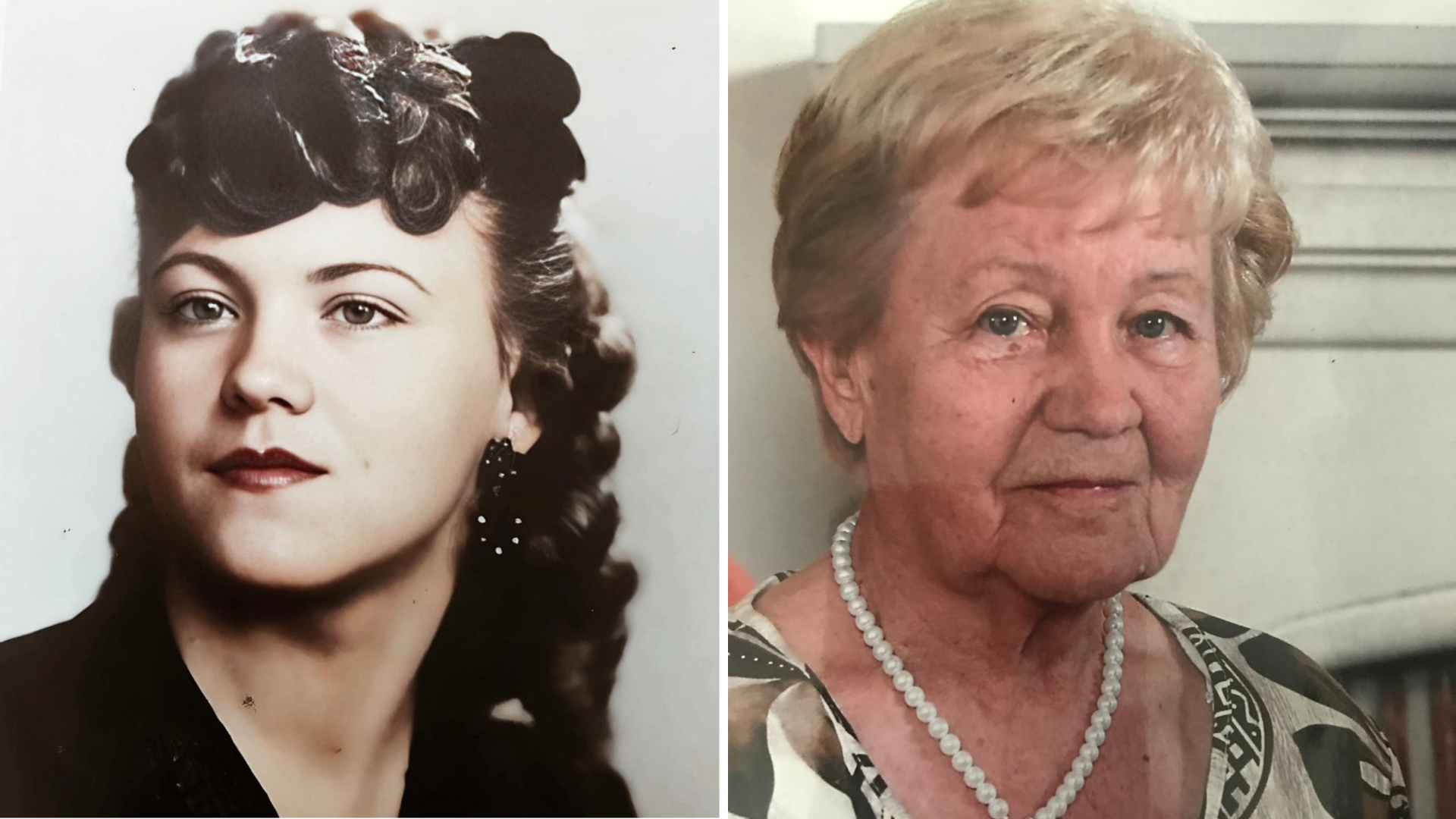
Bertha Serryn aged 18 and 88. Credit: Ellen De Soete
Serreyn was imprisoned in Bruges. De Soete says her mother refused to perform sexual favours in exchange for less harsh treatment. She was beaten with guns as a punishment.
Next, she was transferred to Brussels where she spent several months in a notorious "black cell": in the dark, with hardly any food or water and enduring torture sessions in an attempt to extract information – but to no avail. "They even broke her bones," says De Soete. "I can't imagine that. I don't think I would have the courage."
Serreyn was liberated when the Red Cross intercepted the 'Nazi ghost train' that was transporting 1,600 political prisoners from Brussels to concentration camps in Germany in 1944. The train was the last to attempt to leave Belgium to serve the Nazi regime's interests but was stopped just 30 kilometres outside of the capital.
Serreyn's father happened to be on the same train. De Soete recalls her mother's emotional description of the reunion: "She said it was like a movie. They fell into each other's arms and didn't let go of each other's hands on the two-day journey home."
Fascism on the rise again
This potent family history pushed the 53-year-old to found the 8 May Coalition, which is made up of trade unions, human rights organisations and actors from civil society and academia.
The project has three objectives: reinstate 8 May as a public holiday, advocate for places to be named after Belgian resistance fighters and stand up to the far-right in the present day. It is hoped that these initiatives will encourage a deeper appreciation for resistance culture in Belgium.
All political parties except for the far-right Flemish party Vlaams Belang voted in favour of a resolution to reinstate the holiday in Federal Parliament on 10 April 2025.
Credit: Belga / Nicolas Maeterlinck
De Soete expresses alarm of Vlaams Belang's electoral advances in the federal elections last June (13.8% federally and 22.7% in Flanders). She warns that some members of the right-wing N-VA party are open to governing with Vlaams Belang in the future, and leader of the Francophone liberals Mouvement Réformateur (MR) Georges-Louis Bouchez suggests an alarming slide to the right. "Things happen slowly at first," she says.
"My mother told me, 'Girl, I am seeing things happening exactly as they did in the 1930s. The far-right is on the rise and people are being pitted against each other'. And when I look to America now, I think about what she said. People should be looking out for each other, not standing against each other."
