
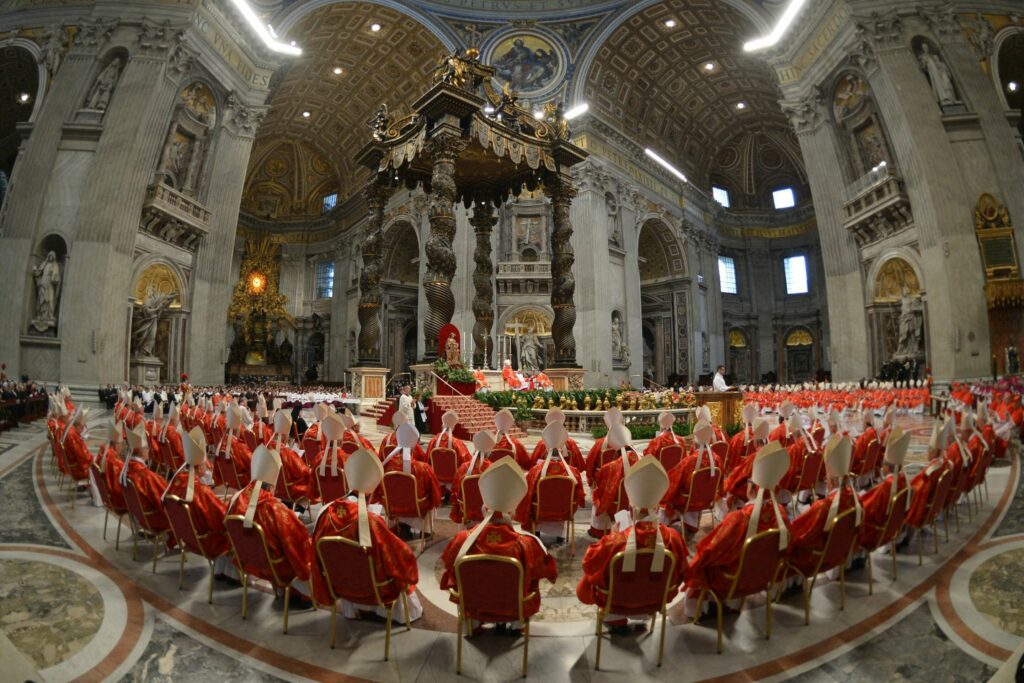
Tension is rising in the Vatican as the conclave to elect a new pope will start in the Sistine Chapel on Wednesday. Barring last-minute changes, 133 cardinals from 71 countries will choose the successor to Pope Francis, who died on Easter Monday at the age of 88.
The conclave starts at 16:30 on Wednesday in the Sistine Chapel. In principle, 135 cardinals (who were under 80 years old when Pope Francis died) may take part in the election – but Antonio Cañizares, former archbishop of Valencia, and John Njue, former archbishop of Nairobi, are excused due to health reasons. This leaves 133 cardinals taking part in the vote to elect the next Pope.
"In theory, all 133 cardinals are running for election. But in practice, probably only 15 to 20 of them have the combined experience, personality and qualities that are needed," Professor Kathleen Cummings, a historian of Catholicism at Notre Dame who closely followed the election of Pope Francis in 2013, told The Brussels Times.
"While it is not going to be just any of the 133, there are still quite a few options. Placing any bets on who will be elected is a great way to lose a lot of money very quickly," she added. "Francis has appointed 80% of the cardinals, but he did not appoint men who were carbon copies of himself. So really, we do not know which way this will go."
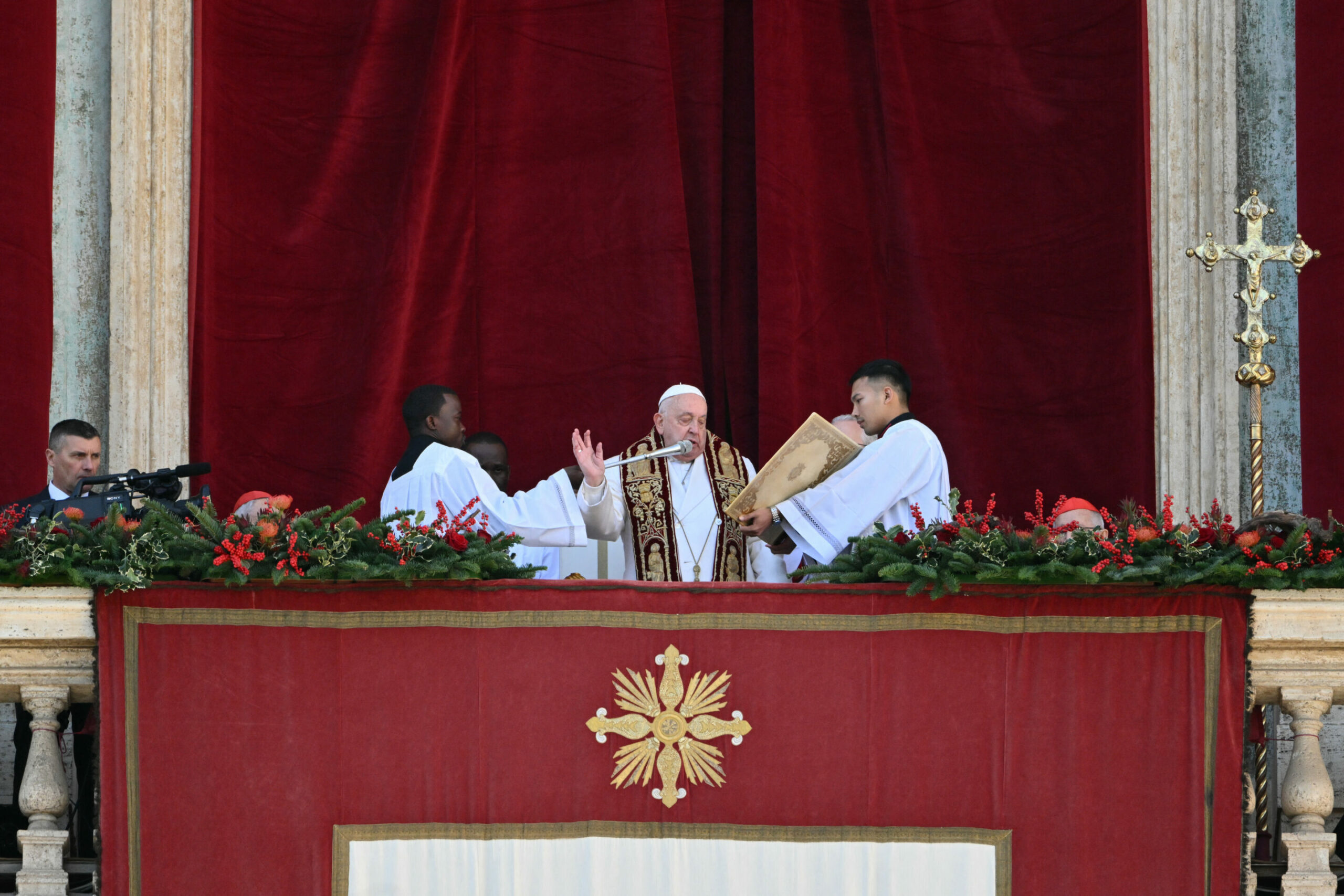
Pope Francis delivers the 'Urbi et Orbi' message from the main balcony of St. Peter's Basilica, 25 December 2024. Credit: Belga/AFP/Alberto Pizzoli
In the utmost secrecy, the cardinals will vote until a candidate gets two-thirds of his colleagues (in this case, at least 89 votes) behind him. Four rounds of votes are allowed each day. The ballot papers are burnt after each vote, in a special stove.
If no new pope is elected, the chimney – which staff at the Vatican placed on top of the Sistine Chapel on Monday – will emit black smoke. In the case of white smoke, a successor to Pope Francis has been found.
In this way, the faithful, many of whom are gathered in St. Peter's Square, will know that a new pope has been elected. Since 2005, a successful election has also been accompanied by the ringing of the bells.
Interestingly, eligible cardinals are not obliged to choose someone from their own ranks: theoretically, any baptised Roman Catholic man is eligible, provided that he is ordained as a bishop immediately after accepting the election. However, a non-cardinal has not been elected since the 14th century.
Who's in the running?
It is anyone's guess who the new pope will be, but some names are being put forward. Italian Cardinal Pietro Parolin (70), who has served as the Vatican's Secretary of State since 2013 and is the most senior cardinal bishop under the age of 80, is the favourite among some Vatican experts as well as British bookmakers to succeed the late Pope Francis.
Parolin has the same profile as Francis and is seen as a compromise figure who could continue Francis' policies, but a "soft" version, so as not to upset the more conservative views within the Vatican. Another name being tipped is Italian Matteo Zuppi. "The last three Popes have not been Italian, but in the 500 years before that, they all were. Now, some people think it might be time for the papacy to return to Italy," Cummings said.
The names of Ghanaian Peter Turkson and Frenchman Jean-Marc Aveline – considered a protégé of Francis – are increasingly circulating. Cummings also mentioned Filipino cardinal Luis Tagle as a "very charismatic person" and a "great candidate in terms of the global church." She also mentioned US cardinal Robert Prevost as an interesting choice, even though it is "improbable" that an American will be elected.
Two Belgian cardinals, Dominique Mathieu and Jozef De Kesel, will also vote in the conclave, meaning they could technically also be elected. New cardinal Mathieu has been archbishop of Tehran-Isfahan (Iran) since 2021. De Kesel, archbishop until 2023, became a cardinal at the end of 2016.
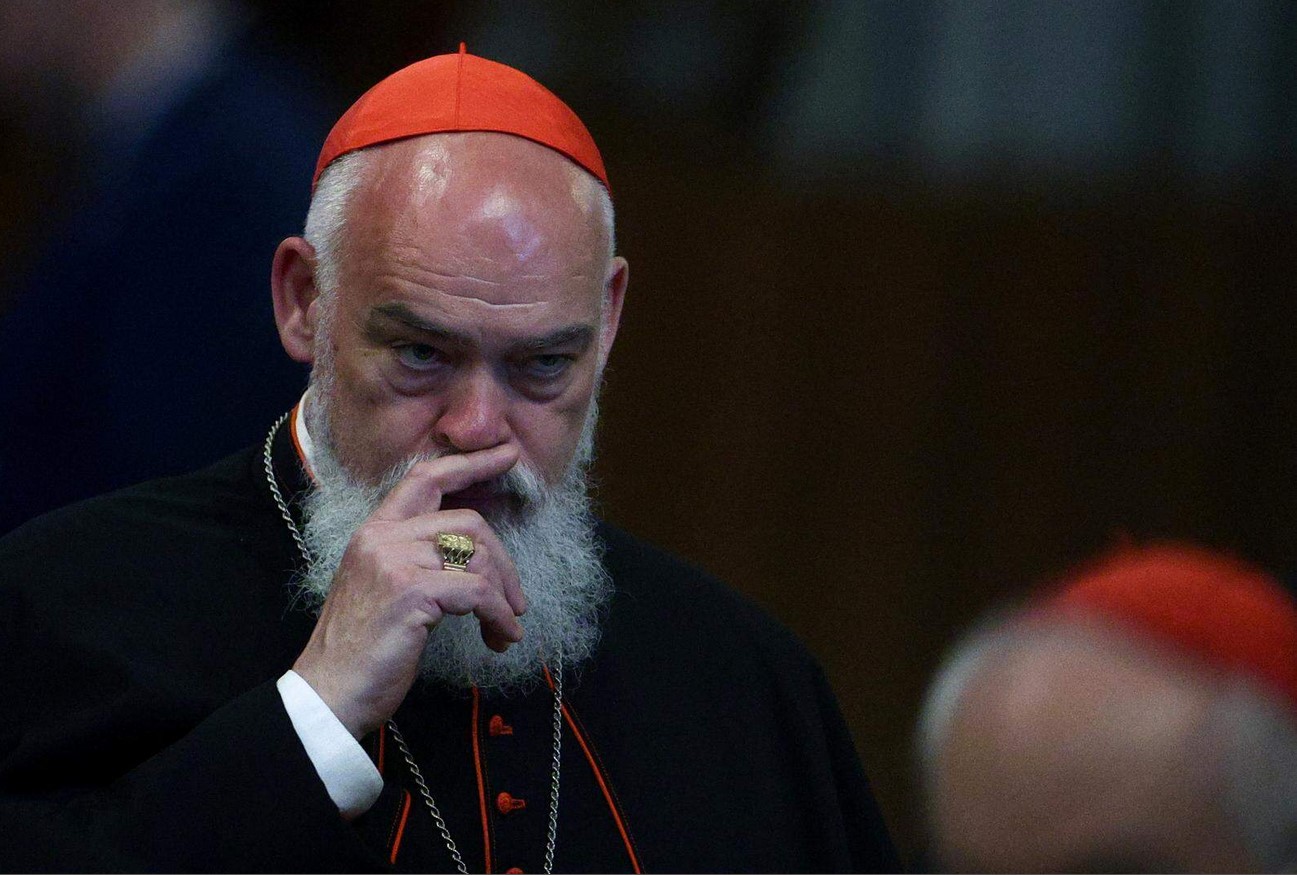
Belgian carnidal Dominique Mathieu. Credit: Belga
Mathieu was only appointed cardinal by Pope Francis at the end of last year. He followed an atypical path that took him to Iran, where he became archbishop of Tehran-Isfahan in 2021, a diocese with barely a few thousand Catholics.
He was born in Arlon (Luxembourg province) but grew up with his West-Flemish mother and Walloon father in Damme, near Bruges. After his ordination in Bruges, he moved to the Saint Anthony Monastery in Brussels in his 20s, in a neighbourhood home to more Muslims than Catholics.
There, he did poor relief, home visits and shelter, and he learned Arabic. He was later active in Lebanon and Rome. In the Italian capital, he took an interest in the fate of Muslim prisoners. The Islamic thread in his career later brought him to Iran – partly to promote dialogue with Islam.
Mathieu belongs to the order of the Friars Minor Conventual – a splinter group of the original order of Francis of Assisi, the same apostle of the poor who Pope Francis chose to be named after. Although he has never publicly commented on major social issues, he seems to be more in the socially progressive camp.
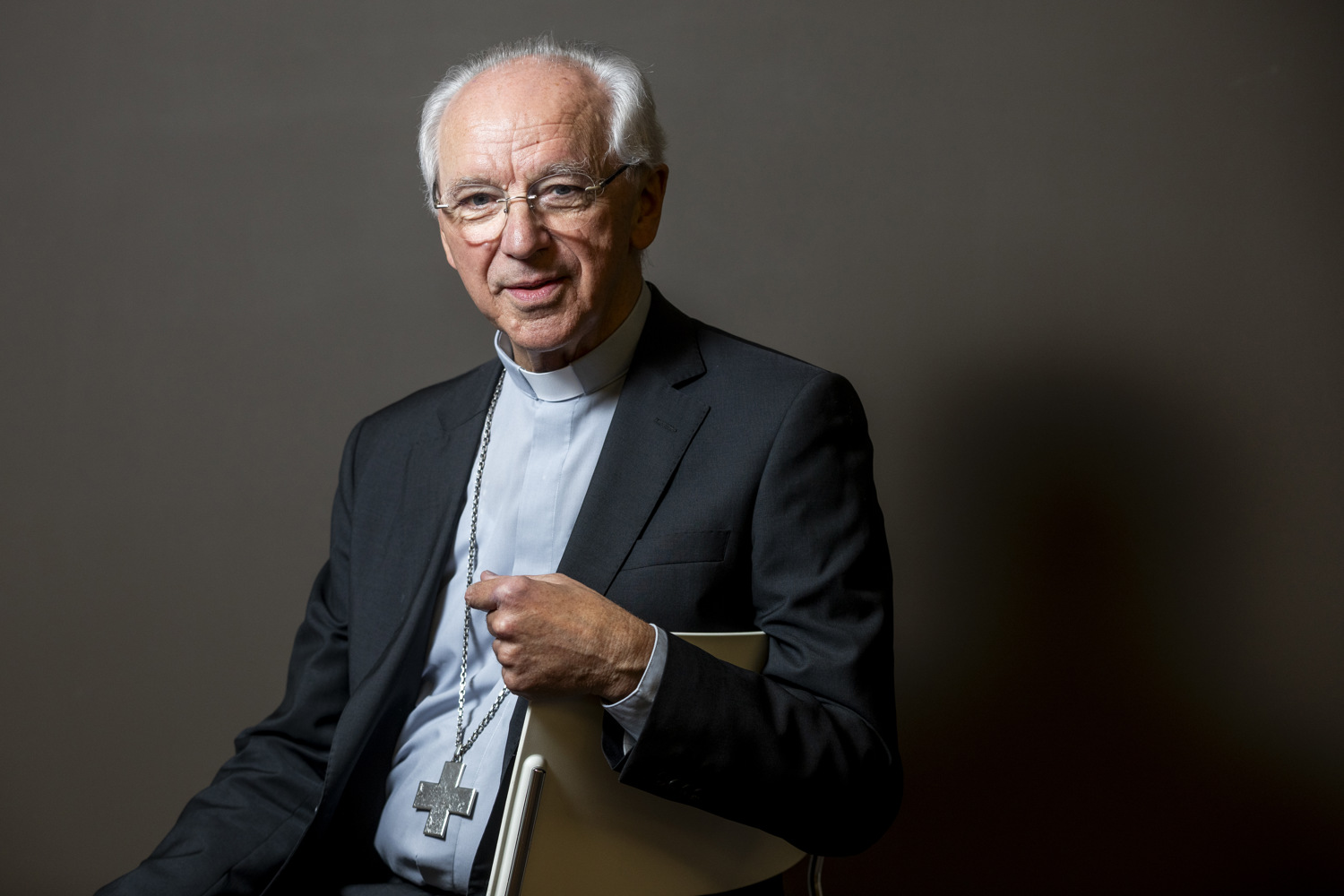
Former Archbishop of Mechelen-Brussels Jozef De Kesel. Credit: Belga / Hatim Kaghat
Meanwhile, De Kesel has been described as "quite progressive" and "a kindred spirit of Pope Francis." He previously advocated allowing married men to become priests, called Islam an ally and backed the blessing of same-sex couples (the Mechelen-Brussels diocese pioneered by making this possible under his leadership).
However, his image as a progressive did suffer a blow when he announced in an interview that he believes Catholic hospitals have the right to refuse abortion and euthanasia.
No phones
The election may take place in the Sistine Chapel, but the cardinals will stay in the Domus Sanctae Marthae, the building where Francis has lived since his election in 2013 instead of the usual flat in the Apostolic Palace.
During the conclave, cardinals are strictly forbidden to have contact with the outside world. "Many people – cooks, doctors and nurses, as well as priests to hear confessions – will be sequestered with the cardinals and were all sworn to secrecy yesterday," Cummings said.
On Monday, the Vatican announced that the 133 voting cardinals would have to make do without a telephone connection for the duration of the elections. Cardinals are required to hand in their mobile phones at the start of the conclave. Additionally, the telephone connection of all mobile phones in the territory of Vatican City will be switched off from 15:00 on Wednesday.
"The signal will be restored as soon as it is announced that there is a new pope," the Vatican said. However, there will still be connectivity in St. Peter's Square during the conclave.
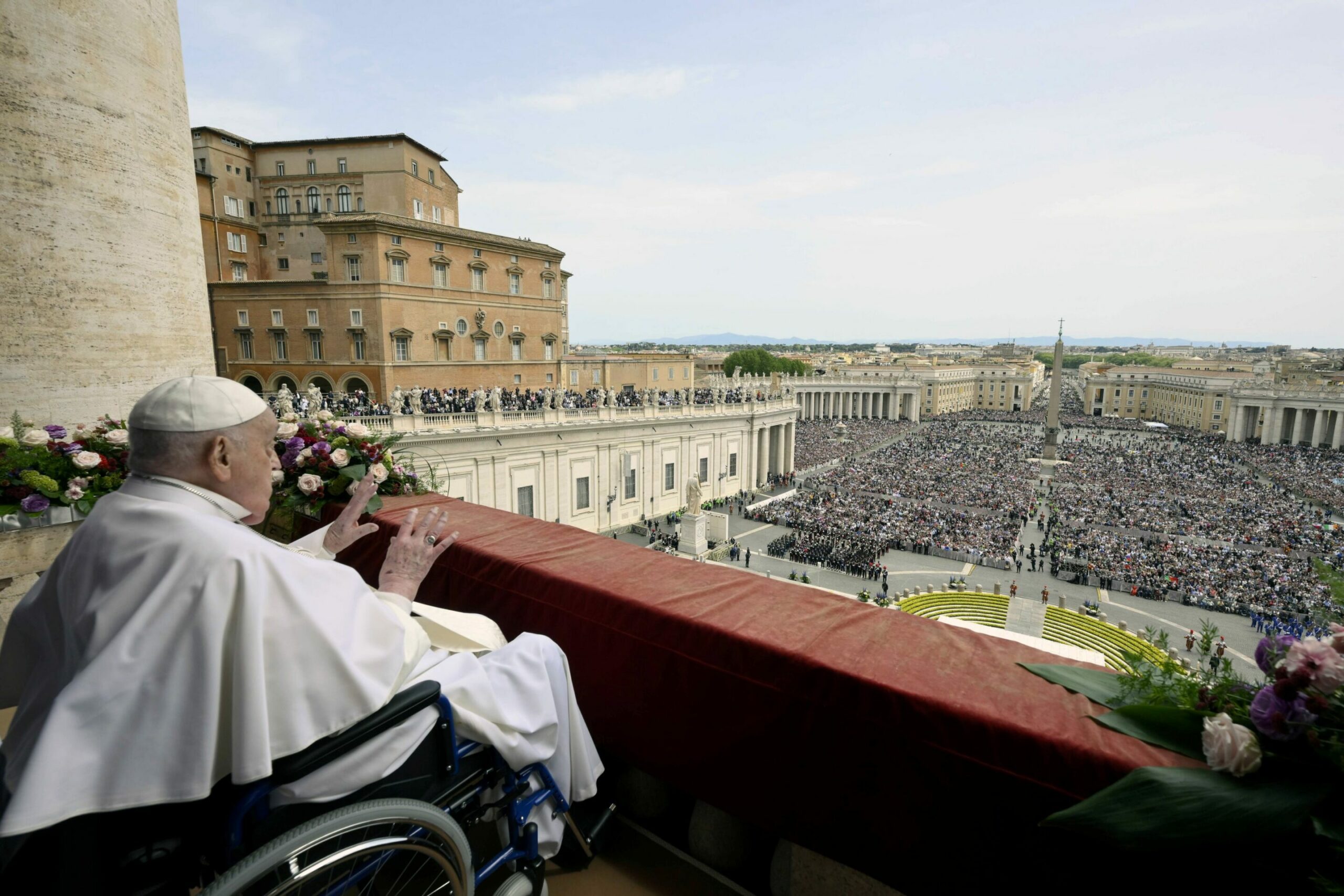
Pope Francis. Credit: Belga
Once there is a majority, the elected person is asked whether he accepts the papacy. Once he answers "accepta," he is formally the new pope and the sede vacante (Latin for "empty seat") period is over. Then, he is asked which name he wants to take.
From the balcony of the basilica, the cardinal with the longest record within the order of cardinal deacons shouts the famous "Habemus papam" (Latin for "We have a pope"). The new pope then gives the papal 'Urbi et orbi' blessing for the first time, also from the balcony.
In the most recent conclaves, it took two to three days to elect a pope.
