
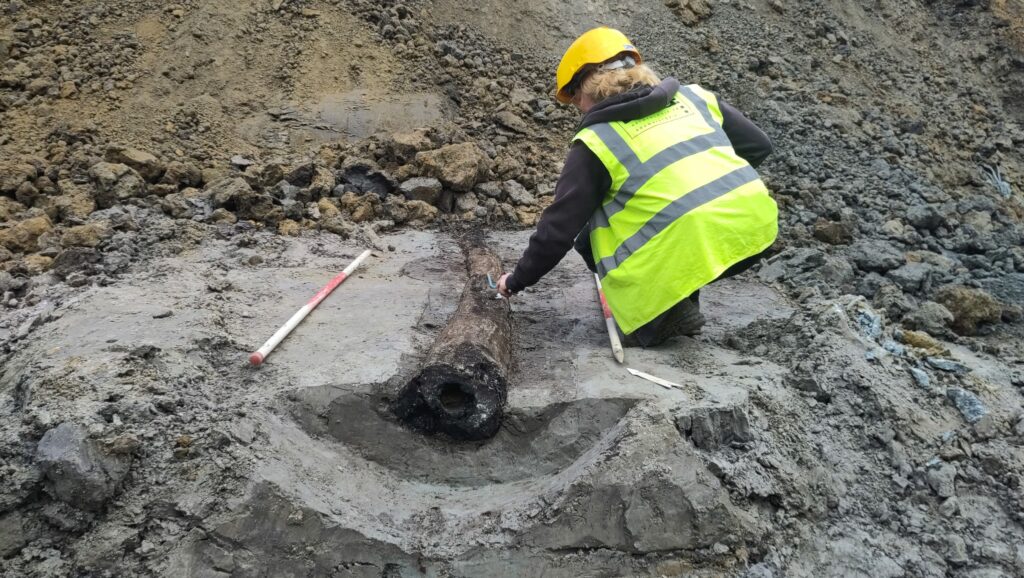
During construction work on Brusselsestraat in Leuven, a Roman-era wooden water pipe was discovered, according to the city council on Wednesday.
Archaeologists describe the discovery as “remarkable and unique.” Under normal circumstances, a wooden water pipe would not have survived for such a long period. However, the waterlogged soil conditions on Brusselsestraat made it possible.
Project developer ION is currently building a student residence with 58 rooms there. An archaeological survey had to be carried out on the site, as is customary for works of this size.
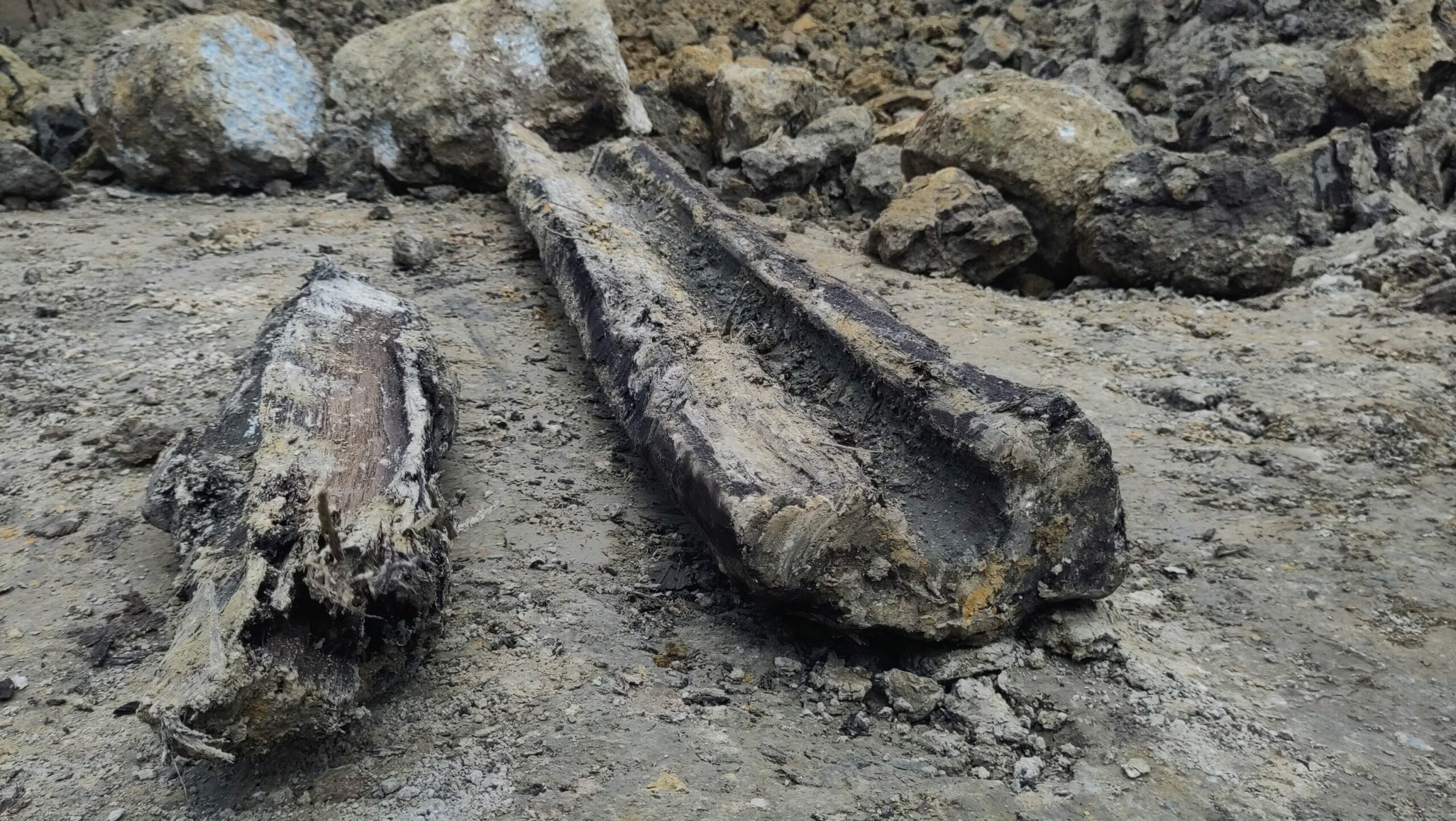
Archaeologists find Roman-era wooden water pipe in Leuven, on . A wooden water pipe from the Roman period has been found during works on Brussels Street in Leuven. Credit: Belga
At a depth of about 4 meters, archaeologists found a wooden water pipe running the entire length of the construction pit, totaling 20 to 30 meters. The pipe consisted of several tree trunks, each about 1.75 meters long. Remains of what could have been a pumping installation were also found on the tree trunks.
The pipe probably also runs under the houses on Goudbloemstraat and under Brusselsestraat. Under normal circumstances, a wooden water pipe would never have survived for such a long period of time.
Wooden water pipes have also been found in Tienen and Tongeren, for example, but the wood is mostly rotten or completely decayed. This was possible due to the marshy ground on Brusselsestraat.
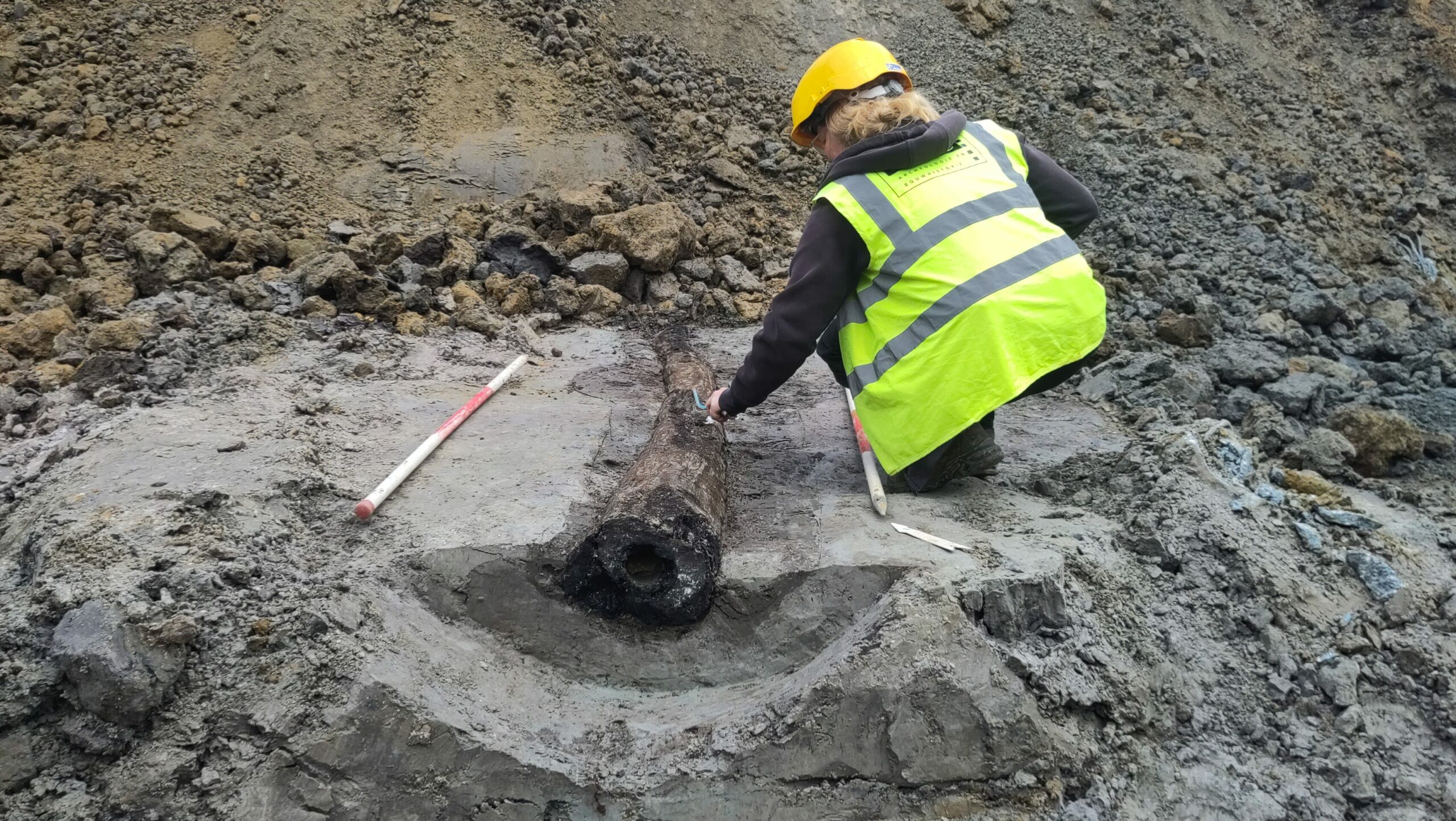
Archaeologists find Roman-era wooden water pipe in Leuven. Credit: Belga
“We are in a swamp here, in a valley,” says Dirk Vansina (CD&V), councillor for Public Works. “Because the wood was also well sealed off from the air, it was able to remain intact.”
To determine the exact date when the pipe was laid, research will be carried out on the annual rings of the trunks. However, it is known that they date from the Roman period, between the first and third centuries AD. "The pipe is covered by a Roman cultural layer, an old field layer, in the soil," explains Ben Van Genechten, project leader at BAAC Flanders.
"This allows us to date the trunks to the Roman period." The find indicates the presence of a settlement in the Roman period. A Roman coin had previously been found at the nearby Burenberg site. The Brusselsestraat is believed to have been a Roman military road in the past.
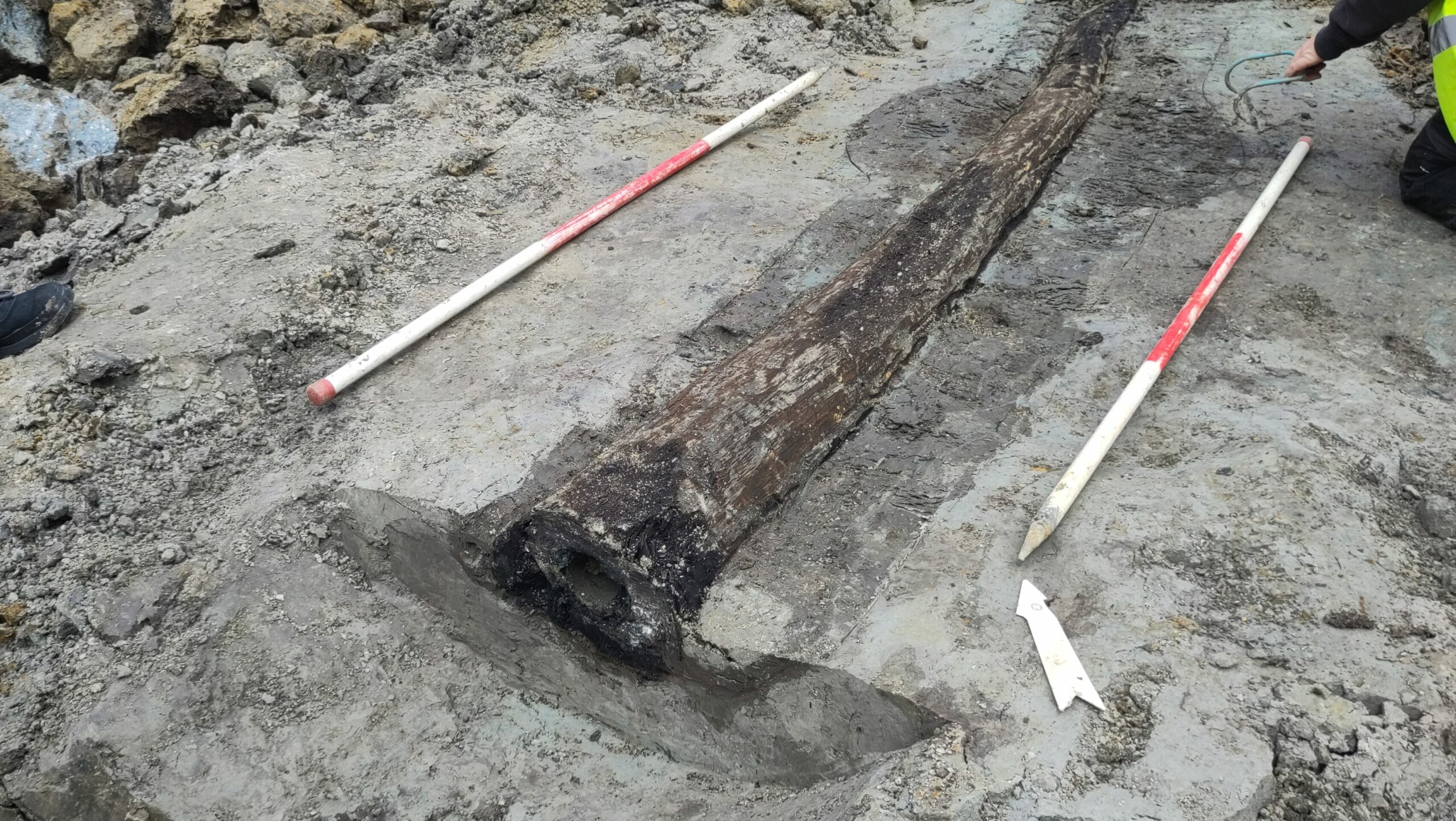
A wooden water pipe from the Roman period has been found during works on Brussels Street in Leuven. Credit: Belga
"So we knew there was a chance of finding Roman traces in this neighbourhood again, but it was a surprise that it would be exactly at this spot," says Van Genechten.
"The fact that we found a water pipe indicates that the settlement must have enjoyed a certain degree of prosperity. We cannot yet fully comprehend what life would have been like here in earlier periods. It is very interesting to be able to piece together the puzzle bit by bit."
The tree trunks will now be removed from the ground and taken away for further investigation. They will then be taken to a depot to be used as reference material or possibly exhibited at a later date. Incidentally, the archaeologists had already found other Roman artefacts in the construction site pit.
These include remains of Roman pottery and fragments of Roman roof tiles. Medieval cesspools, coins, and pots have been discovered in other layers of soil.
