
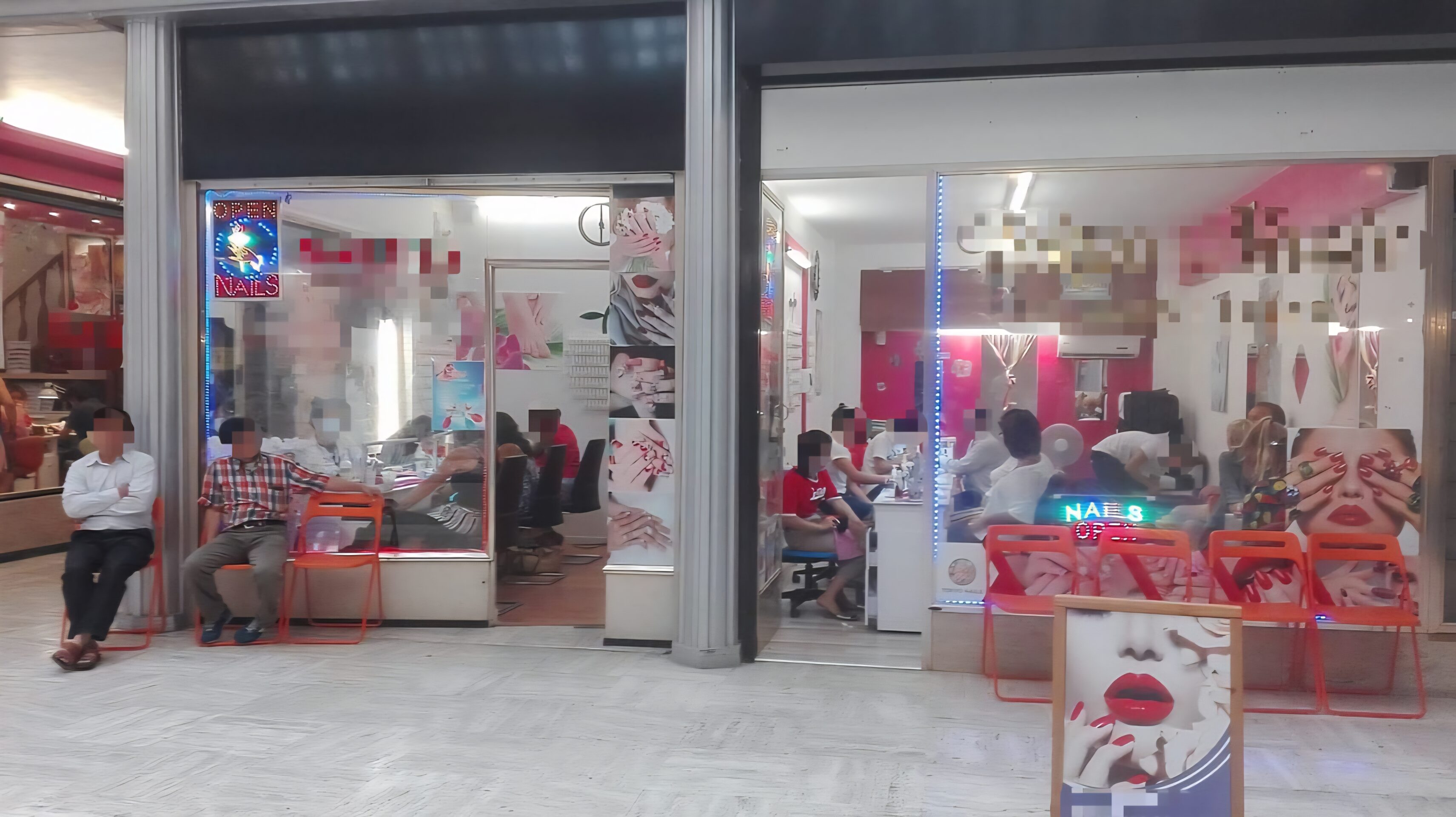
In the heart of Brussels, beneath the neon-lit signs and beautiful windows of countless nail salons dotting the Galerie du Centre and Galerie Agora, a far darker story is unfolding.
What appears on the surface to be a booming beauty business hides a complex network of human smuggling, labour exploitation, and trafficking involving Vietnamese nationals.
According to Sophie Jekeler, director of the Fondation Samilia, an organisation that combats human trafficking, many of the workers in these salons come from the same impoverished region in northern Vietnam.
Their journey begins with a clear goal: reaching the United Kingdom.
“It often starts as smuggling — they pay to be transported. But along the way, many are intercepted, detained, and forced to work to repay their debt. That’s when it turns into trafficking,” Jekeler tells The Brussels Times.
Brussels as a stopover
As Sophie Jekeler explains, Brussels is merely a stopover for these Vietnamese migrants. “They dream of reaching the UK, where ID requirements are looser, and there’s a larger Vietnamese diaspora.”
Some have been stuck in Belgium for years, trapped by debt and unable to move forward.
Families of these migrants are typically required to pay part of the journey upfront, while the workers are forced to work along the way to repay their debts. In many cases, their families in Vietnam have gone into debt to finance their journey.
Many of these individuals, often undocumented and unable to speak French or English, end up working in nail salons under exploitative conditions.
Some live in cramped apartments owned by the nail salons owners. Others sleep above the salons themselves, in unhygienic and precarious conditions.
“These individuals are willing to accept such conditions because they are still better than what they endured in their home country,” Sophie Jekeler says.
They sometimes stay years in Belgium and are not able to continue their journey to the United Kingdom.
According to our information, a naturalised Belgian citizen of Vietnamese origin, who has lived in Belgium for many years, is believed to be behind most of the nail salons in central Brussels.
This individual is suspected of running a human trafficking network and owning several adjacent salons. Although these establishments appear to be in competition, they would, in reality, be operated by the same person.
It appears that these individuals are operating under the control of a sort of 'godfather' of the Vietnamese nail salon business in Brussels.
A shifting business
Bruno Deville, a social inspector with the NSSO (Belgian National Social Security Office), has led inspections into these establishments since 2019.
“Since 2018, we’ve seen a real explosion of these establishments — and that was nothing compared to today,” he tells The Brussels Times. “At first, we conducted large-scale operations inspecting all businesses simultaneously. Now we’ve shifted to more targeted inspections, which allow us to get a broader understanding of the phenomenon.”
Deville describes a constantly shifting landscape. “We don’t know how many salons have had to close, because they often reopen right after”, he explains.
The NSSO, which only enforces temporary closures, must work hand in hand with labour prosecutors and federal police to initiate longer-term sanctions. But judicial processes are lengthy and complicated, especially when victims refuse to testify — often out of fear or shame.
The problem isn’t confined to Brussels. Authorities report similar setups in Nivelles, Paris, and Marseille. And while the establishments are actually legal companies, many workers are in the country illegally and rotate documents among themselves to stay under the radar.
The culture of shame
In a report from 2022 about human trafficking and smuggling, Myria, the Belgian federal centre of migration, describes the Vietnamese “culture of shame”: many Vietnamese victims of human trafficking feel deep shame due to the false promises they believed before leaving and the excessive debts they incurred as a result.
“The victims are often reluctant to testify”, Patricia Le Cocq says, a specialist of human trafficking at Myria.
Health issues
Health concerns are also mounting. Sophie Jekeler warns that the solvents and materials used in these salons are toxic, both to clients and unprotected workers — most of whom have received only a few hours of training, either in Vietnam or during their journey through Europe.
Despite the challenges, there are avenues of support. The organization StopHumanTrafficking.be and the International Organisation for Migration (IOM) help victims seek refuge or voluntary return. Of 40 trafficking cases identified in 2024, 16 chose to stay in Belgium under protected status.
But real change, experts insist, also requires consumer action. “By frequenting these salons, customers unknowingly fuel a system of exploitation,” says Sophie Jekeler. “If we stop going and start reporting, we create the conditions for victims to be helped — and for the system to be dismantled.”
