
In a continent often celebrated for its commitment to social justice and human rights, it is alarming that millions of Europeans still live in poverty. In its latest report, Caritas Europa explores how strengthened income support systems can be a game-changer in tackling poverty across Europe.
Across the EU, one in five people is at risk of poverty or social exclusion. This is not just a statistic - it represents the daily struggles of individuals trying to live with dignity in societies that promise equal opportunities for all.
Caritas member organisations, present in local communities across Europe, see the reality behind these numbers. They see the consequences of policies that fail to protect people living in the most vulnerable situations: despair, isolation and the obligation to make impossible life choices.
Caritas Europa’s report offers insights and experiences on access to and adequacy of minimum income schemes across Europe. It highlights key shortcomings in their design and implementation and proposing concrete recommendations for urgent reforms as the European Commission prepares its 2026 anti-poverty strategy.
Despite multiple initiatives and well-meaning commitments, poverty in Europe remains stubbornly high. In 2023, 94.6 million people in the EU were at risk of poverty or social exclusion - a figure that has barely shifted over the past five years. The EU’s 2021 pledge to reduce this number by at least 15 million by 2030, including five million children, now looks increasingly out of reach. If we are to change course, it is not enough to try harder. We must try differently.
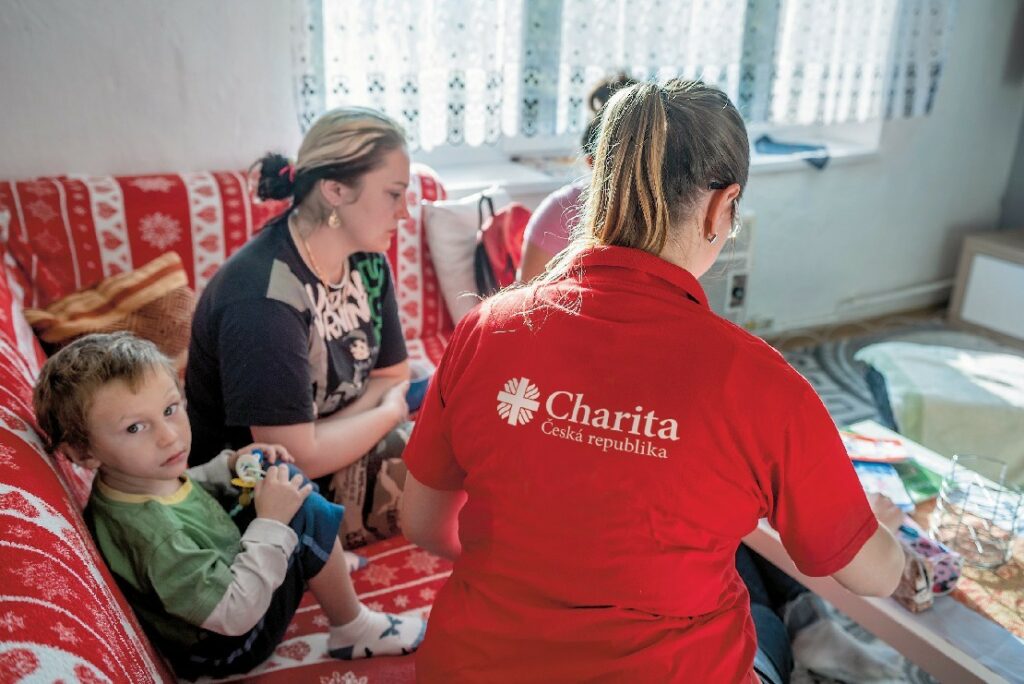
Caritas Czech Republic - Social Activation Service for Families with Children - Social Work in the Family. (c) Miroslav Hodecek
Minimum income: a cornerstone for change
The report from Caritas Europa highlights that minimum income schemes, when properly designed, serve not only as safety nets but as vital tools for fostering inclusion and enabling participation. They ensure that every person can access the resources and services necessary for a life in dignity, while supporting access to education, employment, affordable housing and healthcare.
Yet, the reality across Europe today falls far short of this ideal. Nearly 90% of the 20 Caritas Europa member organisations surveyed for the report indicated that existing benefits in their countries are insufficient to cover even basic needs. Only five countries provide minimum income support reaching 75% of the poverty threshold for both individuals and families.
Access barriers are another major concern. Over a third of the systems analysed exclude young adults aged 18 to 25 unless they meet additional, often arbitrary, conditions. Migrants, people without stable housing and those unable to satisfy strict residency or fiscal contribution rules are frequently left without support. Bureaucratic complexity and stigma further discourage many from even applying.
The result is widespread non-take-up, leaving countless individuals and families without the help they need and are entitled to.

Caritas Vienna - Leo Food Distribution. (c) Franz Gleiß
A moment to act, with ambition
The report comes at a crucial time. The European Commission has announced plans to present the first-ever EU anti-poverty strategy in 2026, and this initiative has the potential to be a game-changer, if it builds on real evidence and learns from past shortcomings.
One such shortcoming is the Council Recommendation on adequate minimum income ensuring active inclusion (2023/C 41/01), adopted in January 2023. While this encouraged Member States to tackle the persistent gaps in their systems - such as inadequate benefit levels, exclusion of certain groups and non-take-up of benefits - Caritas Europa’s analysis shows that few have taken meaningful steps in that direction. Alarmingly, some have even taken measures that weaken their minimum income schemes.
The upcoming strategy, offers a chance to address these failures. Crucially, the strategy must go beyond non-binding recommendations. Caritas Europa calls for a legislative initiative or directive that sets EU-wide minimum quality standards for national minimum income schemes. This should include:
- Adequate income support, high enough to lift people out of poverty.
- Universal means tested accessibility, removing unjust exclusions and simplifying application processes.
- Integration with enabling services, such as housing, employment, education and healthcare.
- Robust monitoring and accountability, shaped by the voices of those with lived experience of poverty.
These are not radical demands, they are basic requirements for a just society. Such a move would strengthen the EU’s credibility on social rights and support its commitment to the European Pillar of Social Rights and the 2030 Agenda for Sustainable Development.
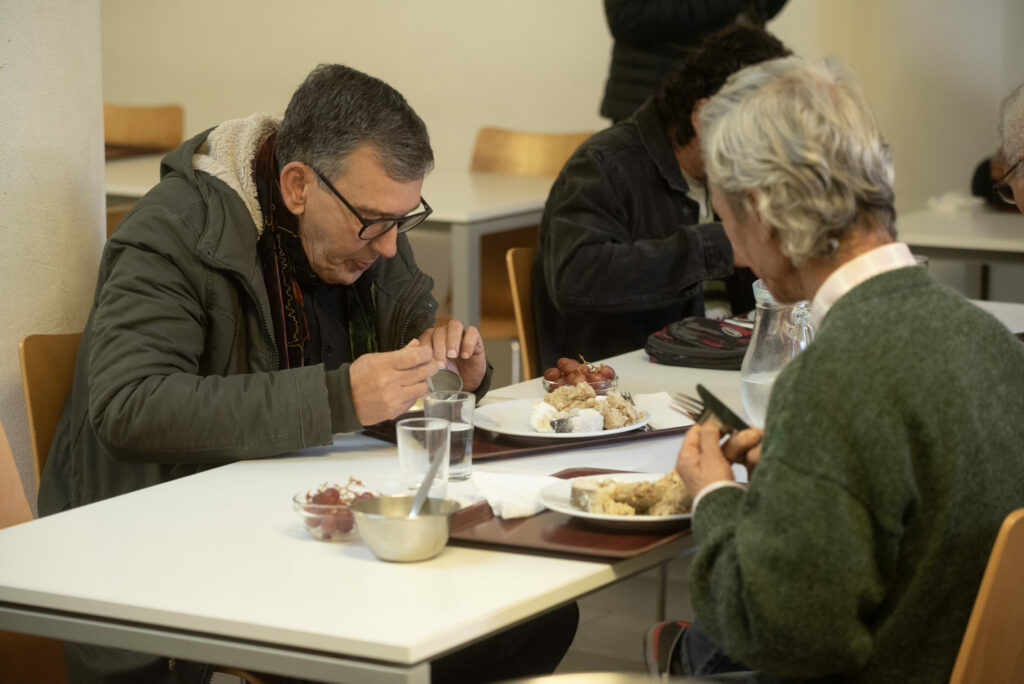
Caritas Portugal - Welcome to homeless people in the social cafeteria of Cáritas Diocesana de Beja. (c) Ricardo Perna
Beyond income: tackling the roots of exclusion
But poverty cannot be addressed through income measures alone. It is a complex and structural issue, rooted in inequality, discrimination, precarious work, unaffordable housing and under-resourced social services.
The EU anti-poverty strategy must be more than a checklist, it must be a vision. One that invests in affordable housing and guarantees universal access to healthcare and education. One that sees inclusive labour markets not just as economic engines but as pathways to dignity. One that recognises the role of child and family benefits, especially for single-parent households, in breaking cycles of poverty.
Just as importantly, people living in poverty must be included in shaping the policies that affect their lives. Civil society organisations and communities with lived experience bring irreplaceable insights; yet, they are too often left out of policy discussions.
The EU claims to be a global model of democracy and fairness. But a society that tolerates such widespread hardship cannot lay claim to true progress. The strength of the European project will not be judged by GDP growth, but by whether it creates a society in which no one is left behind.
Let 2026 be remembered not just as the year another EU strategy was published, but as the year we chose courage over complacency. A Europe that turns the tide on poverty will not only meet its targets, but it will also redefine what kind of a Union it wants to be. Because fighting poverty is not just a matter of policy. It is the moral test of our time.
