
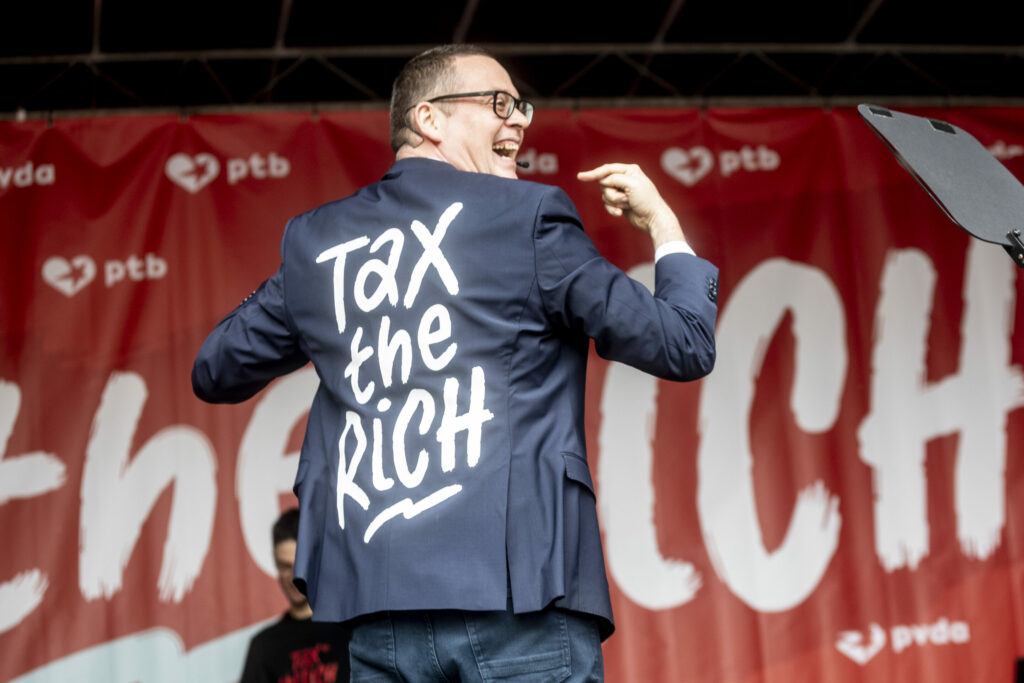
Europe is lurching to the right; centrist politicians scramble to remain relevant. But Raoul Hedebouw wages another war – a classic one, that of the classes. Loud and proud, he declares himself as the last communist standing in the Belgian Parliament. But what does that mean in 2025?
We meet in the House of Representatives – all smiles, a Liège accent that instantly puts you at ease. Hedebouw has a knack for a good punch line (always with a nod to the world of labour) and never tiptoes around what he thinks: "I declare myself a communist, we're the radical left politically," he says. "But we're also Marxists in a Belgian sauce", he adds.
The sauce he's talking about is a spicy, sharp and clear critique of capitalism, as the scapegoat. A deep suspicion of multinational power, and almost a romantic trust in the capacity of "the people" to rise, organise and reclaim what he calls their "stolen" future.
Interestingly, the dynamics of the household he grew up in was a household in Herstal where class struggle was day-to-day life. His mother was fired for union activism, and his father was one of the last men to witness the slow death of the Liège steel industry. Hedebouw’s political identity is rooted in personal experience. "Human rights stop at the gates of multinational companies", he says. Politics is not just a career for him. It's an inheritance.
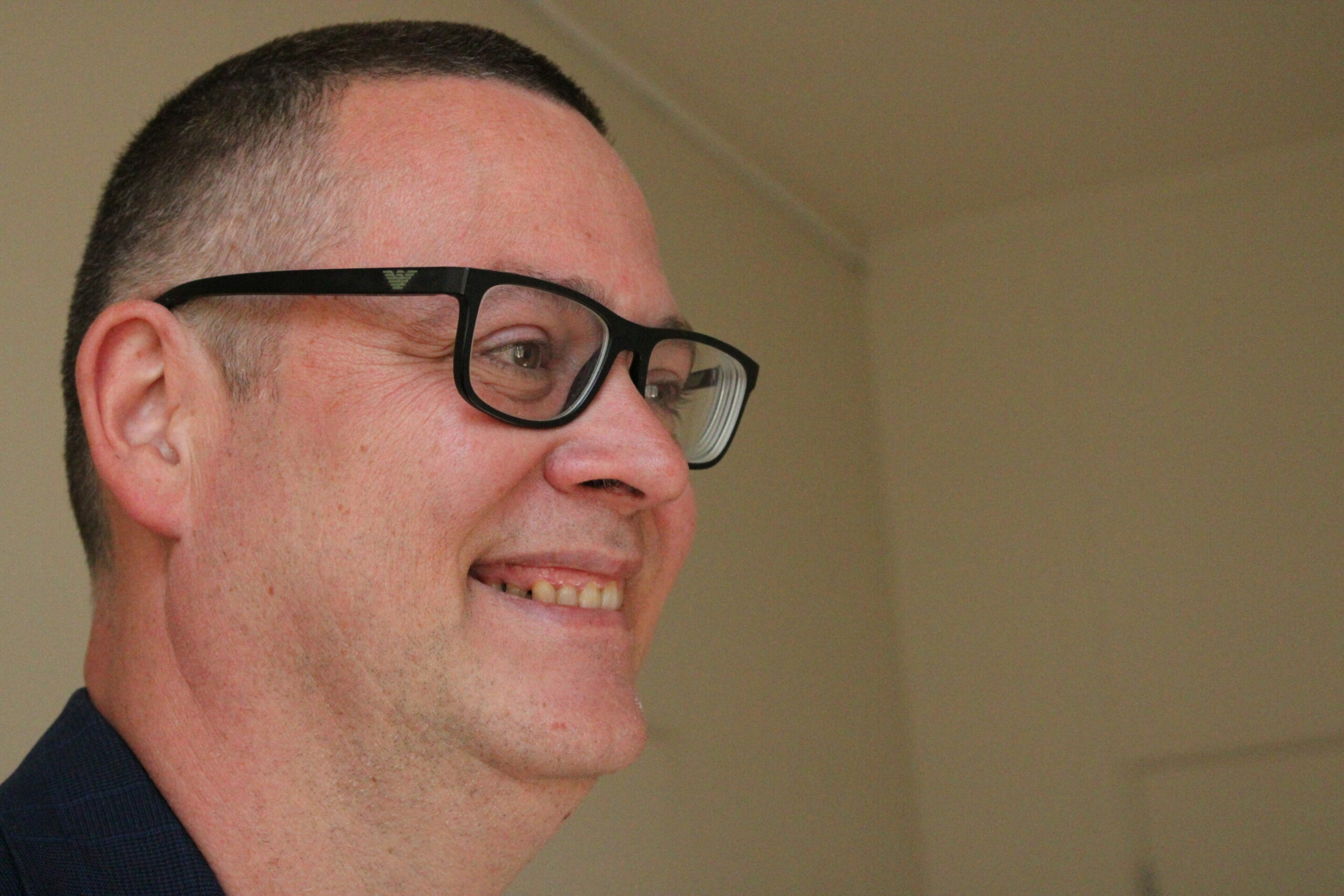
Raoul Hedebouw in an exclusive interview with The Brussels Times. Credit: Anas El Baye
Being a communist in 2025
Being a communist to Hedebouw isn't about reviving Stalin or Lenin, far from that. It's about power; who holds it, and who doesn't? And it's about how to change that balance. While mainstream parties lean into technocratic fixes and free market orthodoxy, Hedebouw's Parti du Travail de Belgique, Partij van de Arbeid van België ( PTB/PVDA ), long dismissed as a fringe protest party, has gained ground nationally. It's the only party operating in all regions; all other groups are split between language communities, and it wants to stand out from the socialist and progressive left. The PTB/PVDA is unapologetically Marxist and fiercely anti-capitalist.
In what could become a political earthquake, Brussels is on the brink of an unprecedented left-wing coalition. If negotiations succeed, the capital could be governed by an alliance of PS, Ecolo, Vooruit, Groen, Team Ahidar, and the PTB - PVDA.
But what the Hedebouw promise is far more radical: a return to ideology; nationalisation of key sectors, a retirement age below 67 years old, and a fundamental redistribution of wealth. Everything under democratic and public control: electricity production, transport infrastructure, and banks.
Being a communist to Hedebouw also means rejecting the idea that housing is a commodity, and treating it instead as a human right. It means reimagining the economy not as a battlefield of competition but as a system of collective care."Today, it's not democracy that governs, it's the market", he adds. "And the market is made up of multinationals".
Beyond Belgium
His rhetoric may sound outdated (or overly combative) to some, but it lands differently in 2025. The new government decisions about pension cuts, the war in Gaza, strikes by rail workers and teachers, and Brussels' political gridlock are symptoms. And he sees one root cause: capitalism. "Prioritising profit over people fuels inequality and puts the fate of democratic institutions in the hands of multinational interests," he regrets.
Hedebouw even lays out an indictment of modern Europe. He wants a socialist Europe and not a social Europe. The EU? A "market machine" designed by and for multinationals. NATO? A force of provocation that has cornered Russia into dangerous militarism. AI? A capitalist tool monopolised by tech giants to squeeze not just factory workers, but journalists, translators, and even thinkers.
"The political superstructure serves the bourgeoisie", he insists. Parliament, in his view, is a puppet show. Real power sits in corporate boardrooms, not government buildings. And yet he doesn’t retreat from democratic institutions – he occupies them. Uses them. Subverts them.
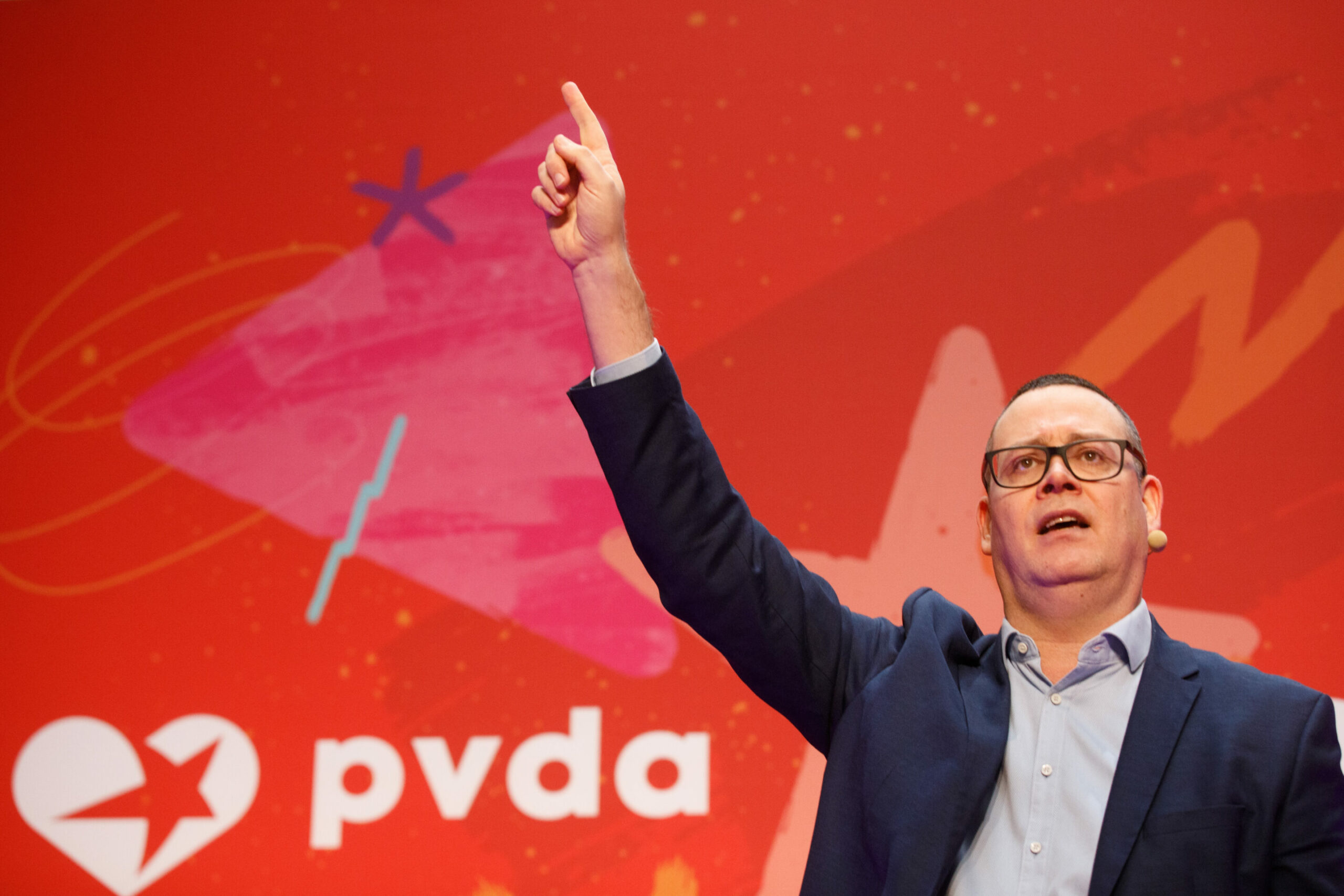
PVDA - PTB leader Raoul Hedebouw pictured during the traditional New Year's reception of the Belgian Workers Party (PTB-PVDA), in Brussels, Sunday 12 January 2025. Credit: Belga
Hedebouw is no apologist for regimes like China or North Korea, and he doesn’t want a Soviet redux, either. Instead, he believes in something messier, more human: building a movement within the contradictions of a post-industrial democracy, a movement that grassroots politics, labour unions, tenant struggles, and climate activists can shape.
He sees hope in the Global South, not as a utopia but as a laboratory of resistance."The BRICS countries, like India, China, and South Africa, assert independence from Western neoliberalism. There's energy there."
Brussels was recently declared an antifascist capital, and Hedebouw rejoiced at the decision and saw both the symbolism and the political opportunity. When the PTB/PVDA pushed for 'excessive rent' control in the Brussels parliament, it won. Those are the kind of small legislative victories that Hedebouw sees as proof the system can be bent – maybe even broken.
A diagnosis or a deflection?
But there is tension too. Between radical ambition and legislative realism. Between ideology and daily governance. Blaming capitalism has become a familiar refrain (especially on the left), a catch-all explanation for everything from housing crises to climate collapse to the war in Gaza. Critics argue it's an oversimplification, a convenient scapegoat that dodges nuance and avoids more complex questions about governance, policy choices, and human social behaviour. But for voices like Hedebouw's, pointing to capitalism is about identifying a system he believes inherently breeds inequality, corrodes public services and concentrates power in the hands of the few. Whether it's a diagnosis or a deflection depends on who's listening.
Raoul Hedebouw may be the last communist in the Belgian parliament, but he’s betting he won’t be for long. In a system he calls rigged, he’s still playing and playing to overturn the table.
Related News
- Belgium in Brief: Austerity, pensions, and political failure - What's the point of the national strike?
- PTB-PVDA leader vows to resist new 'anti-social' government coalition
- Interview: Expats should learn Dutch says Flemish Minister Cieltje Van Achter
- Multinational firms hold key to a third of Belgian jobs
