

Belgian municipalities with high crime rates experience a paradoxical boom in business activity, according to new economic research. The three top municipalities are all located in the Brussels-Capital Region.
Brussels has increasingly been rocked by rising crime rates – with a spate of drug-related shootings last month. Business organisations have argued that these crime rates are detrimental to companies, but new research by Companyweb now shows that this is not necessarily true.
The Brussels municipalities of Saint-Josse-ten-Noode, Anderlecht and Molenbeek-Saint-Jean all have many businesses in relation to their population, indicating a lot of entrepreneurship.
At the same time, however, it appears that it is precisely in these municipalities that relatively more enterprises go bankrupt – with, in some cases, almost half of these bankruptcies being linked to criminal activities such as money laundering, corruption and bankruptcy fraud.
"One of the biggest challenges revealed by the research lies in striking the right balance: effectively tackling economic crime without impeding legitimate entrepreneurship," said Professor of Accounting and Auditing Marie-Laure Vandenhaute (PhD, VUB).
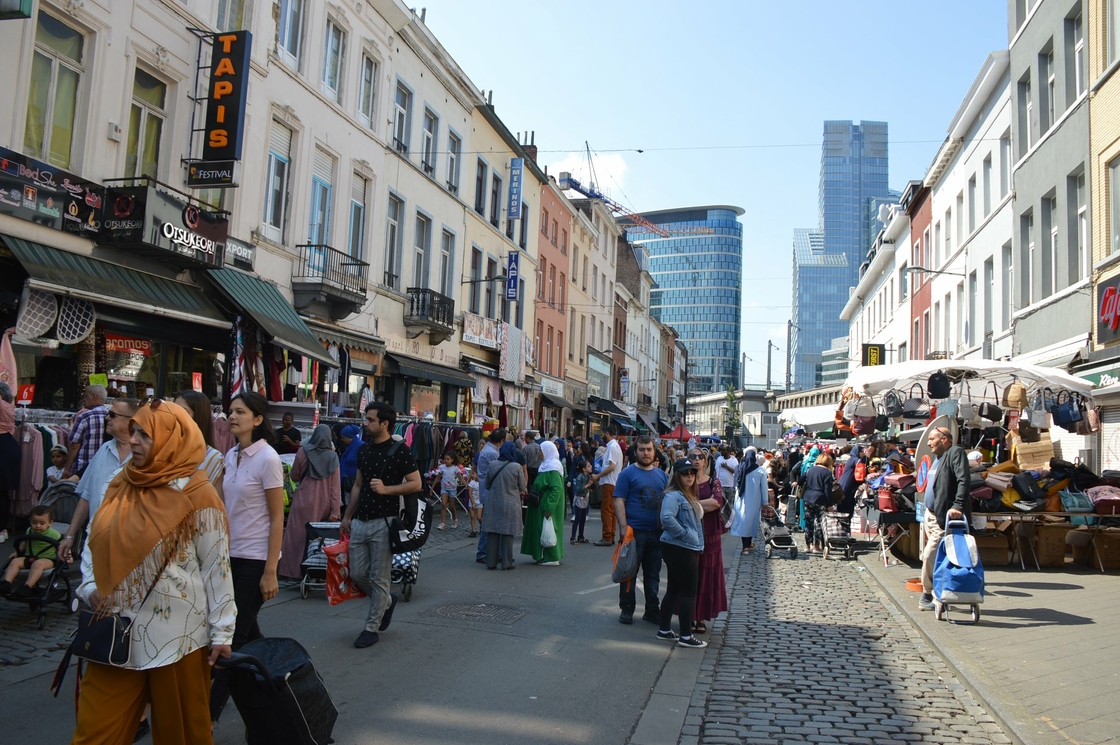
Street In Brabant Quarter. Credit: Saint-Josse
As the survey data show, the problem is geographically concentrated, with a significantly higher percentage of criminally connected bankruptcies in certain municipalities. "We observe clear differences between firms with and without criminal connections. A targeted approach that takes into account these geographical and business characteristics could increase the effectiveness of enforcement measures."
Economic boom with a dark side?
Saint-Josse-ten-Noode tops the list: the municipality – which is the most densely populated in Brussels and the poorest in Belgium – has a remarkably high number of companies per inhabitant (16.22%). This also makes it one of the municipalities with the highest activity rate in Belgium.
At first glance, this indicates entrepreneurial spirit and positive economic dynamism. At the same time, however, Saint-Josse also records the highest bankruptcy rate in the country (1.67%). In other words, relatively more companies go bankrupt in this municipality than elsewhere in Belgium.
This striking combination of a lot of activity and relatively more bankruptcies raised questions for the researchers. Especially when it turned out that almost half (45.84%) of bankrupt companies can be linked to criminal activities.
Anderlecht followed in second place: the municipality has an activity rate of 13.13% and a bankruptcy rate of 1.51%. Of those bankrupt companies, one in three (32.45%) had links to crime.
Third place went to Molenbeek, with an activity rate of 11.08%, and a bankruptcy rate of 1.28%. Over one in three (36.06%) of these bankrupt companies had criminal connections.
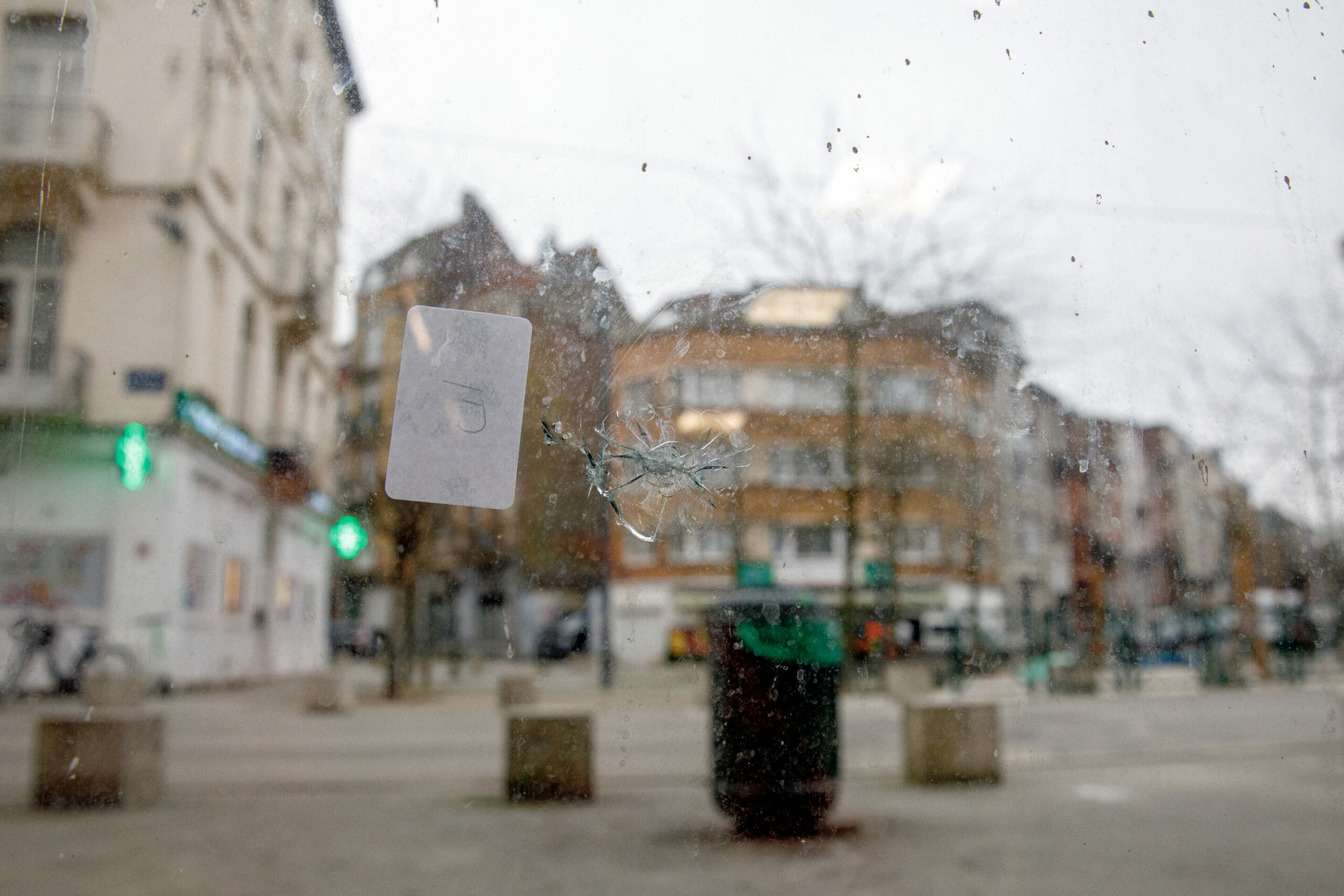
The site of a shooting at the crossing of Rue de Merode in Forest, Brussels, on Tuesday 11 March 2025. Credit: Belga
"We investigated how companies are linked to each other through common directors and therefore form clusters," said Thomas Selleslagh (PhD, Independent Researcher at Companyweb). "This shows that bankruptcies do not occur randomly, but are concentrated within certain business clusters."
Companies linked to criminal convictions – ranging from bankruptcy fraud to money laundering or involvement in criminal organisations – pop up remarkably often in those clusters. "These do not appear to be random scams, but the systematic abuse of business structures by organised crime," Selleslagh and Vandenhaute said.
A very different picture is seen in Flemish cities. Ghent, for example, has a similar activity rate (14.42%), but a bankruptcy rate that is three times lower (0.55%). Still, over one in five (21.42%) of these bankrupt companies in the city have links to crime.
In Antwerp – which has the fifth highest bankruptcy rate in the country after Schaarbeek (0.96%) at an activity rate of 14.09% – only 13.60% of bankrupt companies can be linked to criminal activity.
Three key elements
In addition to criminal convictions, the study also highlights three other striking features of companies in bankruptcy clusters. First, the high degree of mobility stands out: these companies make a strikingly high number of address changes, suggesting they are fleeing.
The second characteristic is poor financial reporting. For instance, these companies often publish their financial statements late or not at all. The third characteristic is the high number of board changes, especially just before bankruptcy.
"Whereas an average director is involved in two companies on average, directors in bankruptcy clusters simultaneously manage eight to ten companies," Selleslagh said.
Belgium's previous Federal Government, led by Alexander De Croo (Open VLD), introduced the Directorate of Integrity Assessment for Public Administrations (DIOB) to tackle rogue traders, but this law mainly focuses on specific sectors.
"However, our research shows that suspicious bankruptcies occur in all sectors," said Selleslagh. "The results underline the added value of a data-driven approach that detects suspicious business patterns regardless of sector."
