
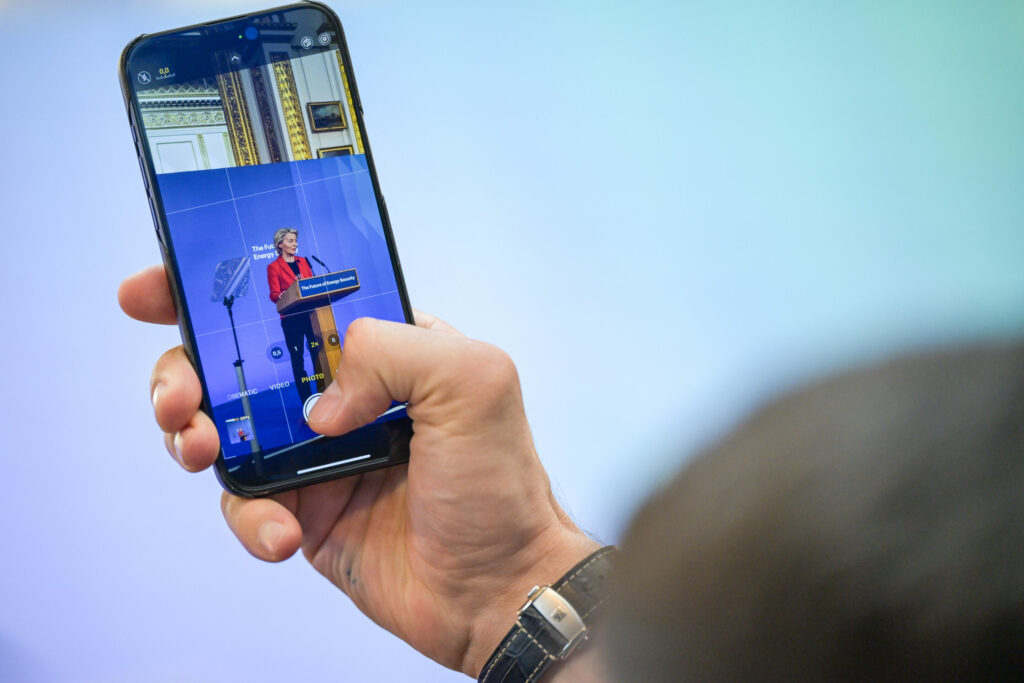
European Commission President Ursula von der Leyen faces a crucial test on Wednesday morning, with an EU court set to rule on the Pfizergate scandal.
The EUs's General Court in Luxembourg, a branch of the Court of Justice of the European Union, will deliver its ruling on opening public access to text messages exchanged with the Pfizer CEO, Albert Bourla, in 2021-2022.
A key aspect of the legal case is transparency, and the ruling will determine whether text messages can be considered as public documents under EU law. However, it could also raise wider questions about her legacy.
The Commission president has faced heavy criticisms from all sides, even from within the so-called "von der Leyen II majority" in the European Parliament. It would also cause embarrassment to the German conservative after she made transparency a key priority of her second term during her re-election bid last September.
The case stems from a request by the New York Times (NYT), rejected by the European Commission, to access text messages exchanged between the President of the European Commission, Ursula von der Leyen, and the CEO of Pfizer, Albert Bourla, in 2021-2022.
Going back to the height of the pandemic, the European Commission was seeking to obtain much-needed Covid-19 vaccines for its Member States, which were also coveted by other major powers.
Von der Leyen has been accused of having negotiated the vaccine contracts with the American pharmaceutical giant partly by text message, as suggested by a 2021 article in the NYT. The EU may have also paid a steeper price for the new doses that von der Leyen helped secure in this batch, according to the Financial Times.
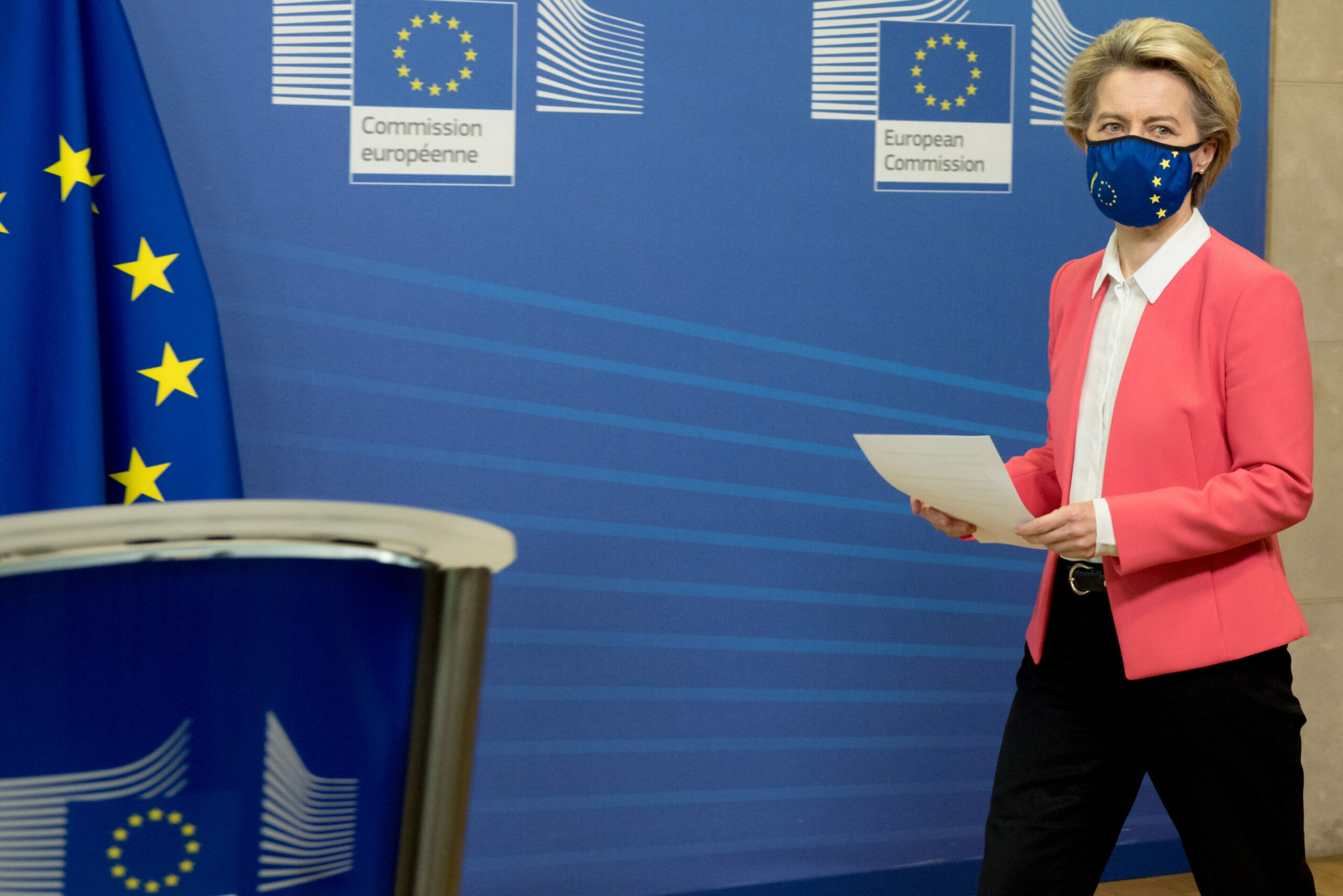
Ursula von der Leyen during the Covid-19. Credit: European Commission
Brussels-based NYT journalist Matina Stevis-Gridneff requested access to these text messages on the grounds of public interest and the accessibility of internal documents from major EU institutions. These were denied.
The case received significant support when EU Ombudsman Emily O'Reilly called on the Commission to conduct a an exhaustive search for the text messages, adding the Commission in response to the American media outlet's request amounted to bad administration.
The Commission said it had not been able to identify any text messages that had been used to negotiate the purchase of vaccines. It did, however, acknowledge that text messages may have facilitated further exchanges.
Yet, in order to be recorded as an official document, an exchange must contain substantial information. According to the European Commission, no text messages of this type have been found, thus justifying its rejection of the journalist's request.
Today's ruling by the EU's General Court will hopefully answer these questions, and also determine whether these private texts can be deemed to be in the public interest, under EU law.
A separate case was filed against von der Leyen by a Belgian lobbyist specialising in EU-China relations in 2023. However, it was deemed "inadmissible" by the Liege Public Prosecutor in January 2025 because he had no interest in bringing the action.
