
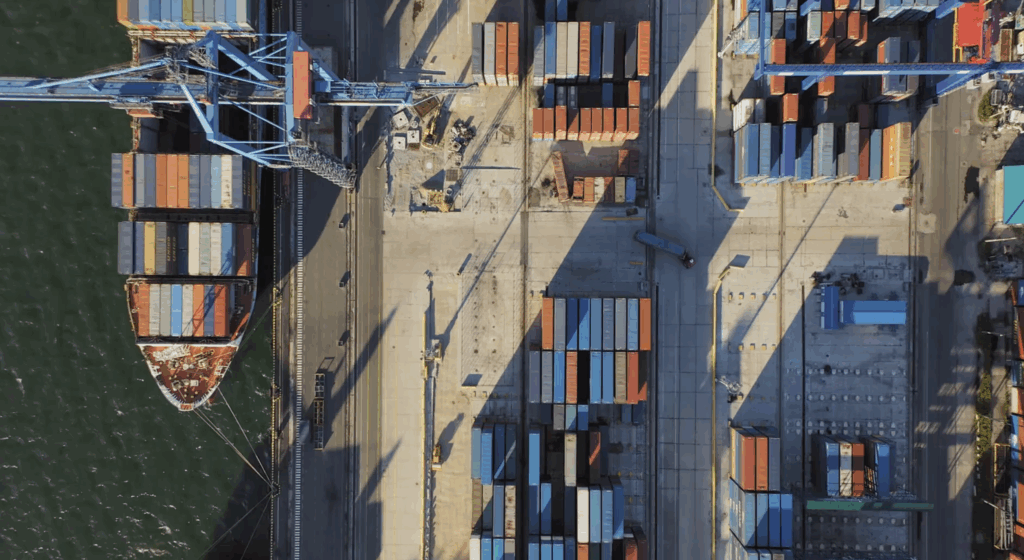
A new climate tool designed to help convince countries outside of the European Union to cut their emissions will come into force next year. Here is how the EU’s carbon border adjustment mechanism will work.
Industries in Europe have to decarbonise how they manufacture products like steel, cement and fertilisers in order to stick to the EU’s climate targets. But going green is not cheap and European companies could lose their competitive advantage.
That is where the EU’s new carbon border adjustment mechanism or CBAM comes into play. It is meant to put a price on imports that have not been manufactured to the highest environmentally-friendly levels.
It essentially extends the bloc's 'polluter pays' principle to countries outside of the EU.
So a steelmaker in Europe can, in theory at least, invest in expensive new furnaces that use renewable power, without fear of a non-EU competitor undercutting them with metals still produced using polluting coal.
Lots of gremlins still need to be worked out and charges will only start applying as of January next year, but the logic is sound: imports will become more expensive if green measures are not implemented.
Europe’s single market is one of the most lucrative in the world and global players want to sell as much as possible in it. That is the simple truth that CBAM will hope to exploit. 'Go green, then make green' is the mantra.
Earlier this week, the European Parliament’s environment committee voted in favour of making small changes to CBAM, as part of the Commission’s current spate of simplification proposals.
The main change is that small companies will be exempted from CBAM. Around 99% of importers will no longer have to stick to the rules, but 91% of emissions will still be accounted for by charging large companies.
A full sitting of MEPs will vote on the changes next week.
For the time-being, calls to delay CBAM’s implementation or even scrap it completely have not gained any traction. Many analysts believe that not deploying CBAM would hurt European competitiveness, not preserve it.
Next week, EU and UK leaders meet for a summit, when CBAM is likely to feature on the agenda. Both sides want to work out an arrangement that exempts each other from their respective carbon taxation plans.
It will only be after 2026 when the true success of this innovative new policy can be assessed.
