
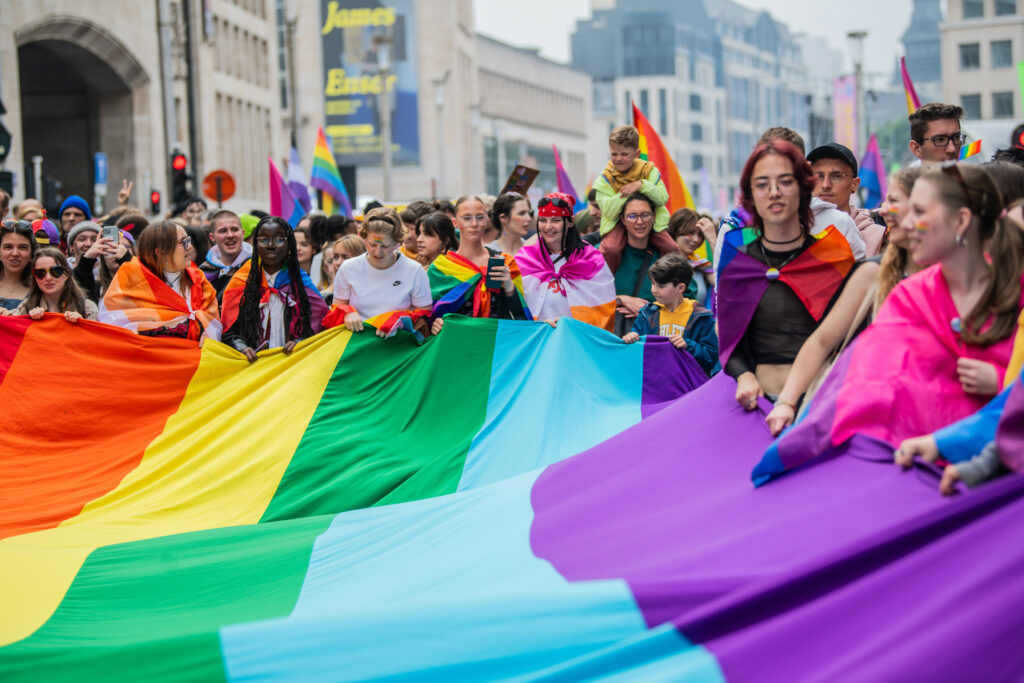
Belgium climbed to second place in the European ranking for LGBTQ+ rights by the ILGA-Europe advocacy group on Wednesday – overtaking Iceland on the list.
Belgium achieves a score of 85.31% – well above the European average of 51.13%. Overtaking Iceland on the list, Belgium is now in second place behind Malta, which has been the leader for several years, according to an annual analysis of LGBTQ+ rights in European countries.
"As Belgium, we can set an example," said Thomas Jans of Flemish LGBTQ+ rights association çavaria. "We want to call on people to make themselves heard, like on Saturday at Pride in Brussels."
Belgium has been doing well in the ranking for a while now, regularly competing with Iceland for the second spot. Some of the reasons for the higher position are the updated police and justice policies on hate crimes and discrimination based on gender characteristics, among others.
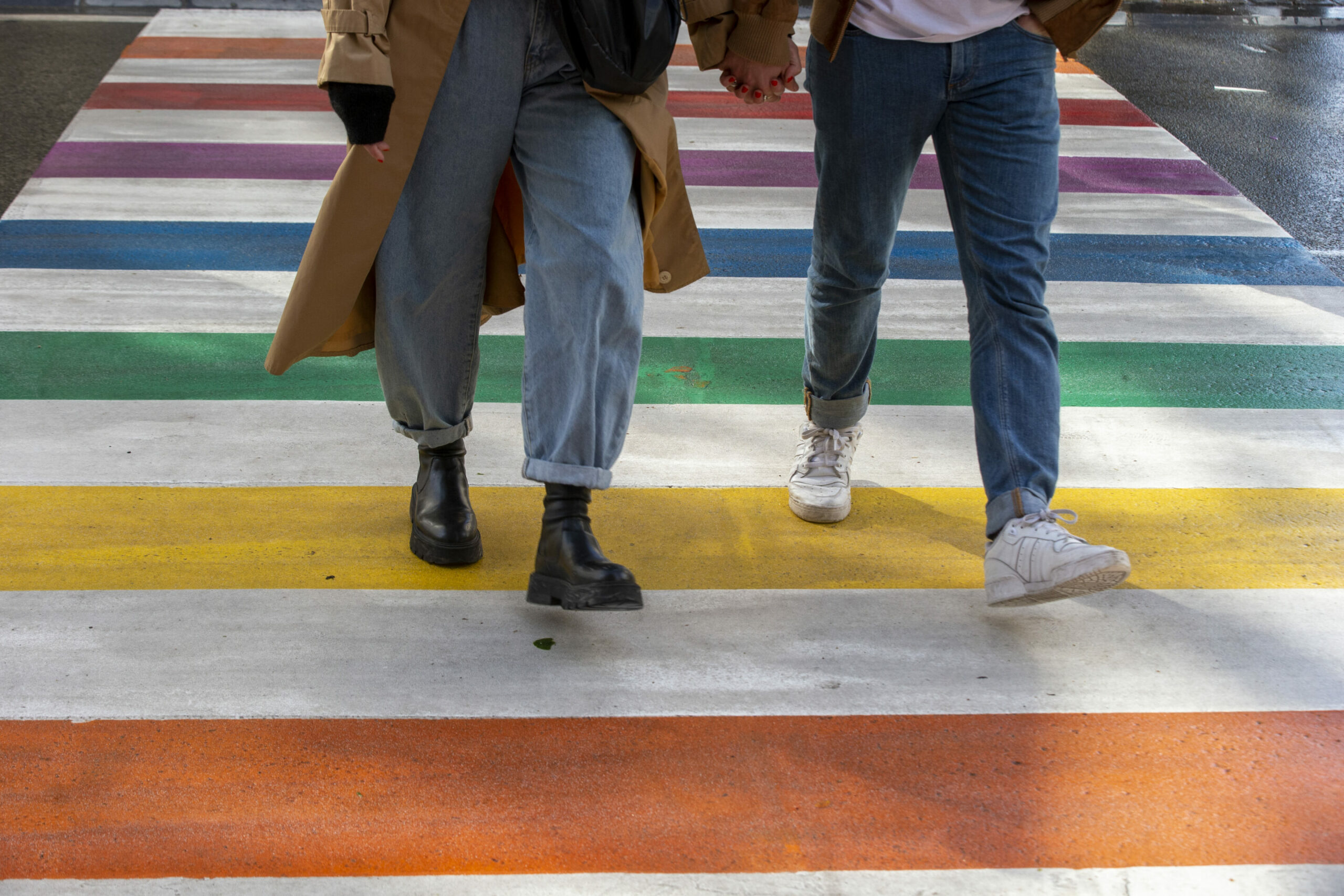
Pedestrian crossing in rainbow colours. Credit: Belga/Nicolas Maeterlinck
The first place is a possibility if certain regulations are still implemented, according to Jans. For instance, a proposal to ban unnecessary medical interventions on intersex minors is said to be included in the coalition agreement. What is not yet on the table, however, is the gender registration of non-binary persons on Belgian identity cards.
Despite Belgium's encouraging second place, LGBTQ+ rights are under pressure in many other European countries. In Hungary, for example, all Pride events were banned, while in the United Kingdom, legal recognition of transgender people was restricted. In Georgia, there was a ban on all forms of LGBTQ+ representation.
"Under the influence of an international anti-rights movement, not only LGBTQ+ rights but also women's rights and fundamental freedoms are being undermined. This is worrying," Jans said.
Violence and discrimination
Despite Belgium's second place, however, figures from Belgium's Centre for Equal Opportunities Unia and Institute for the Equality of Women and Men show that cases of violence and discrimination against the LGBTQ+ community continue to exist.
In 2024, Unia opened 136 cases on sexual orientation: hate speech, and especially hate crimes, occur much more often than in cases on other protected characteristics. 35% of Unia's cases were characterised by homophobic, lesbophobic or biphobic hate crimes last year.
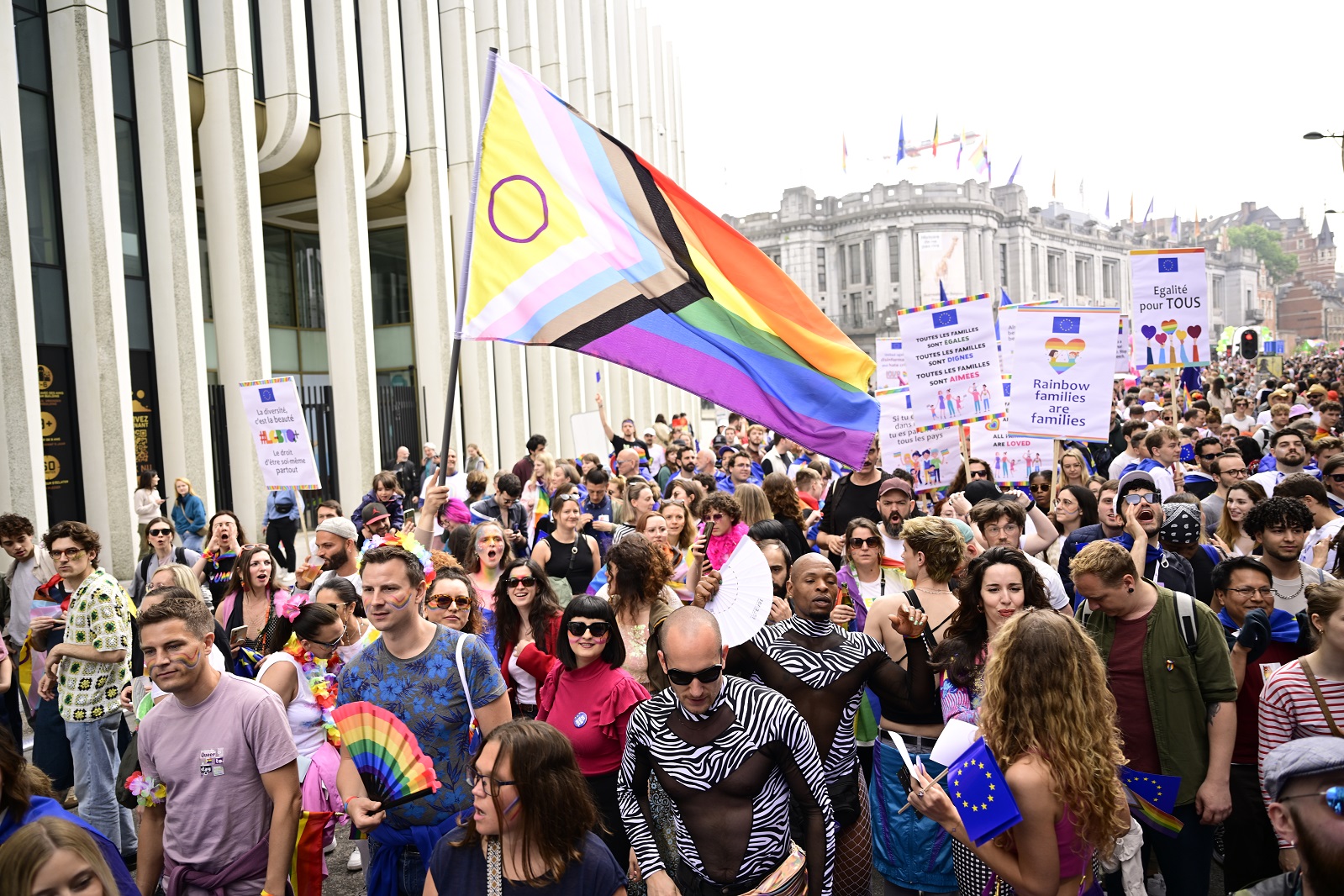
Credit: Belga / Laurie Dieffembacq
More than a third of the cases concern assault and battery, and a similar percentage concern serious intimidation. For racial characteristics and religious beliefs, the percentage of hate crimes is much lower (14% and 6%, respectively). The perpetrators are often young men who, sometimes in groups, mainly target other men. Traps via specialised dating apps are noticeably more common.
For example, at least eight men were lured into a trap via the Grindr app. They were exposed to homophobic insults, threatened with stabbing weapons, beaten and blackmailed.
74 cases from the Institute in 2024 concerned medical and/or social transition, and 80 concerned gender identity. Transgender people are often the target of discrimination in the workplace (47 reports in 2024), but also in the insurance and healthcare sectors.
Social media and the media reinforce the anti-gender discourse, which calls into question the right to exist of transgender people. "More insidious is that hate speech is not always explicit, but takes a humorous or parodic form. Nevertheless, it creates a transphobic climate and normalises hateful behaviour."
